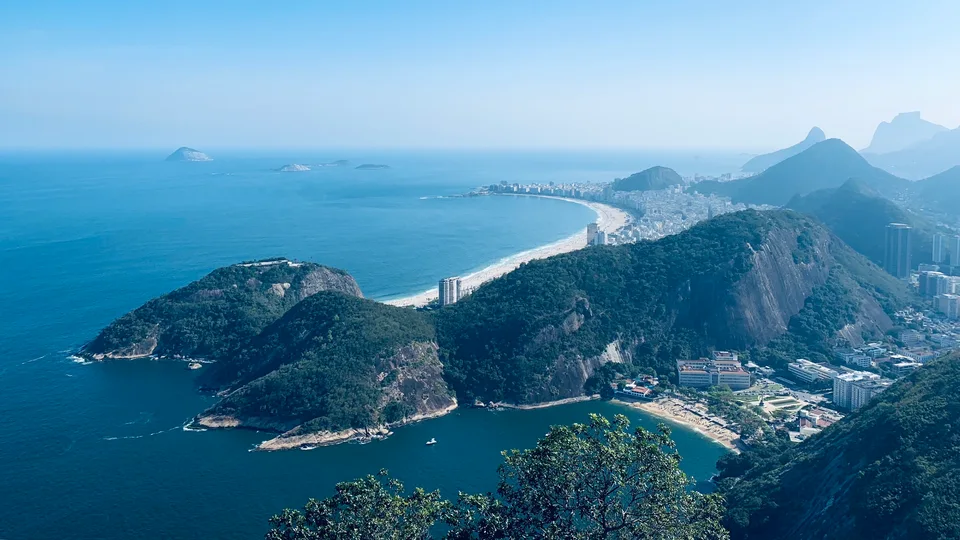
Rio makes a fairly unreasonable opening offer. An entire crescent of beach, a mountain where a mountain has no business being, and a city that appears to have slipped into the spaces left between them. We had two weeks in Brazil, split between here and Florianópolis. Looking down Copacabana, it was difficult to imagine needing the second destination.
We would, eventually. For now, there was the small matter of learning how to spend a day in a place where the scenery keeps interrupting.
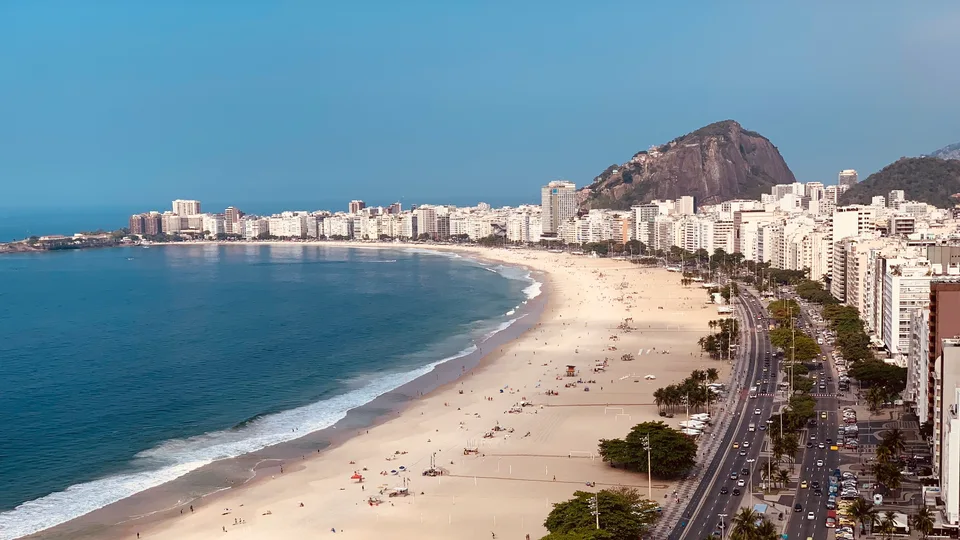
An unreasonable opening offer.
The beach is doing several jobs
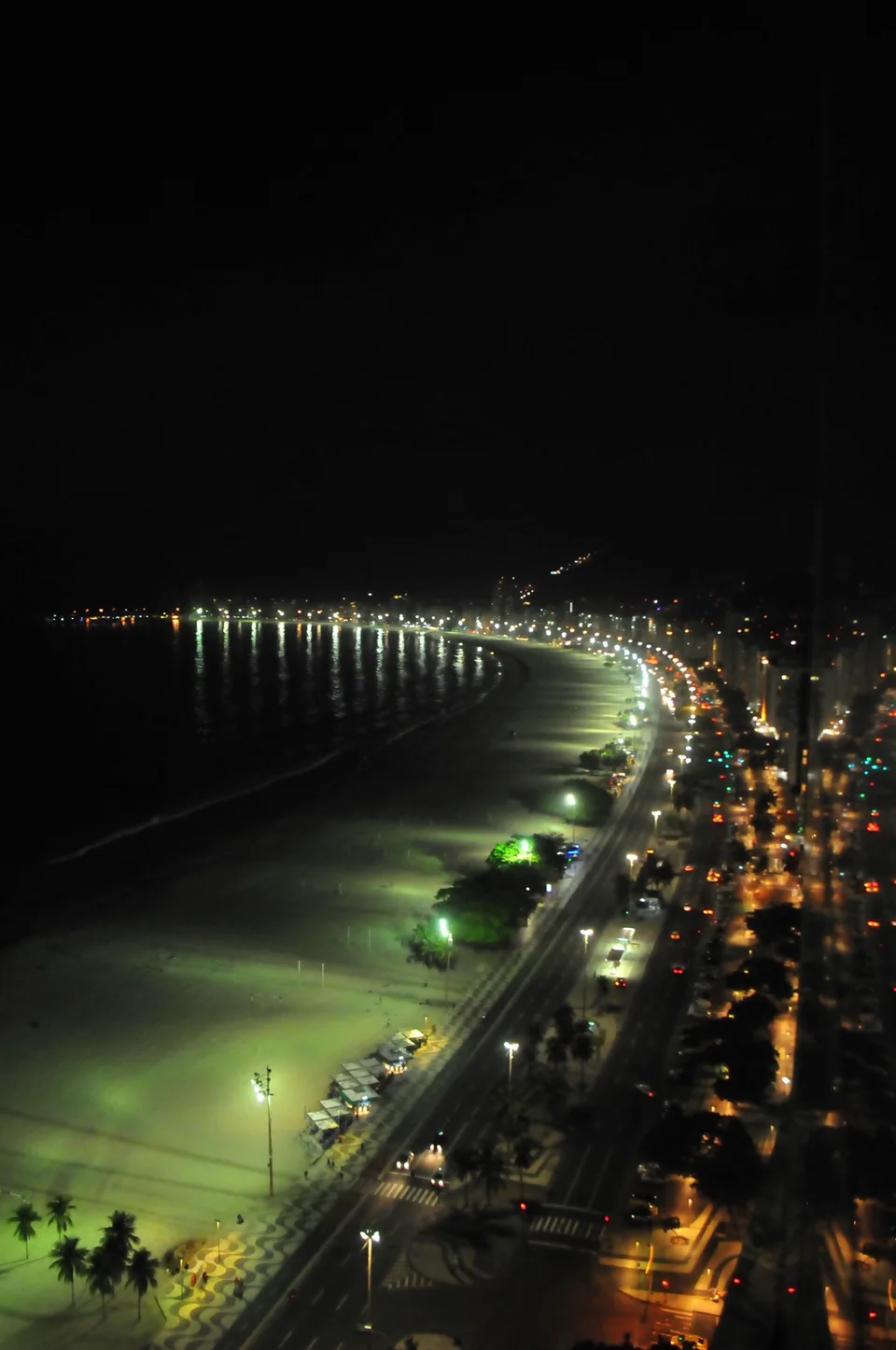
Copacabana’s black-and-white pavement gives a walk its own moving pattern. Beyond it, the sand opens into a vast public living room. People exercise, talk, arrange chairs, sell things and conduct the complicated business of being near other people without necessarily wishing to speak to them. The ocean handles the background noise.
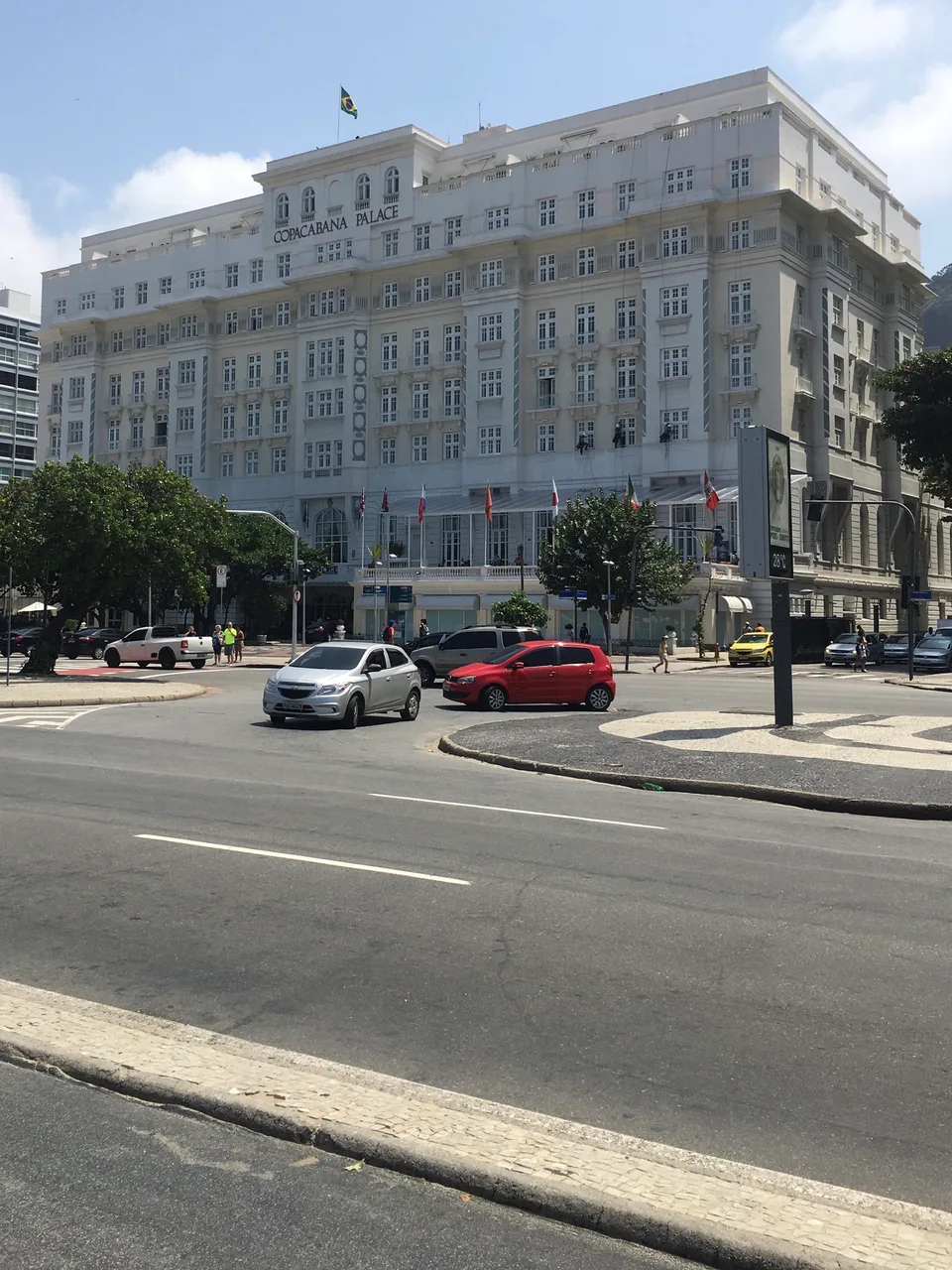
We walked beside it, took photographs, and stopped often enough to make the word “walk” somewhat generous. A sand sculptor had produced a reclining figure elaborate enough to shame our usual contribution to a beach: two footprints and a towel. Across the road, the Copacabana Palace looked serenely prepared for another century of people arriving with expectations.
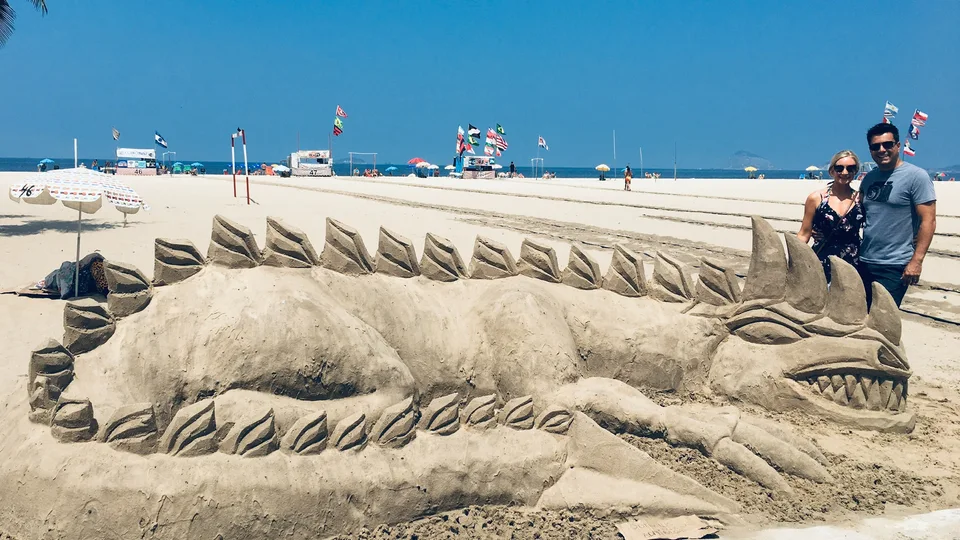
Some people bring considerably more ambition to the beach.
“A whole stretch of pavement had found a way to make lingering feel like participation.”
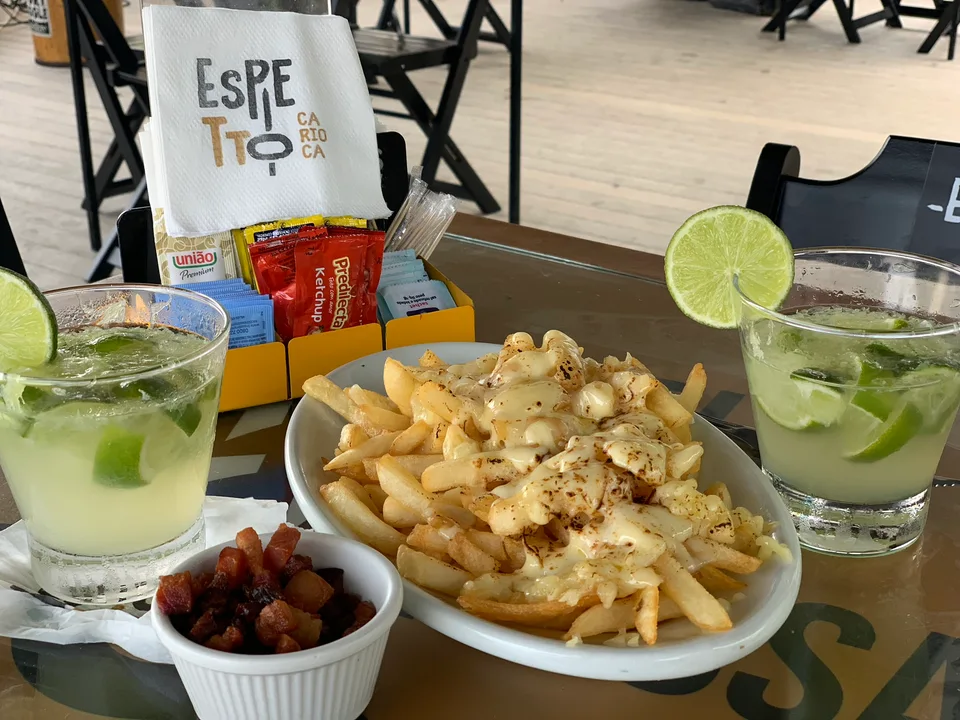
At a beachside table, lime wedges brightened our glasses. Cachaça, lime, sugar and ice are an admirably direct proposal. A caipirinha asks very little of the person holding it, beyond remembering that something this refreshing still contains a serious ingredient. We had the sea in front of us and nothing urgent that couldn’t survive a short postponement.
It is easy to mistake this for doing nothing. The distinction becomes less interesting after the first few sips. Chairs fill, conversations drift, somebody passes with something cold to sell. A whole stretch of pavement has found a way to make lingering feel like participation.
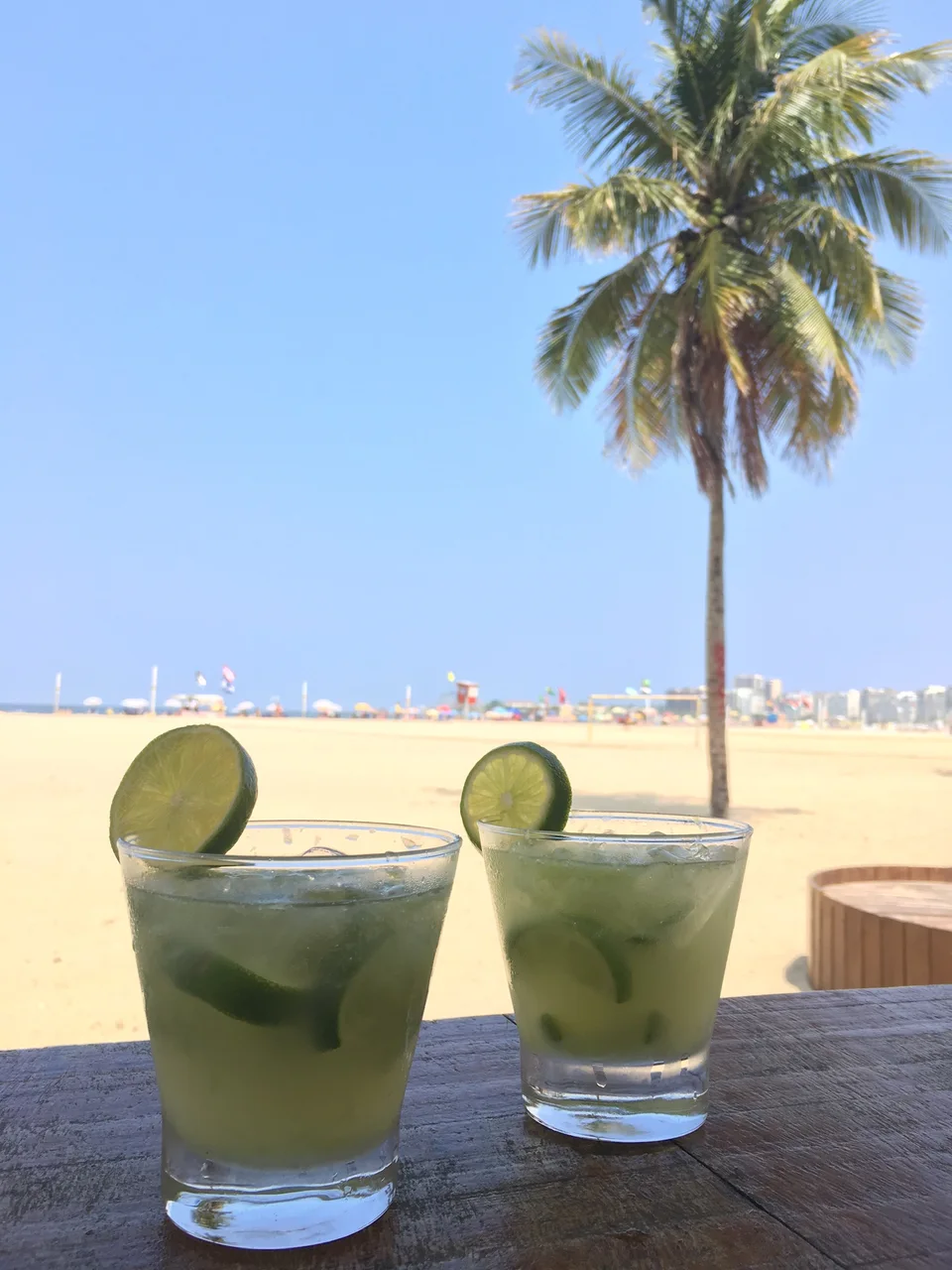
Nothing urgent that couldn’t wait.
An excellent reason to look down
At Christ the Redeemer, looking up was the obvious first response. The outstretched arms were familiar from a lifetime of pictures; the experience of standing underneath them was less easily filed away. The folds of the robe, the weight of the figure, the bright sky around its head: a symbol had become an actual object sharing our patch of air.
The monument opened in 1931, built high on Corcovado above the Tijuca Forest. That setting supplies much of its force. The city doesn’t stop cleanly at the mountain. Buildings press toward greenery; trees close over slopes; the coast reappears beyond another ridge. From the terrace, Rio looked less like a plan than an ongoing negotiation with the land.
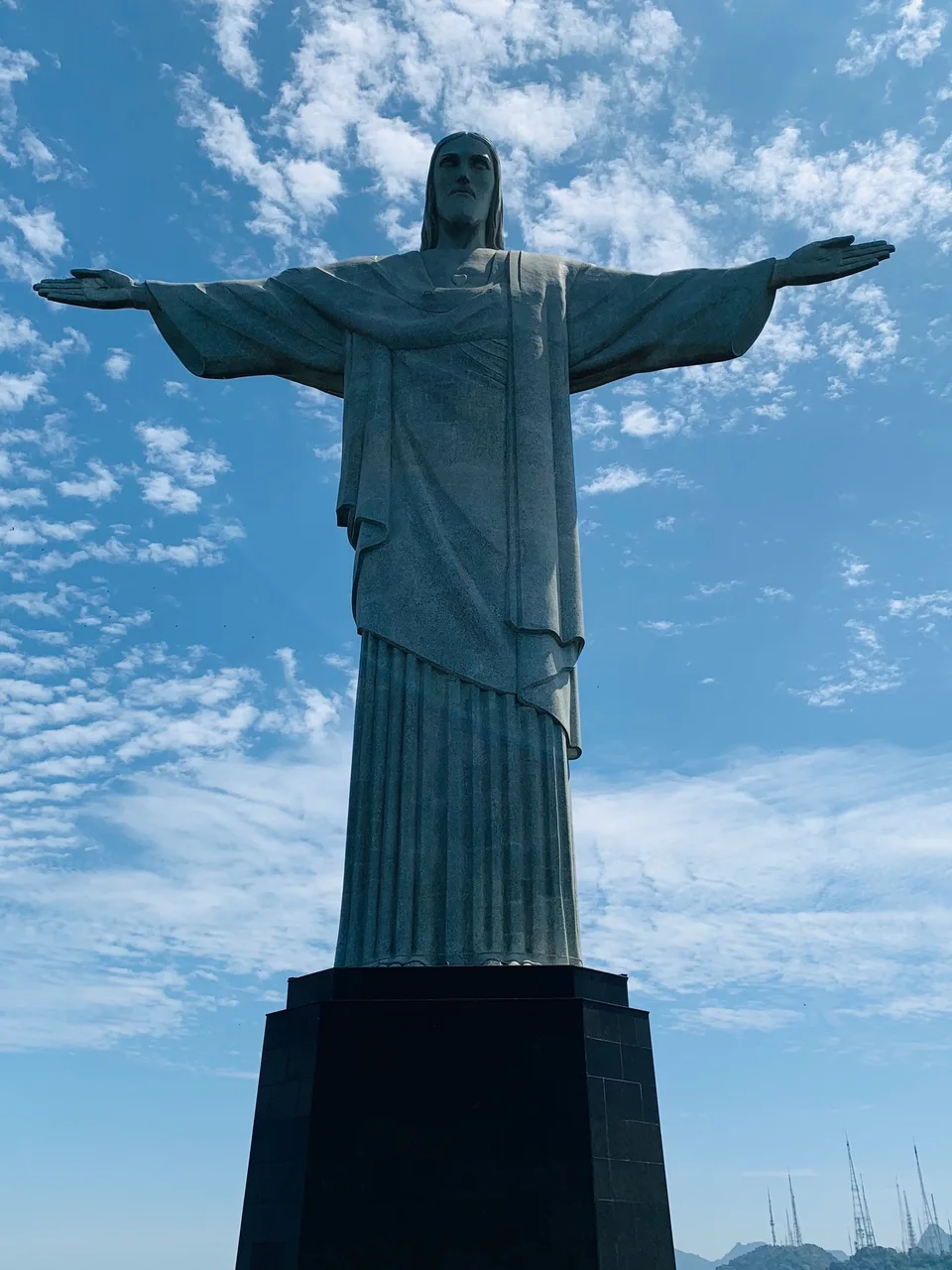
The familiar became very large.
We joined the people trying to make a photograph contain all this. There were arms extended, cameras tilted and strangers briefly collaborating on the difficult geometry of a souvenir. Below us, the Maracanã appeared as an oval set among the city blocks. Farther away, Sugarloaf rose beside the bay, already advertising another change of perspective.
The forest mattered as much as the famous statue. Green slopes kept breaking up the view, making the buildings seem to gather wherever the land would allow them. It gave the city a texture that disappeared in the usual tightly cropped photograph of the monument. We kept looking beyond the obvious subject.
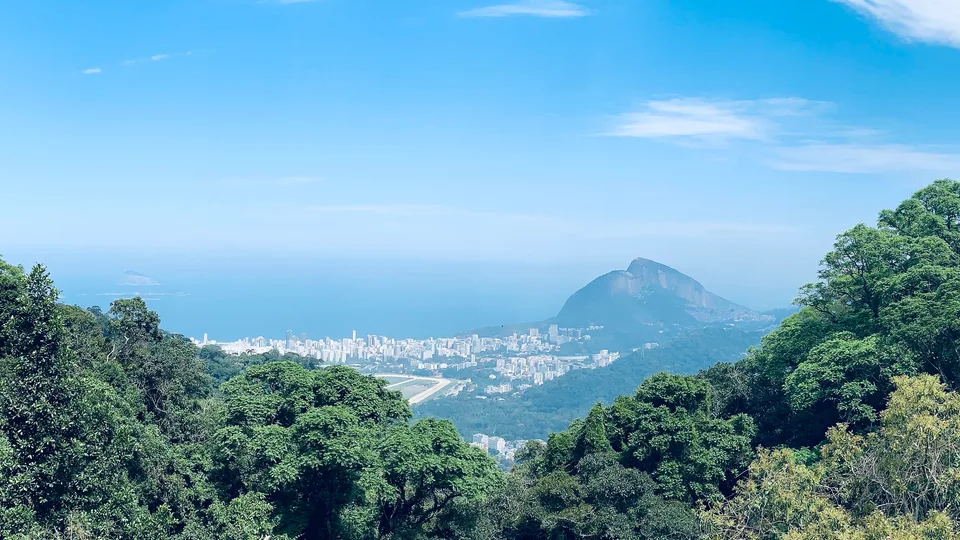
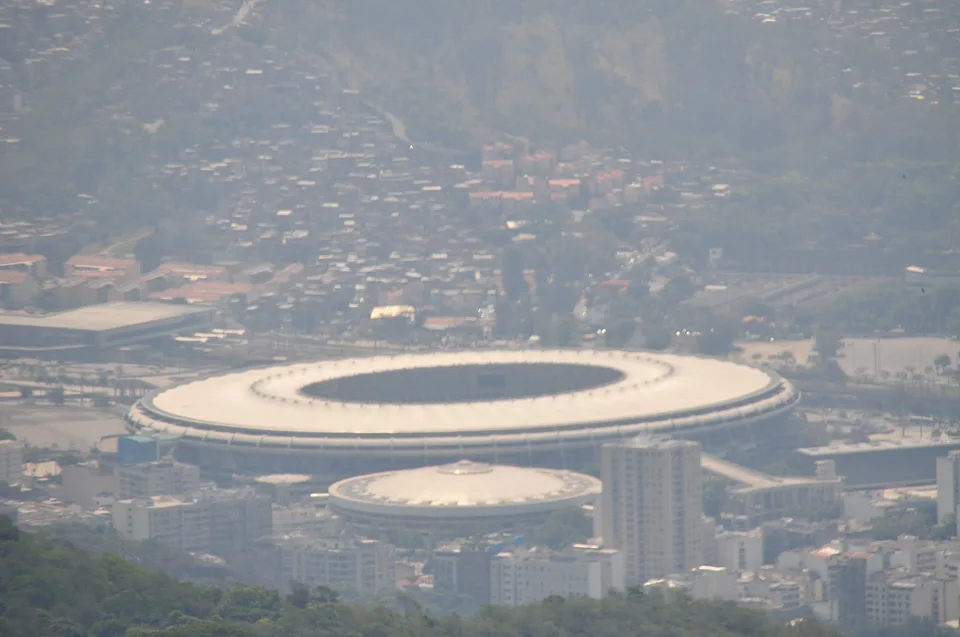
The city left room for a forest.
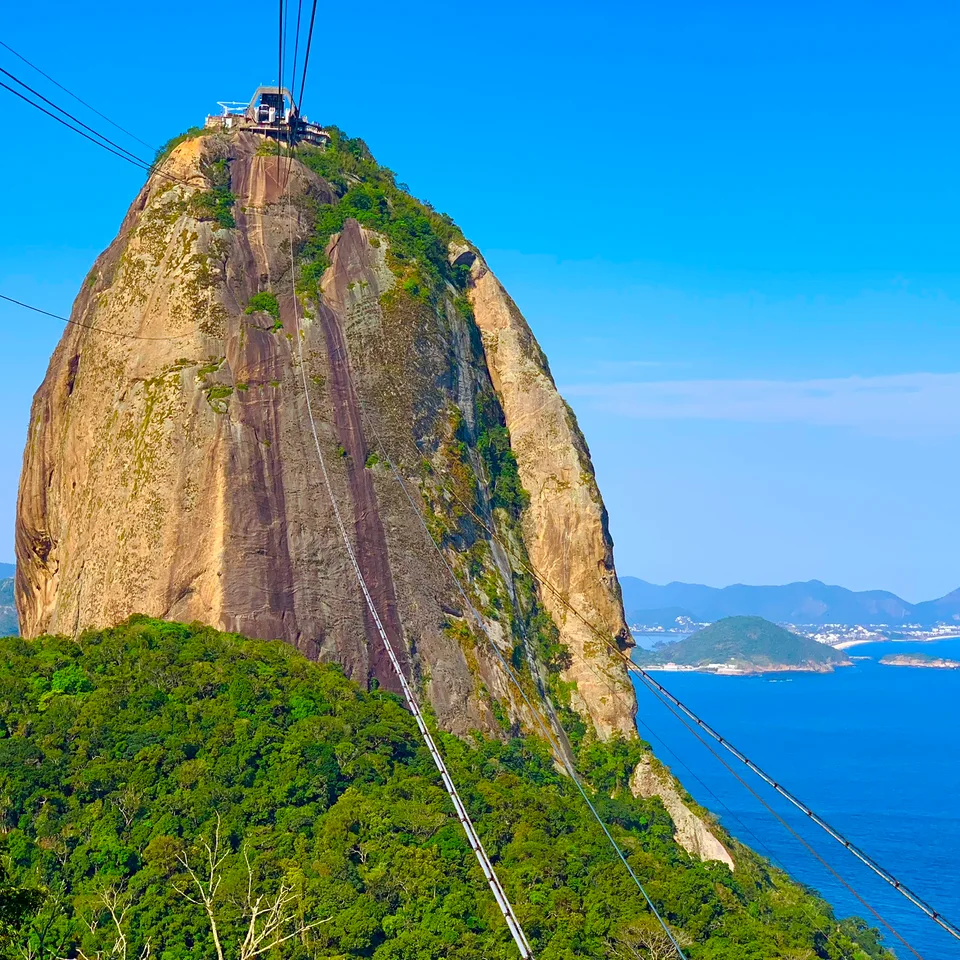
Sugarloaf offered its own solution to the problem of getting above the city: hang a cabin from a cable and trust the people who understand these things. The bondinho began carrying passengers in 1912. Its two-stage journey, through Morro da Urca and onward to Pão de Açúcar, makes an elegant piece of theater out of the approach. Each platform reveals a view and then quietly admits that there is another one waiting.
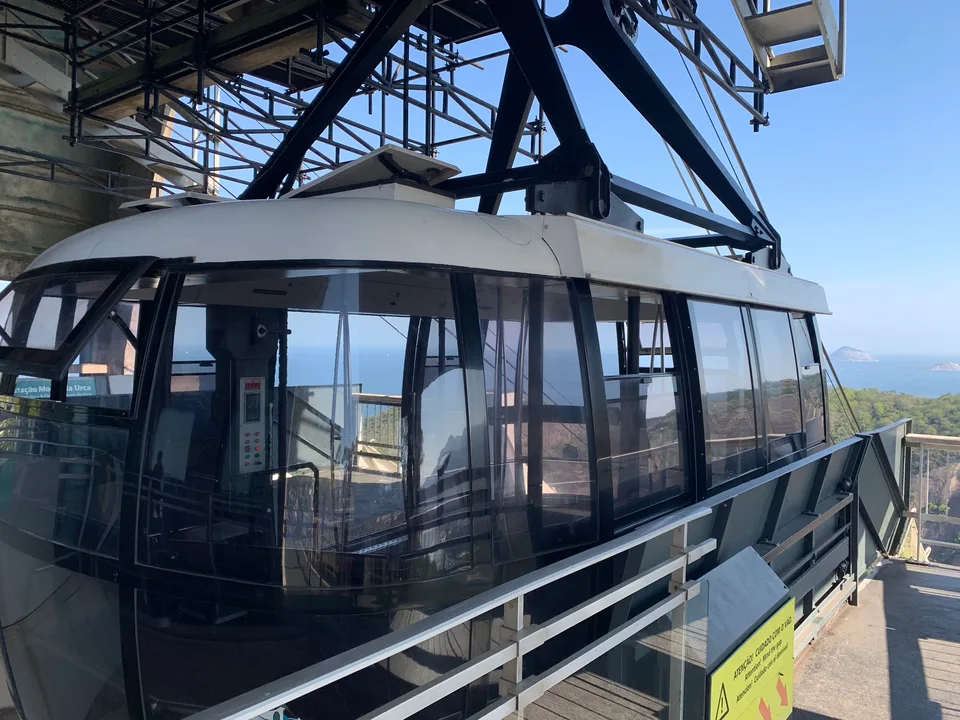
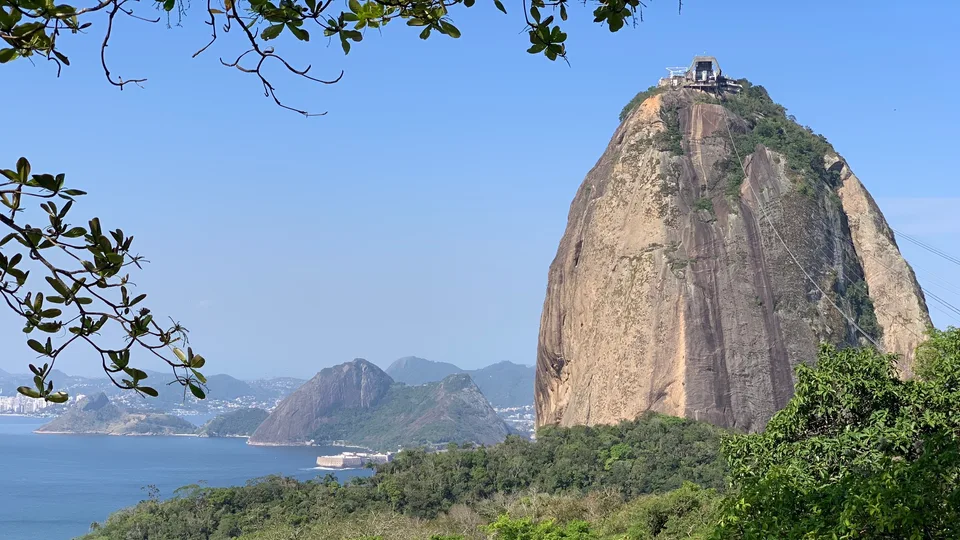
Trust the people who understand the cables.
Inside the cabin, the lines converged ahead of us and the bay widened below. Boats became marks on the water. The headlands separated into layers. Roads that had demanded attention at ground level became thin, comprehensible threads, which was reassuring even if the effect would wear off the moment we returned to them.
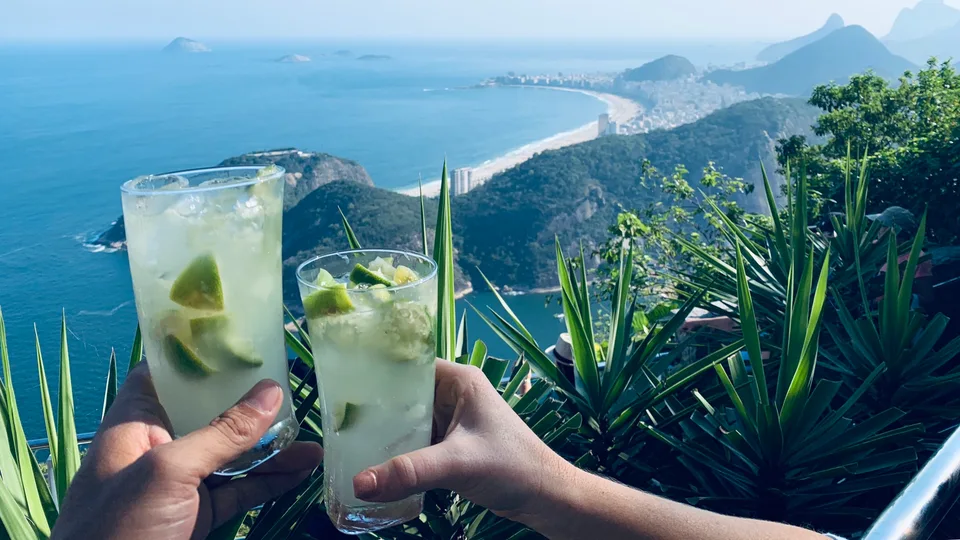
At the top, we stopped for drinks with a view extravagant enough to make the glasses look like props. The city had supplied an argument for climbing a mountain, then installed somewhere to sit down. We appreciated the complete service.
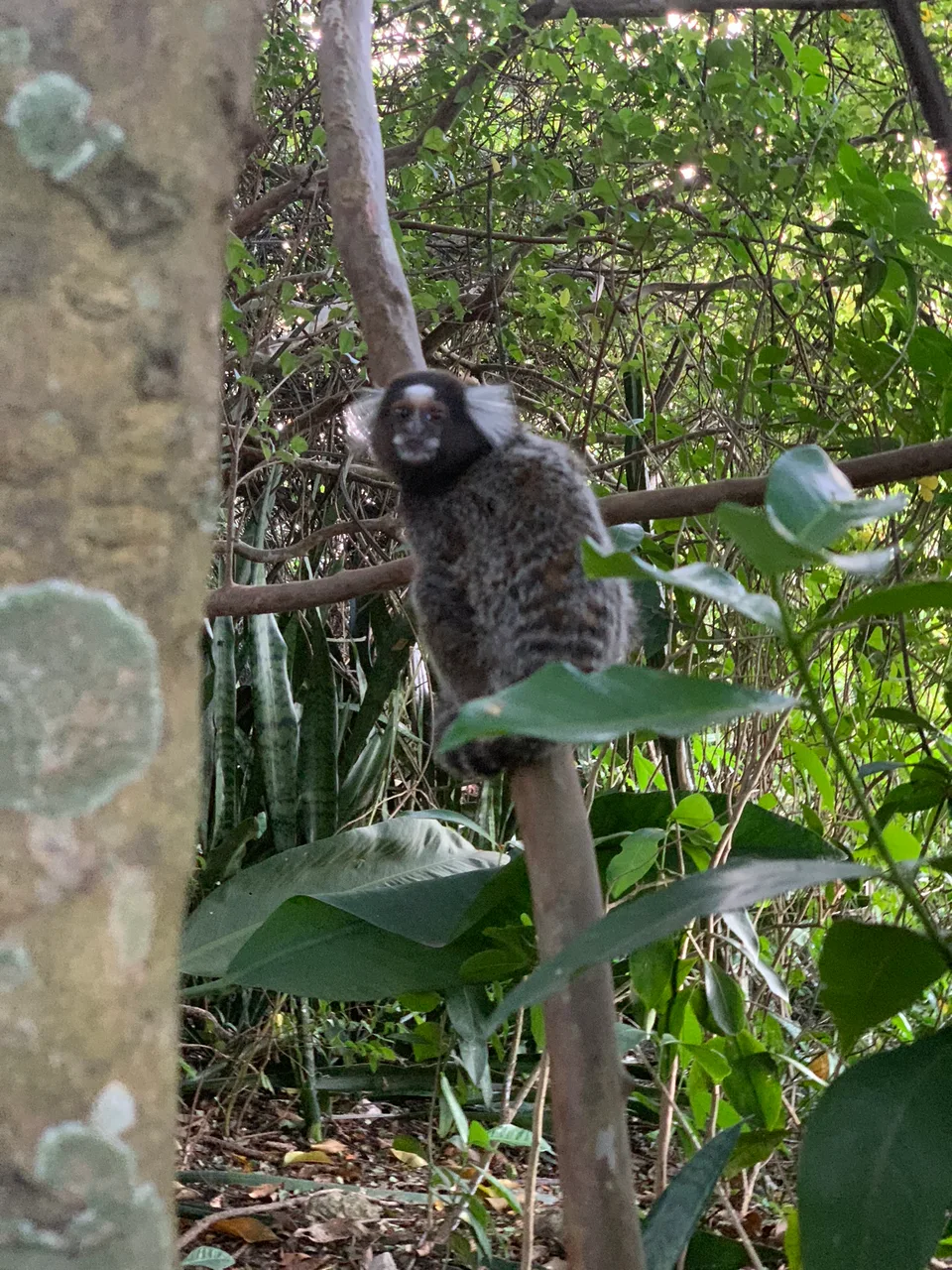
In the trees around the cable-car park, a small monkey occupied a branch with the unconcern of a resident. We were conducting a major expedition. It was having an ordinary day.
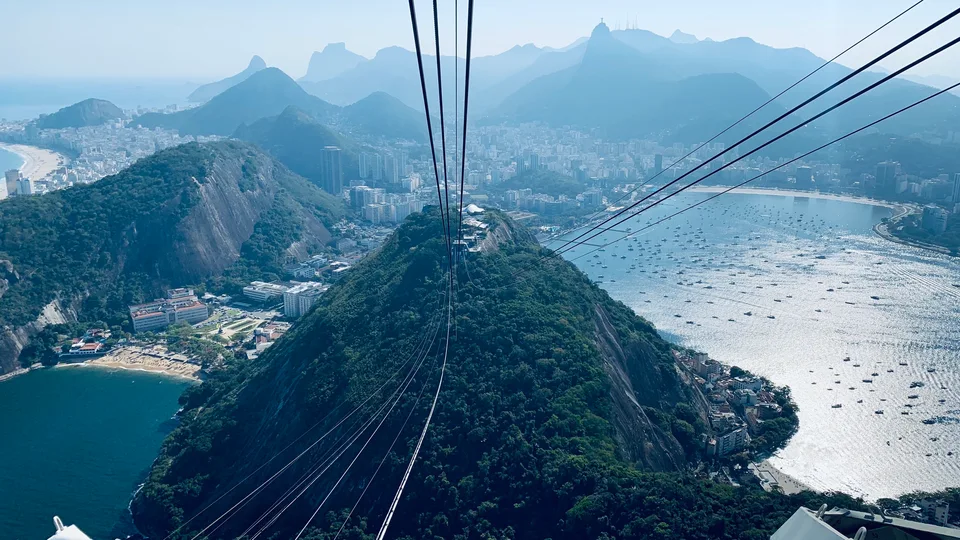
A useful distance from the traffic.
The city kept unfolding.
As the light softened, the distances became less definite. The mountains settled into silhouettes; the water held the last brightness. Rio is exceptionally good at this hour, when the hard work of the city is still happening somewhere below and the visitor has managed, temporarily, to rise above the traffic.
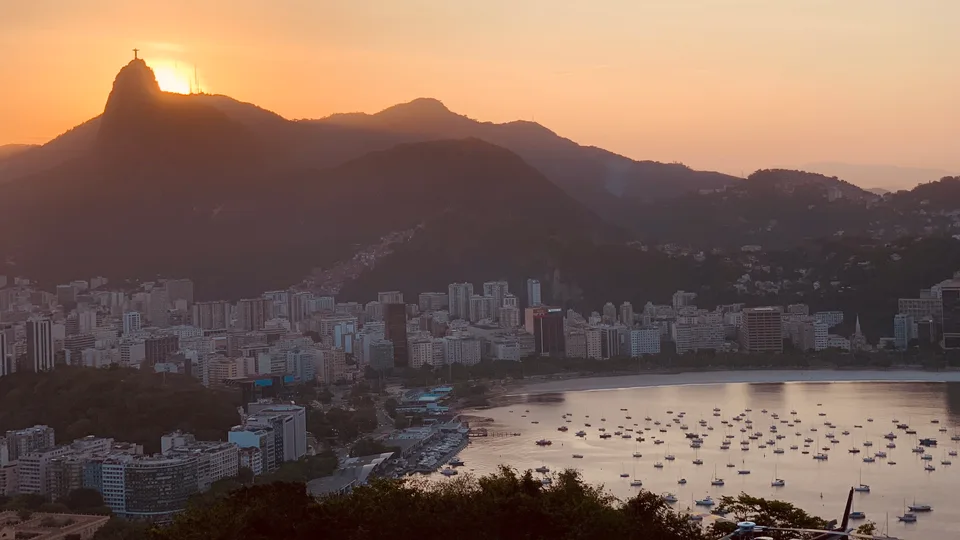
We stayed for the light.
Back where the people are
At Ipanema, the sea returned everything to its proper scale. A wave doesn’t care how well you composed a photograph from a mountaintop. It arrives, folds over itself, spreads along the sand and starts again. Along the beach, the Dois Irmãos peaks supplied a backdrop so distinctive that even an aimless stroll looked geographically informed.
We went down to the water, stood together in the shallows and acquired the beach-day expression that tends to survive longer in photographs than any carefully arranged pose. A green coconut was another excellent piece of local packaging. No branding exercise could improve on a drink that comes in its own small piece of tropical architecture.
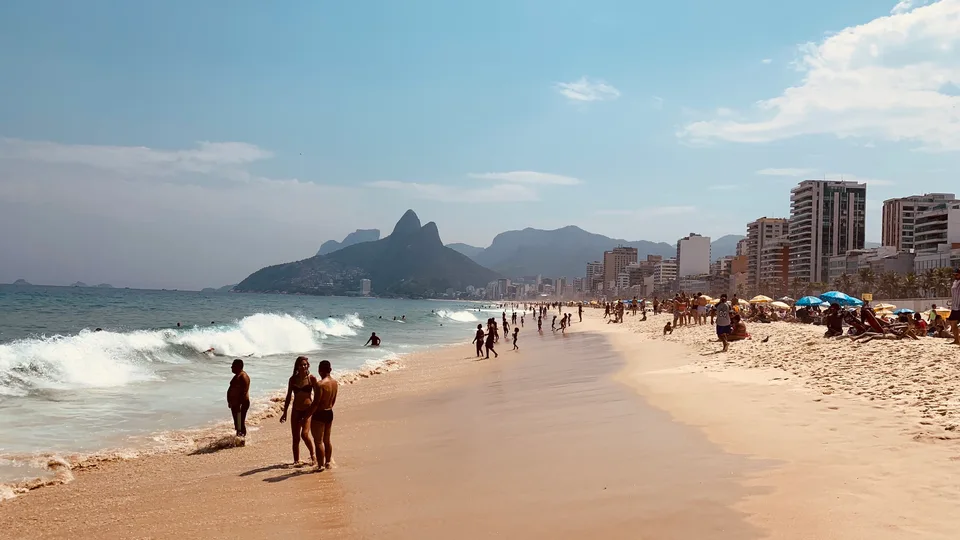
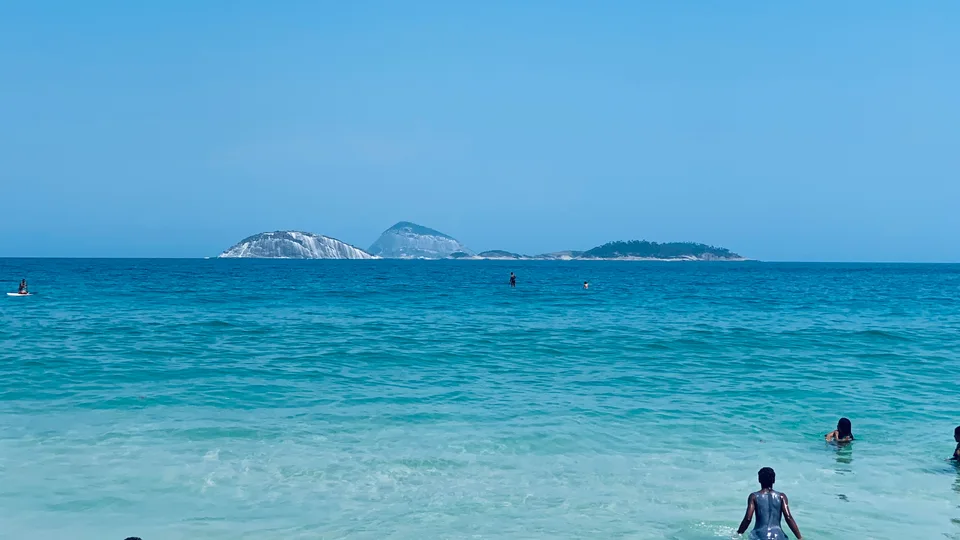
The ocean declined to hold the pose.
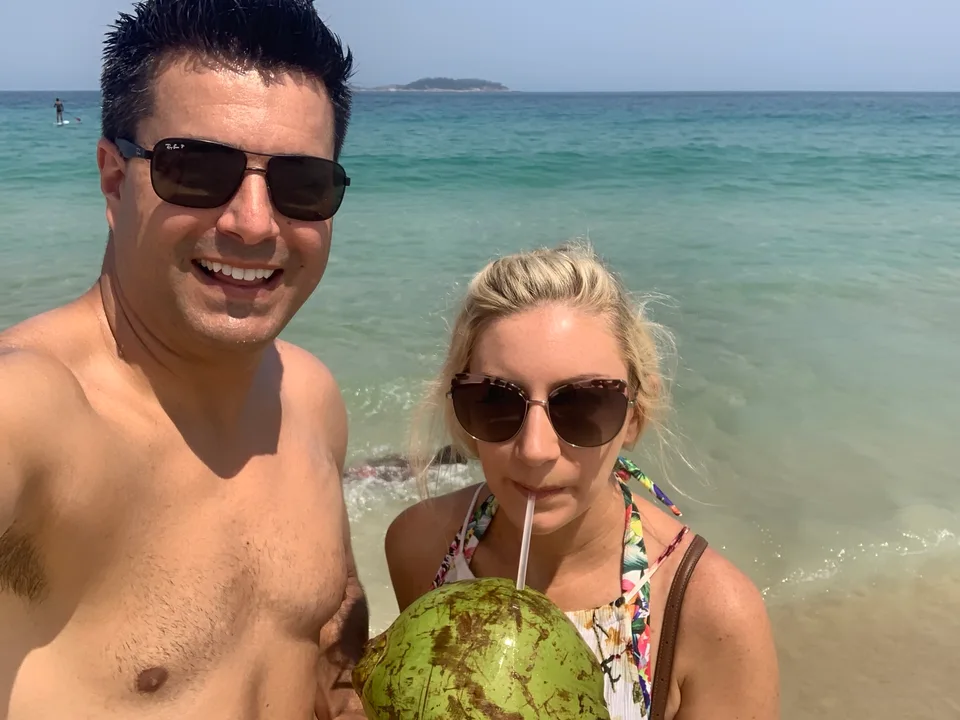
Our beach-day expression.
Food fitted into these days without requiring a declaration of intent. A shared plate, fries, cold drinks, somewhere to rest our elbows: lunch could be an interruption or the point of the afternoon, depending on how much of the afternoon remained. We were getting less concerned about the distinction.
It helped that the beaches were part of the city. Stepping away from the sand brought us straight back into streets, tables and people going about their business. The postcard never quite detached itself from ordinary life. That gave it more to hold our attention than a perfect view alone could manage.
A small room, then a very large crowd
The Little Club in Beco das Garrafas brought the scale down again. Red curtains, instruments, musicians close enough that the room couldn’t hide behind its own reputation. We sat and listened. Copacabana outside was still moving; here, the important thing was what happened between the people on stage.
Bossa nova carries Rio’s beaches into the imagination, but music in a room has another kind of immediacy. You can see the work. Fingers find the strings, a breath becomes a phrase, somebody listens before coming in. Our photographs caught musicians mid-performance, which is the honest limitation of a camera: it records the people making the sound and leaves you to supply the part that mattered.
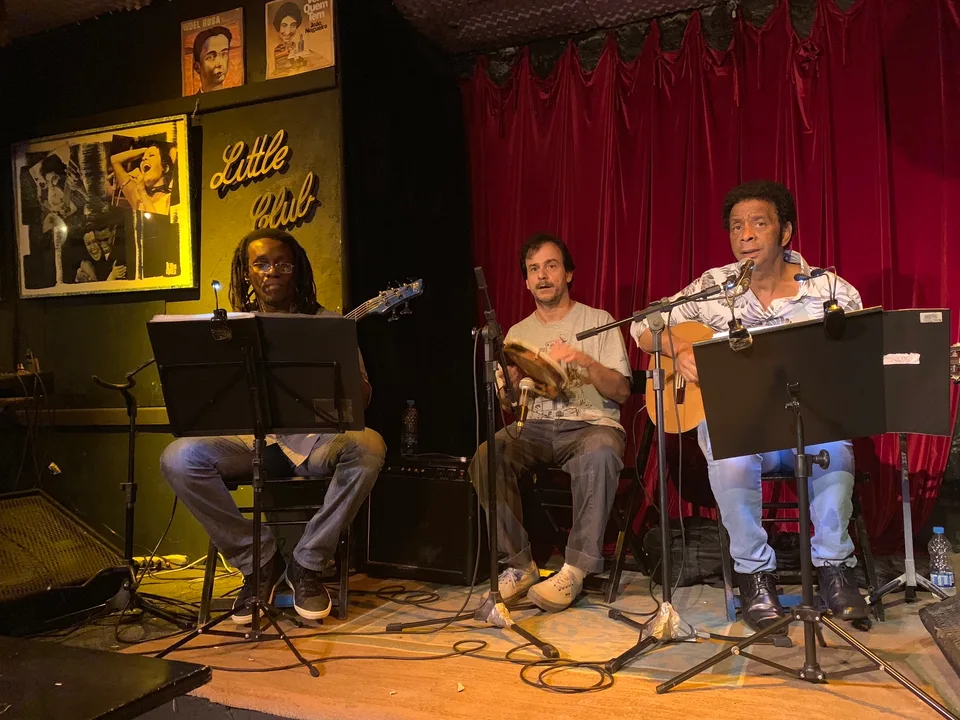
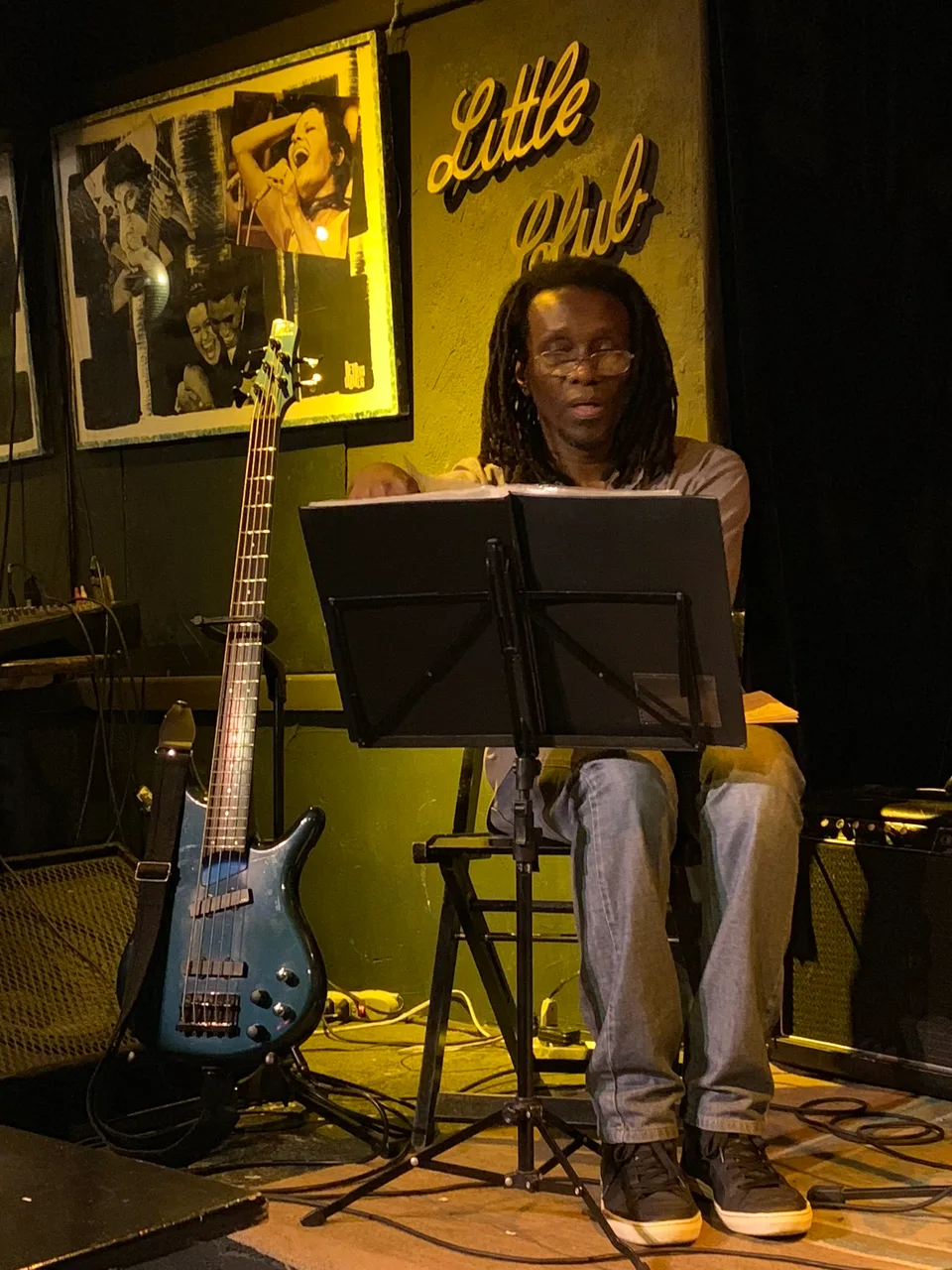
A small room with plenty to say.
Another evening delivered color, feathers and dancers arranged across a stage. The show made no attempt at understatement, and we weren’t in Rio to insist on it. After the intimacy of the club, there was pleasure in a production that wanted the back row involved too.
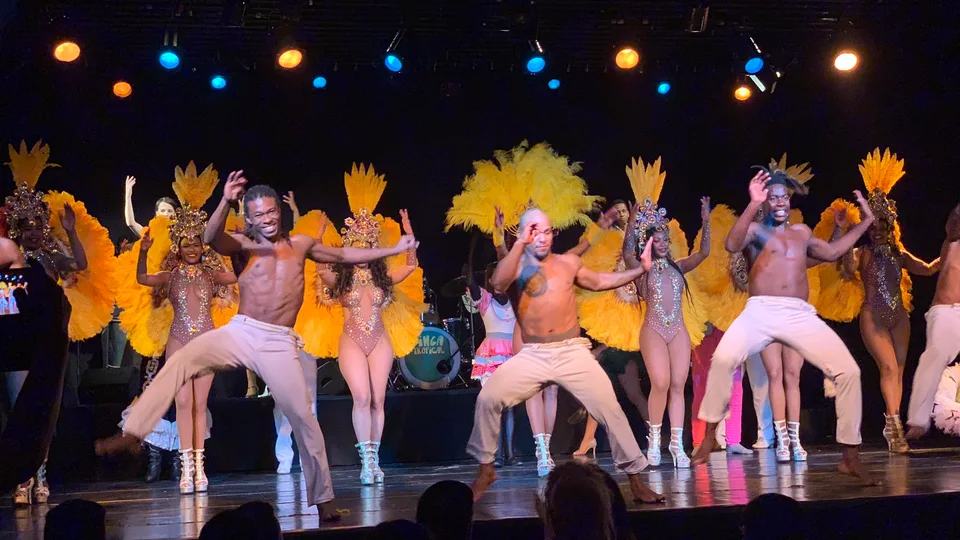
Understatement had the evening off.
Football expanded the audience considerably. We wore Grêmio blue and carried the flag into the Estádio Nilton Santos, the Engenhão. This was Fluminense against Grêmio, and our clothing settled any question of neutrality before we reached our seats.
The pitch sat inside its blue running track beneath great white roof arches. Watching in person means accepting the stretches when the game refuses to reward your attention. The ball moves away, an attack dissolves, a promising position becomes another reason to discuss what should have happened. Then one moment changes what everybody will remember.
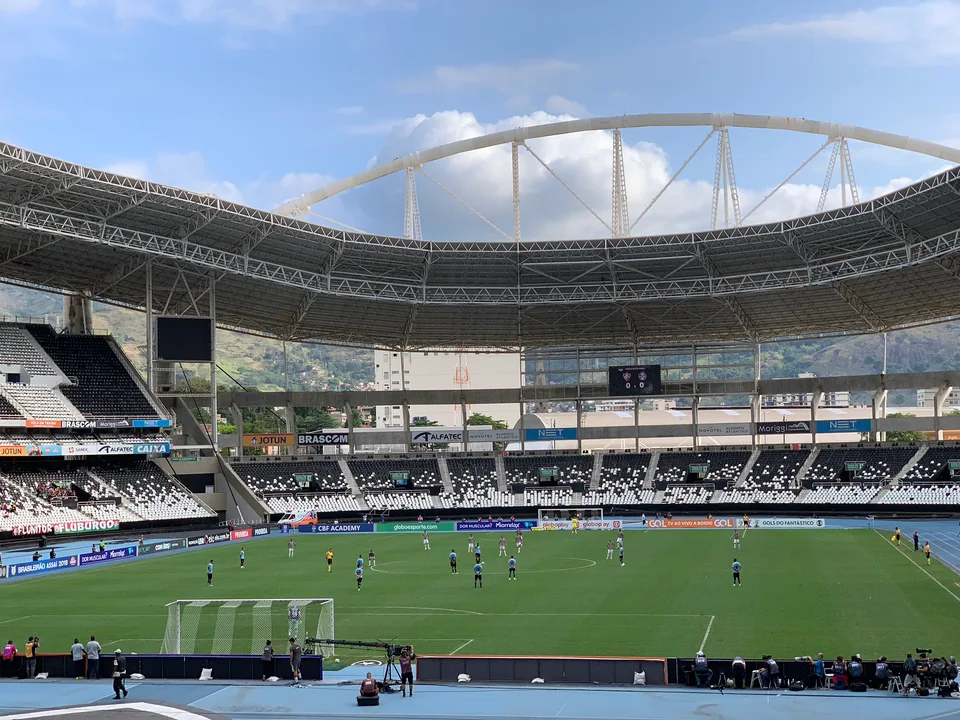
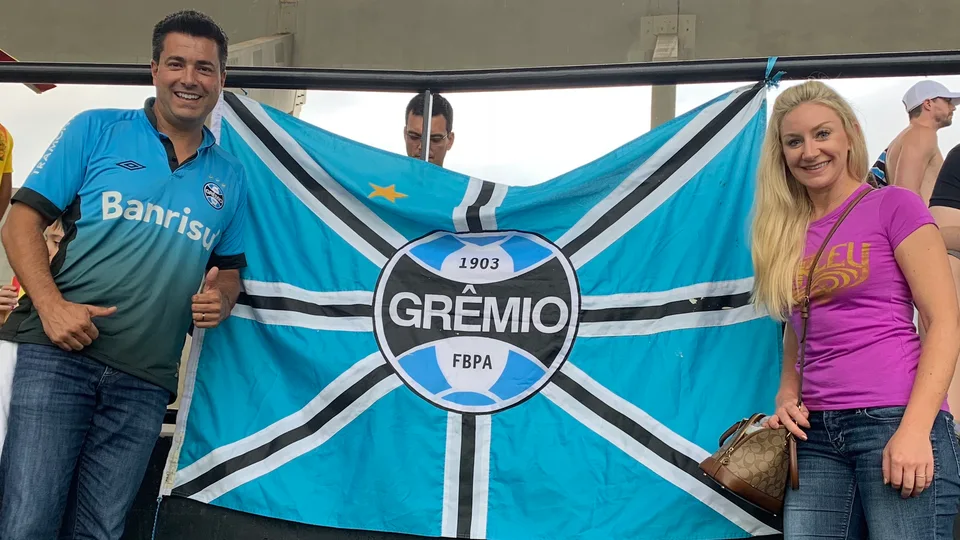
Neutrality had never been the plan.
Grêmio won 1–0, with Everton scoring in stoppage time. A very economical return on an afternoon’s anxiety. We had come to Rio for its scenery and found ourselves invested in a rectangle of grass, which seemed an entirely sensible use of a city that can command your attention in several different ways.
A detour into another Brazil
Petrópolis took us inland, into the mountains and a different register of the same journey. Greenery framed a small fountain. The former hotel-casino at Quitandinha supplied decorative ambition on a scale that made a modest entrance seem like a missed opportunity. Opened in 1944, the building belonged to an era that expected leisure to dress for the occasion.
Inside, sculptural furniture and ornate surfaces made us look twice. An art installation assembled from pieces of wood offered a considerably less polished sort of spectacle. There was room in this old place for both the grand gesture and something stranger. We wandered through it rather than trying to make every room agree with the last.
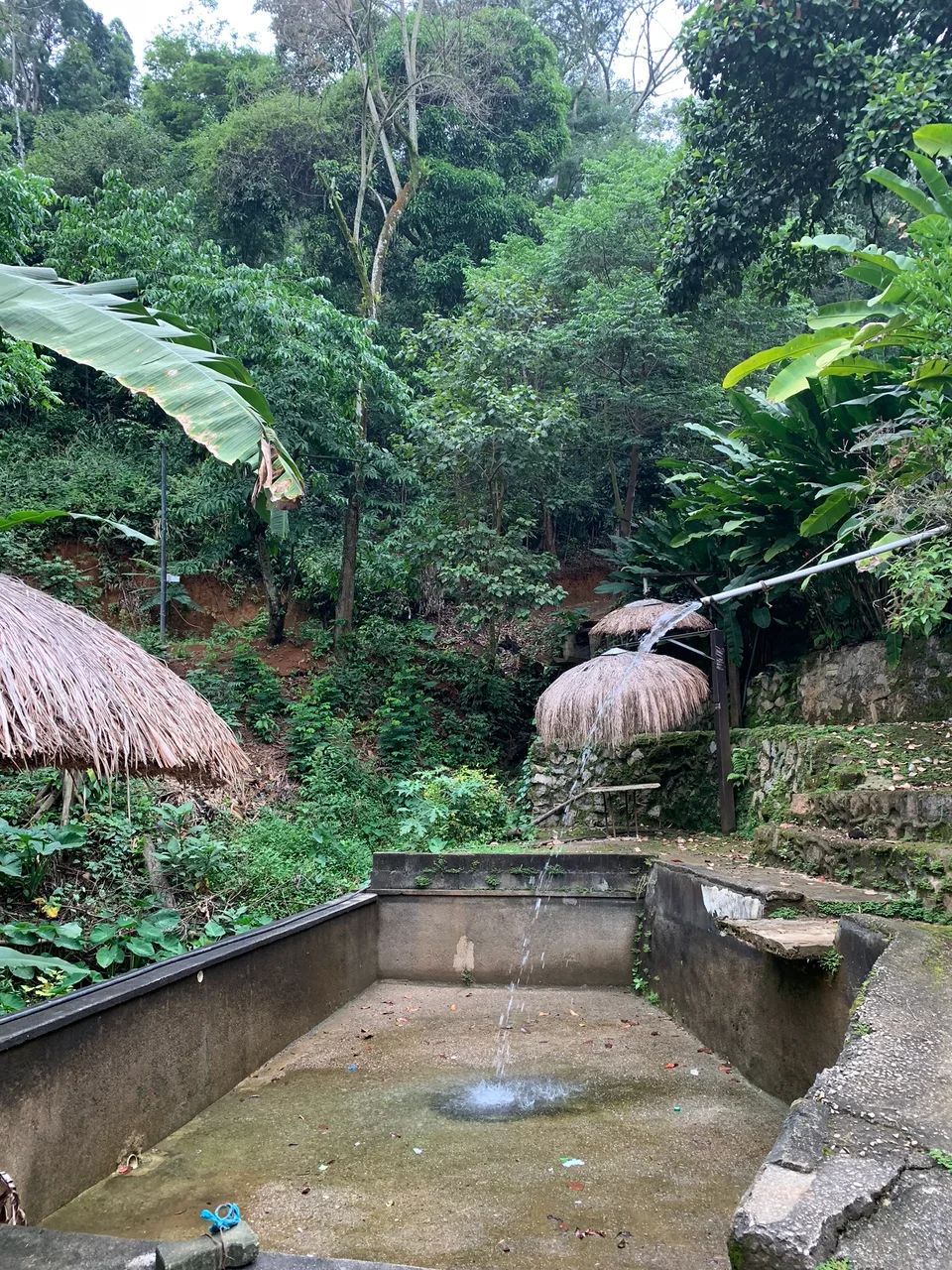
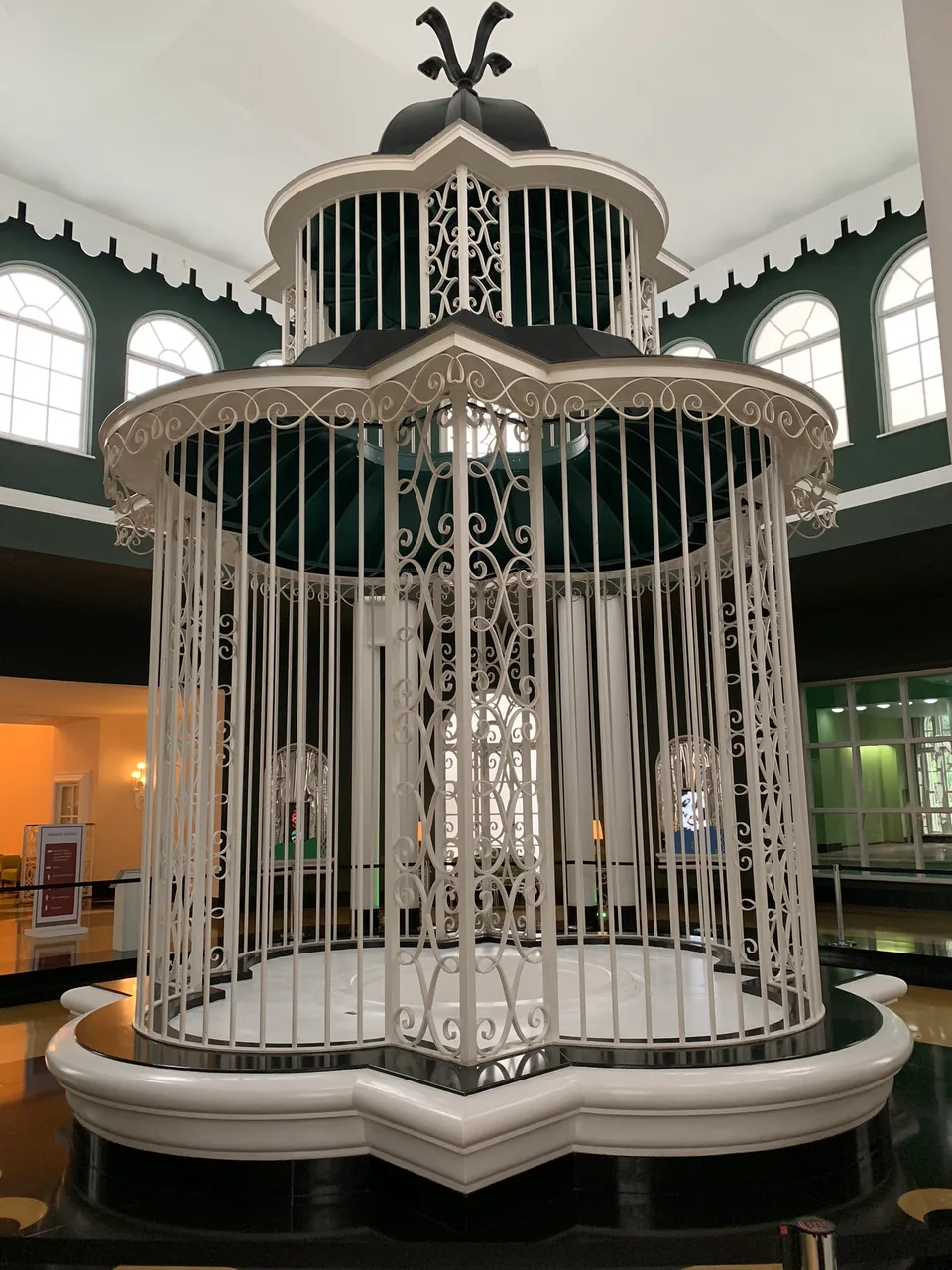
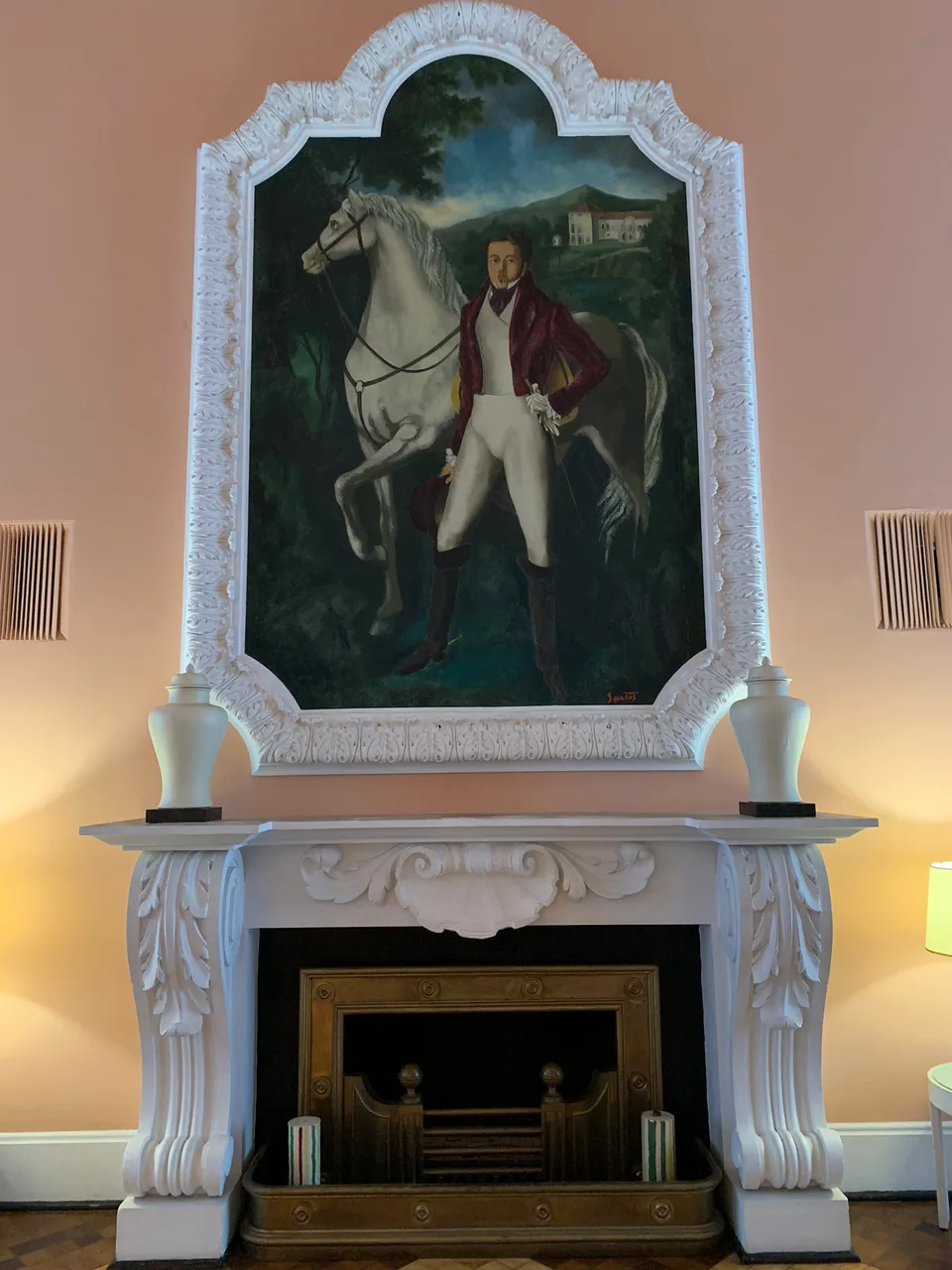
The detour grew greener.
At Cervejaria Bohemia, copper brewing equipment and rows of barrels redirected our cultural education. Petrópolis has a brewing history reaching back to the nineteenth century; the visit turned that history into things you could walk around and, in Kristin’s case, a glass you could carry while reading the display. There are less agreeable ways to absorb information.
The pleasure of the detour was the change itself. We had started beside a beach and found ourselves among mountain greenery, an old casino and a brewery. The country was becoming larger than the version we’d arrived with.
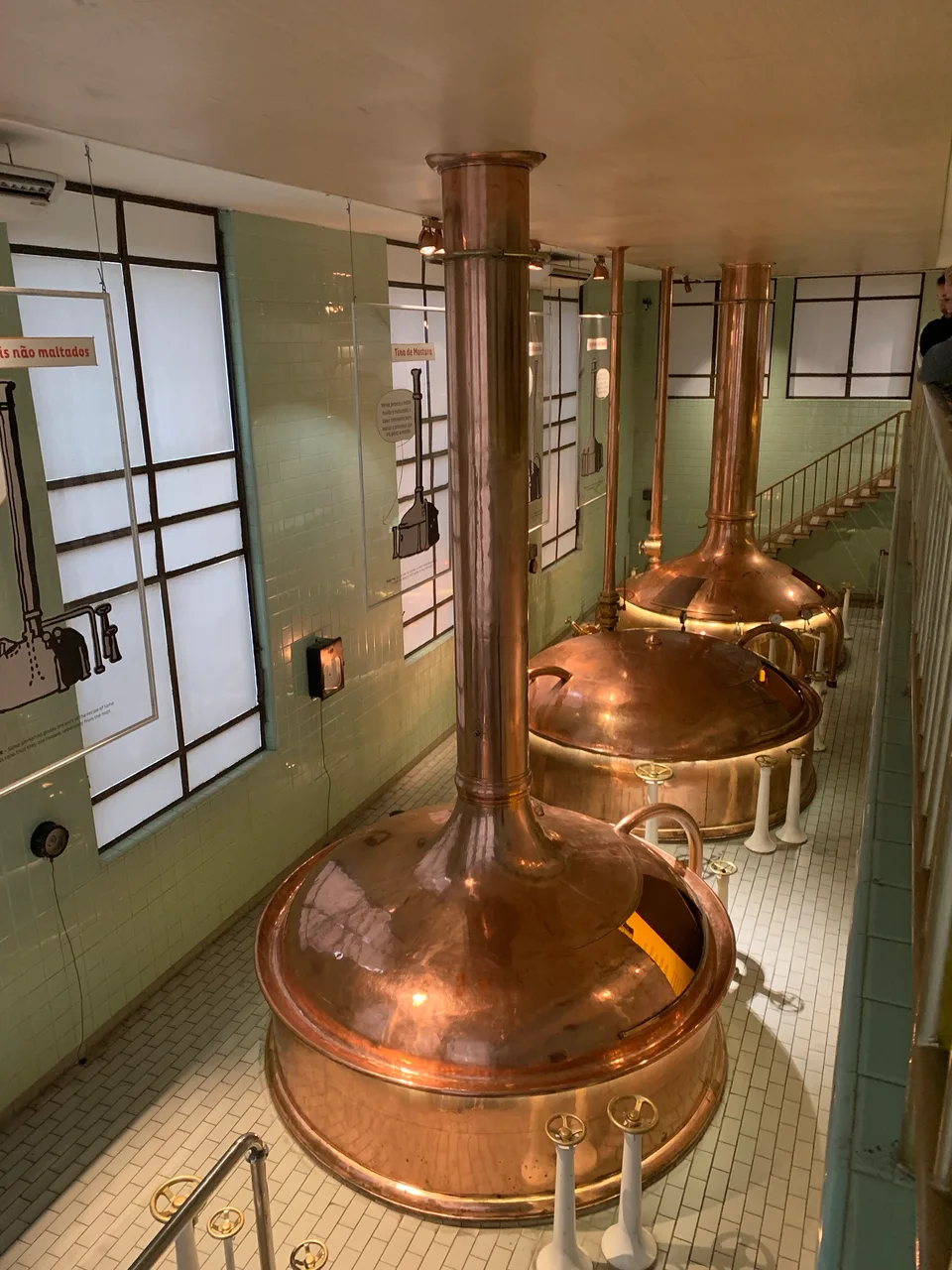
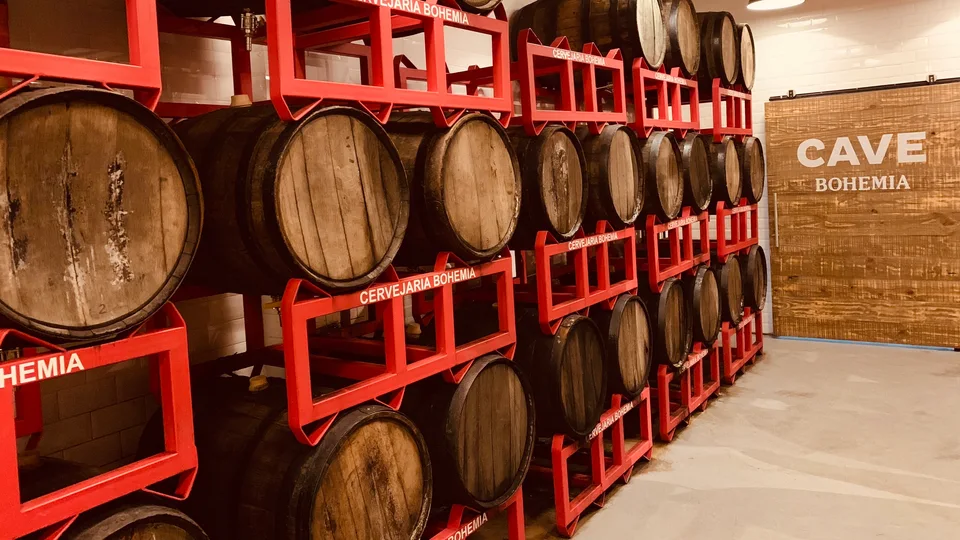
Continuing our cultural education.
Back by the coast, the light spread over the water once more. We were heading south next, to an island with fishing boats, dunes and a different idea of how to spend the day. Rio had already given us plenty to carry with us: lime on ice, a red curtain, a goal worth waiting for, the city falling away beneath a cable car.
We took another photograph of the sea. Apparently we still thought one more might settle the matter.
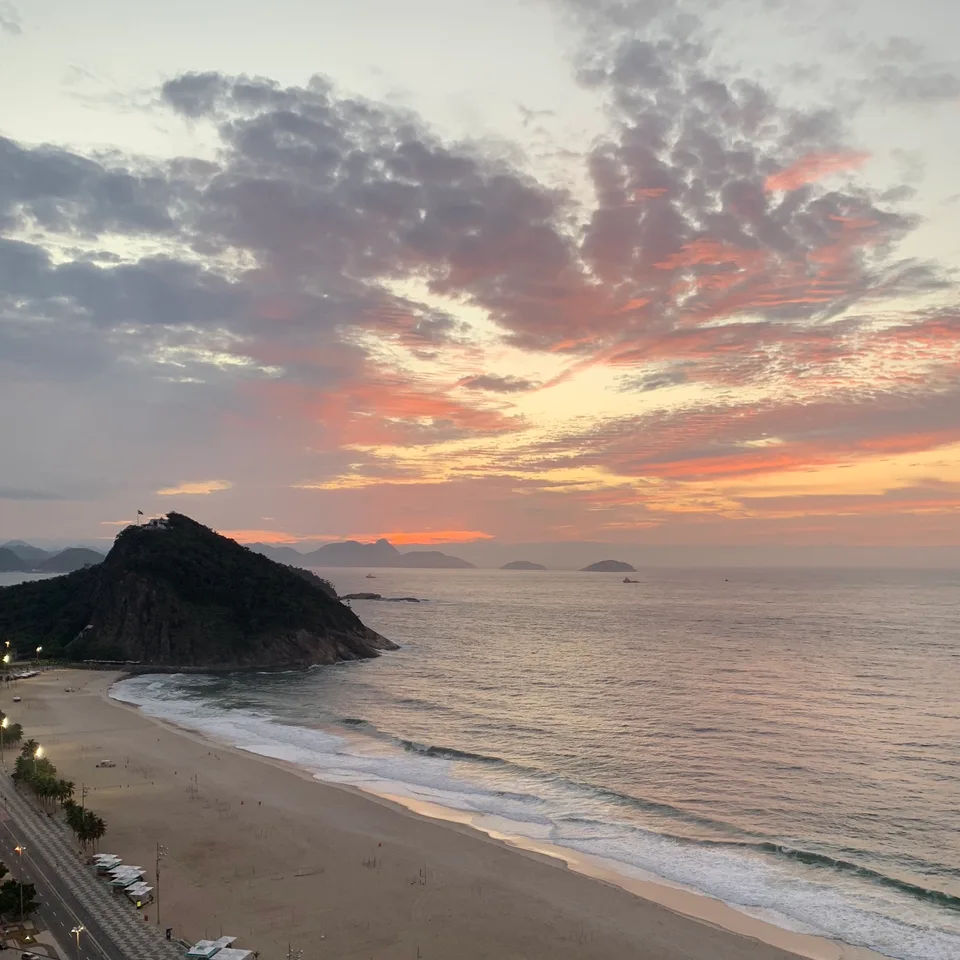
Apparently, one more photograph was necessary.
Visited 2018 · Written 2026