On a horse beside the Atlantic, the useful part of an itinerary becomes very small. Stay in the saddle. Look where you’re going. Appreciate that the animal appears to understand the arrangement better than you do.
Florianópolis was the second half of our two weeks in Brazil. Rio had sent us up mountains, into a football crowd and through evenings of music. Floripa gave us beaches, dunes, fishing boats and a stretch of coast where we could arrive on horseback beneath a gray sky. We were willing to consider this a promising change of pace.
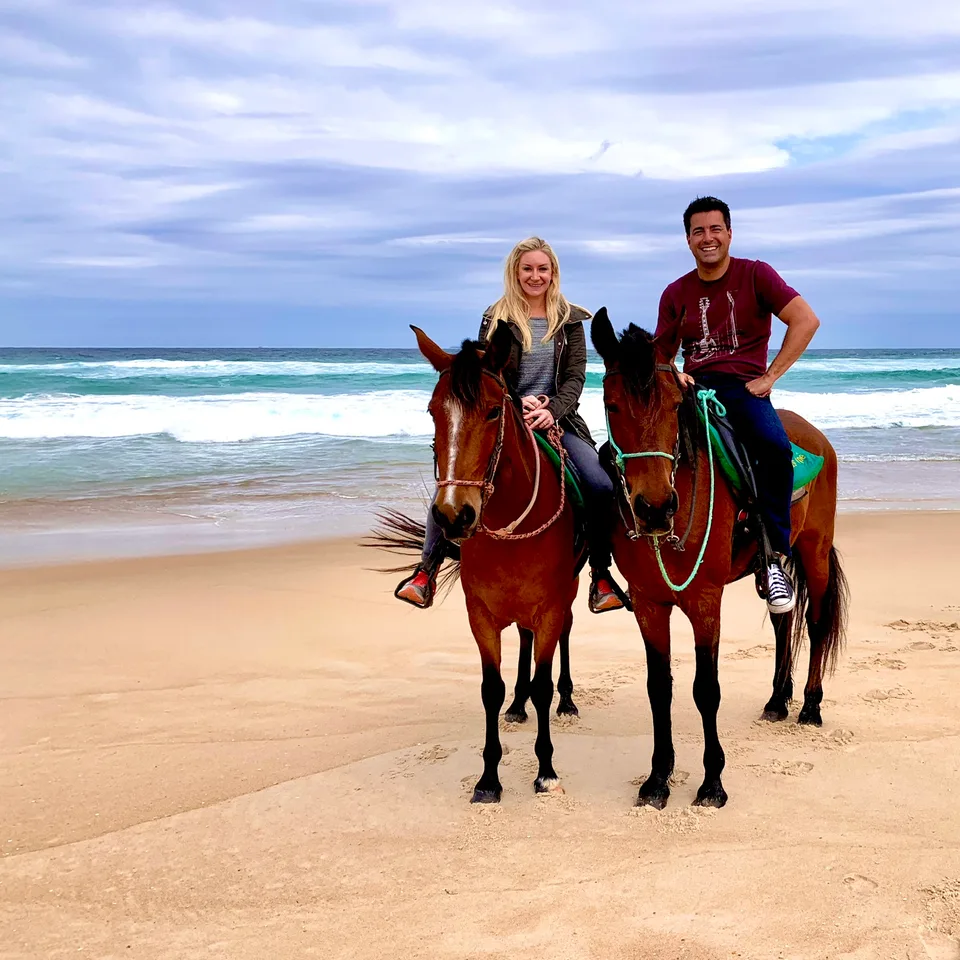
The horses understood the assignment.
Several different kinds of water
From above, the island seemed to have arranged its water in separate moods. The Atlantic broke white along the outer beaches. Lagoa da Conceição lay inland among the hills. On the sheltered western shore, boats could sit beneath a sunset without appearing to have anywhere pressing to go. Calling all of this a beach destination was accurate in the way that calling a restaurant somewhere with chairs is accurate.
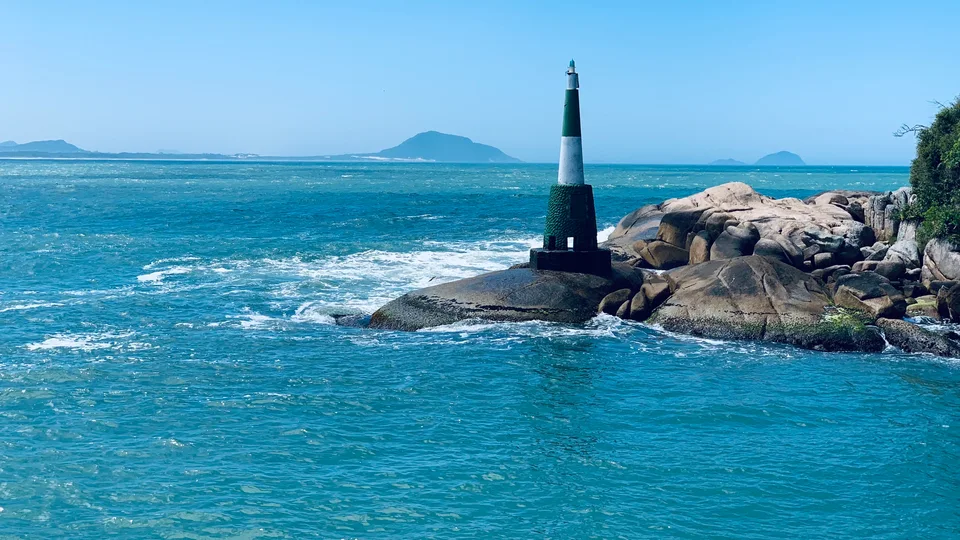
Our photographs began accumulating different blues. From a lookout, houses spread between green slopes and water. Down at the coast, large boulders interrupted the sand. Behind the beaches, pale dunes took over so completely that the next hill could have belonged to another country.
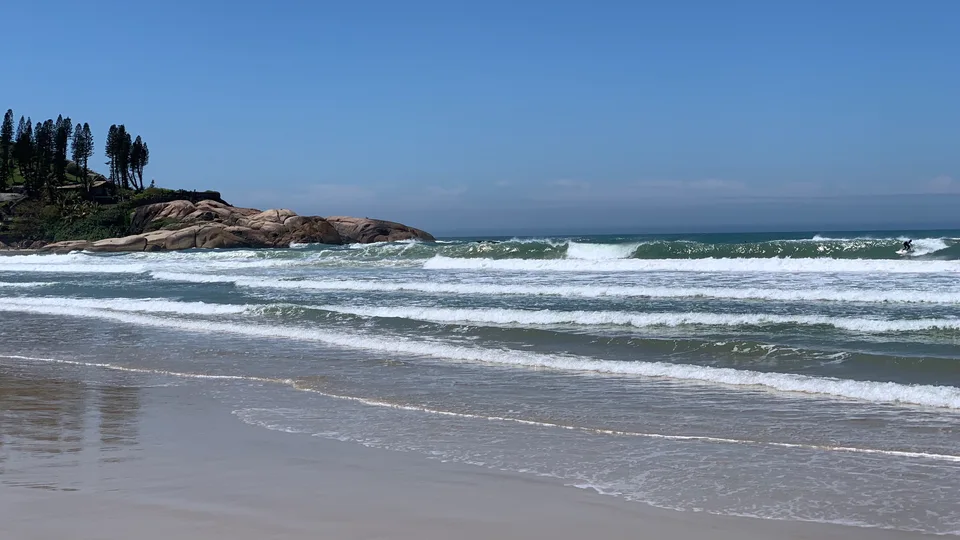
The Atlantic had the floor.
We spent our days moving between these landscapes, with plenty of stops that made more sense once we were standing there than they would have on a schedule. A little more beach. Another view. Something to drink. It was an easy rhythm to acquire, though we were careful not to strain ourselves by naming it a philosophy.
Joaquina brought the ocean close and emphatic. Waves arrived in white rows; rock formations gave the edge of the beach a solid shape against all that motion. We walked down to the sand and watched the water work. Some places encourage a long explanation. A breaking wave tends to finish it for you.
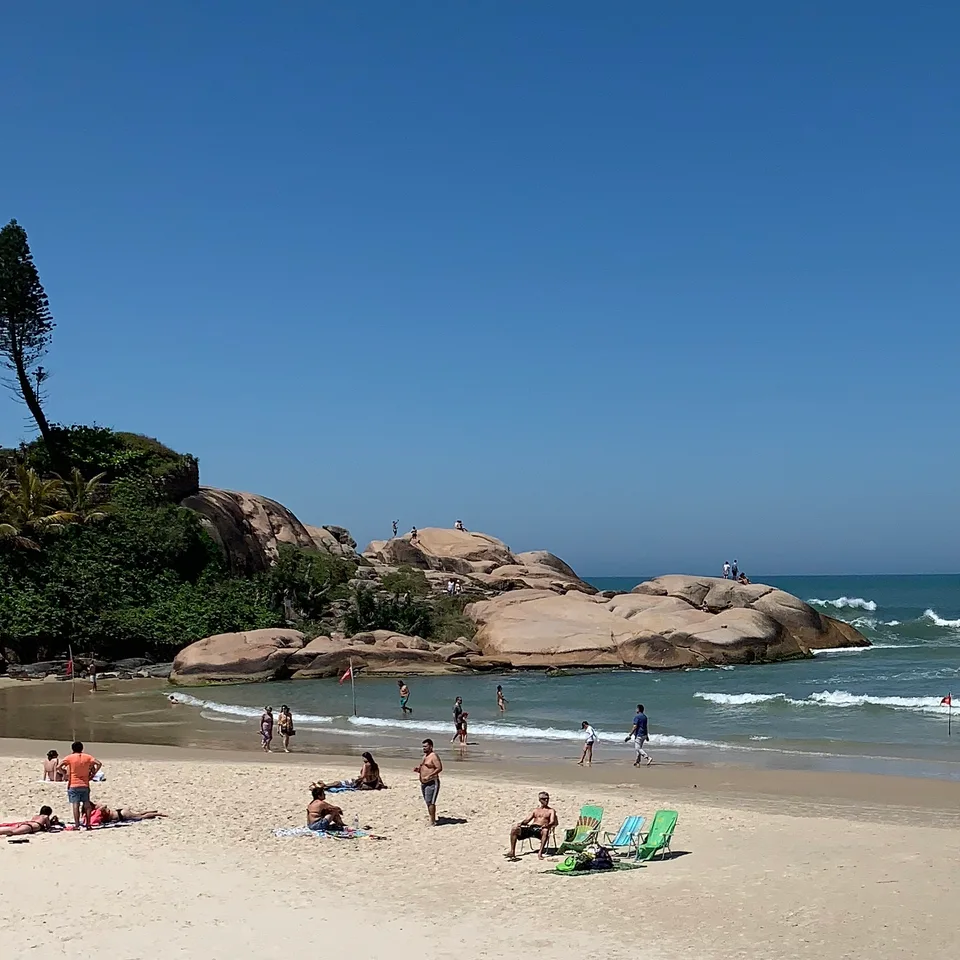
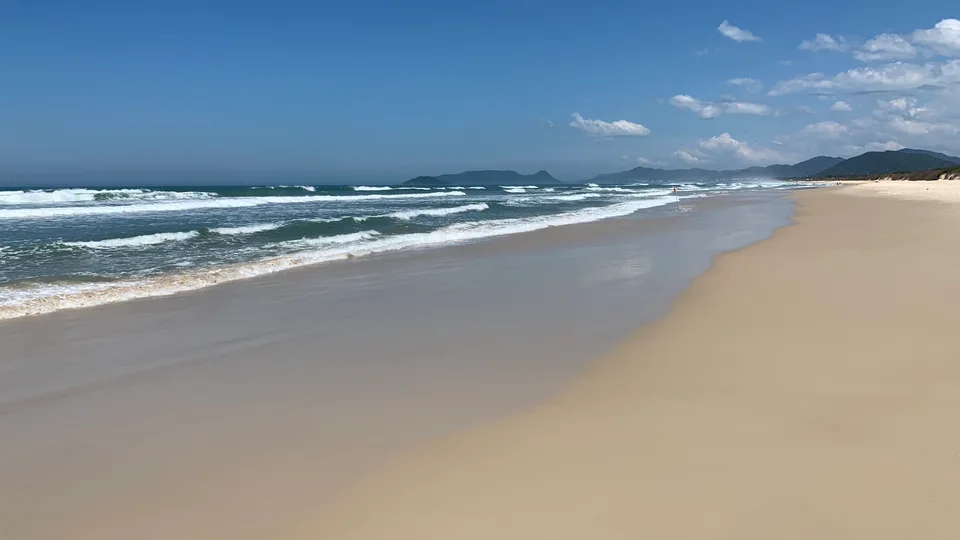
Another reason to stop.
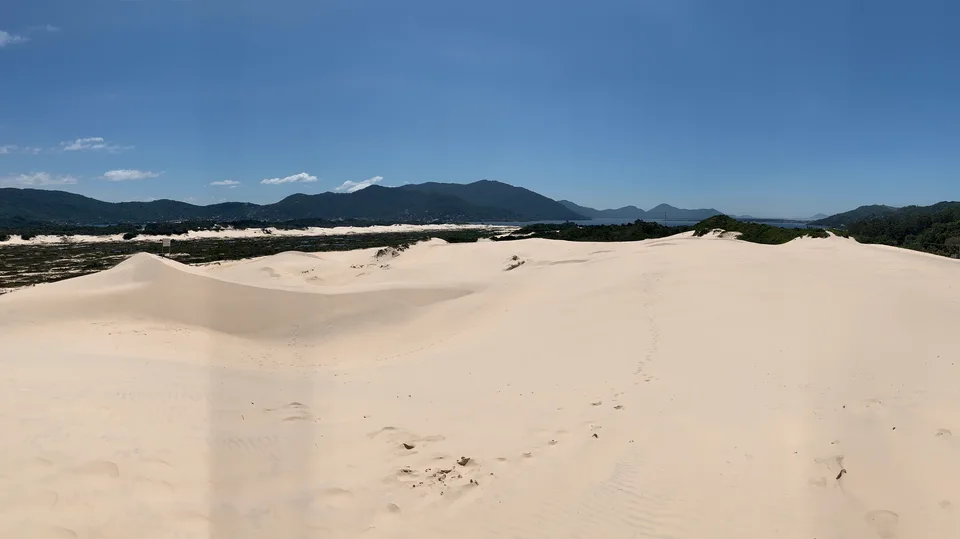
Behind the coast, the dunes changed the terms of walking. A slope that looked unremarkable from below became a small negotiation with every step. Sand shifted, shoes filled, and the top moved away at a rate that seemed personally unreasonable. Then we stood above those pale curves with the hills on the horizon, and our objections lost some of their force.
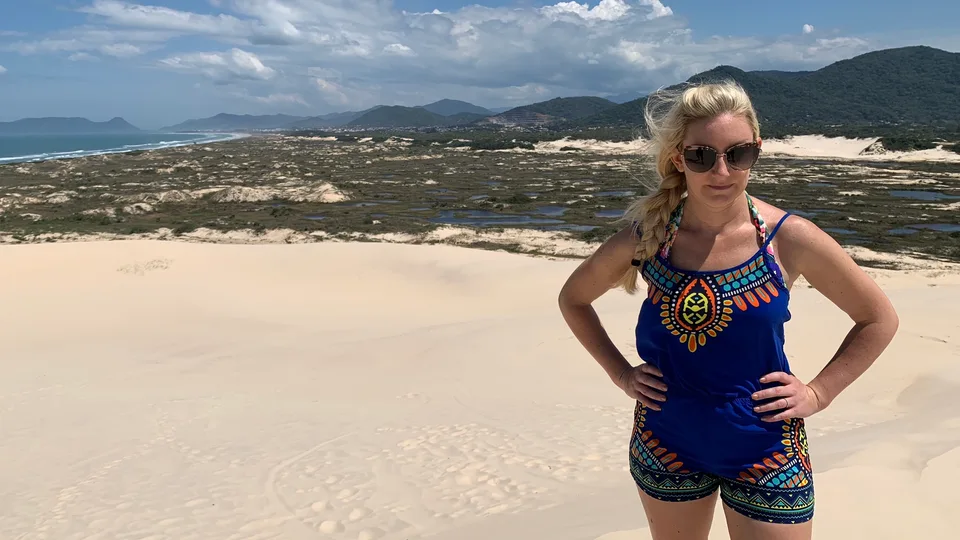
A small part of a very large surface.
There was a childish pleasure in so much open sand. We took photographs, spread our arms and occupied a very small part of an enormous surface. You can spend a surprisingly satisfying portion of a holiday finding different ways to stand somewhere good.
The dunes are part of a protected coastal landscape around Lagoa da Conceição. That matters when you see how easily the surface changes: wind, vegetation and passing feet all leave their work behind. We didn’t need a lecture to notice the fragility. The evidence was following us up the slope.
Boats at the back door
At Barra da Lagoa, the channel brought the scale back to the neighborhood. Painted fishing boats rested beside the water, houses gathered along the banks, and palms supplied shade without improving anybody’s efficiency. The scene had the practical beauty of a place where the boats belong there because people use them.
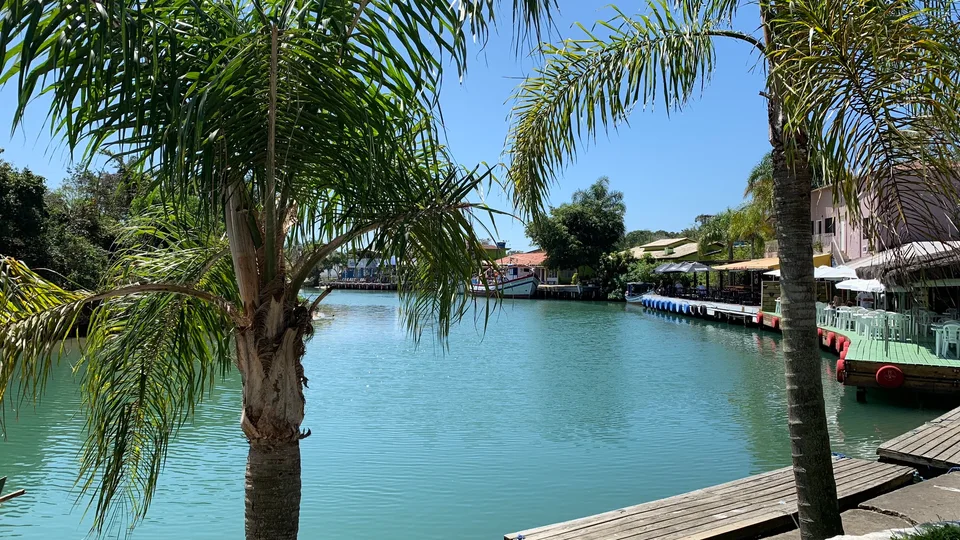
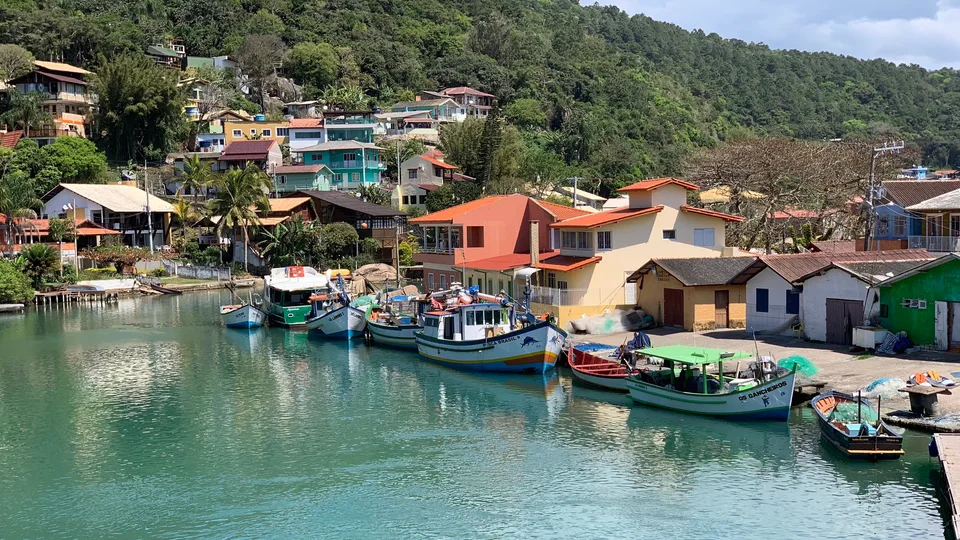
Boats at the back door.
We followed the water past hulls and mooring ropes. The channel shifted from green to blue according to the light and what lay beneath it. Near the rocks, swimmers made the distance to the opposite bank look manageable. We were content to look, then look again from a little farther along.
A table beside the channel gave us a reason to stop properly. A drink arrived in a jar, boats remained in view, and the afternoon continued without requiring much supervision. The grand activity was sitting close enough to the water to watch small things happen on it.
“The grand activity was sitting close enough to the water to watch small things happen on it.”
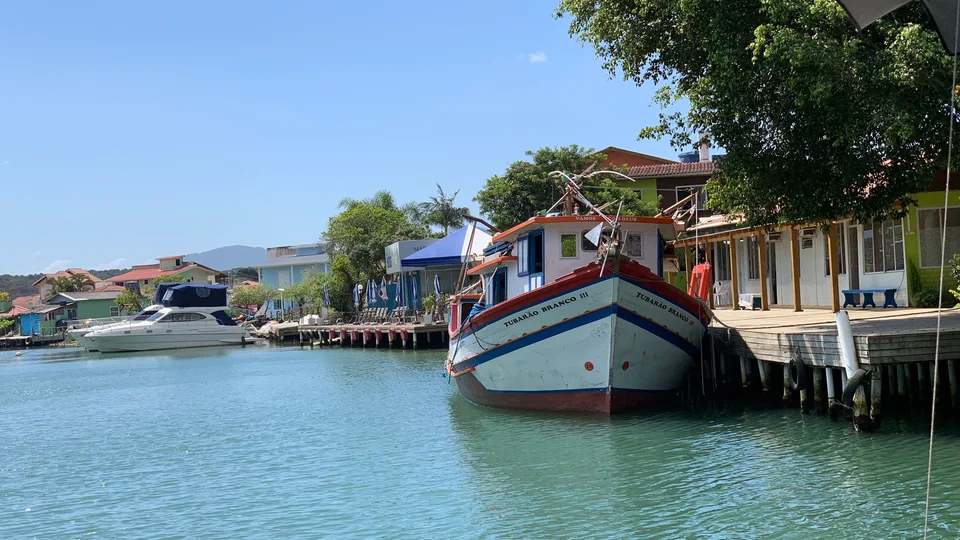
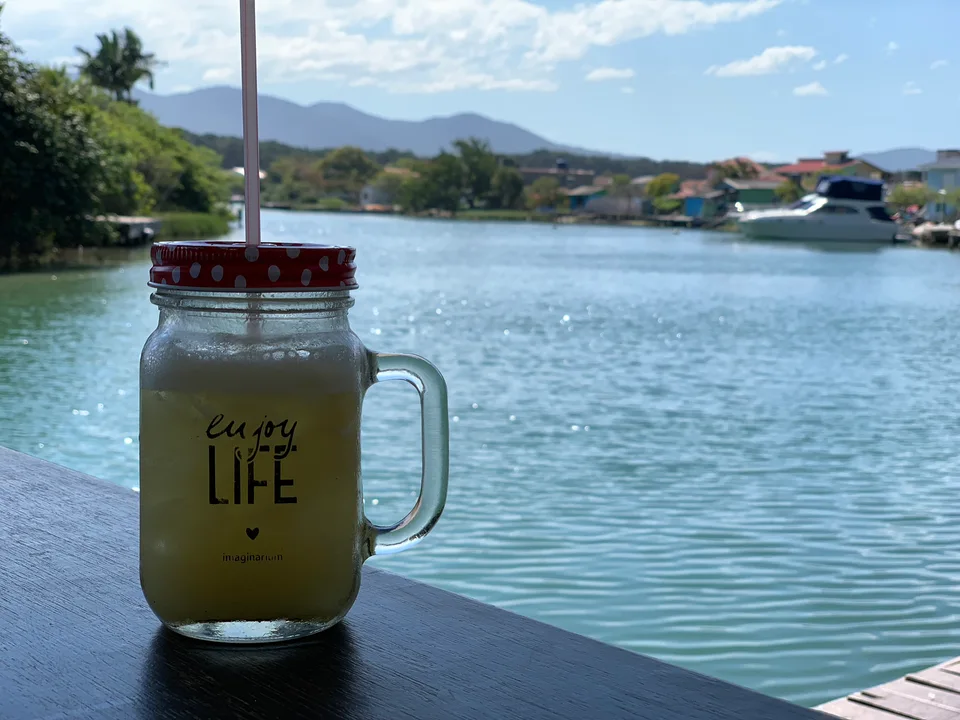
The water changed its mind about color.
This was the part of Floripa that worked on us gradually. It didn’t require a big reveal. A boat edged into a gap, light caught a painted bow, somebody walked along the bank. The island’s reputation could fill a brochure, but its ordinary arrangements were often what kept us in a chair.
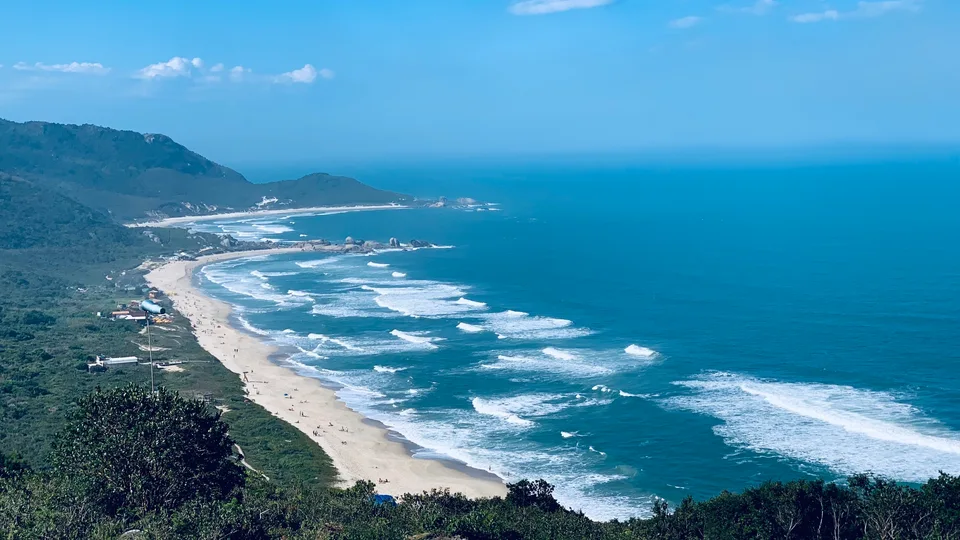
Along the eastern coast, the beaches opened out again. From a grassy lookout above Praia Mole, the shore ran away beneath us in long alternating bands of sand and foam. Farther along, smaller stretches of beach sat between rocks and vegetation. We kept finding places where the sensible response was to put the camera down for a moment.
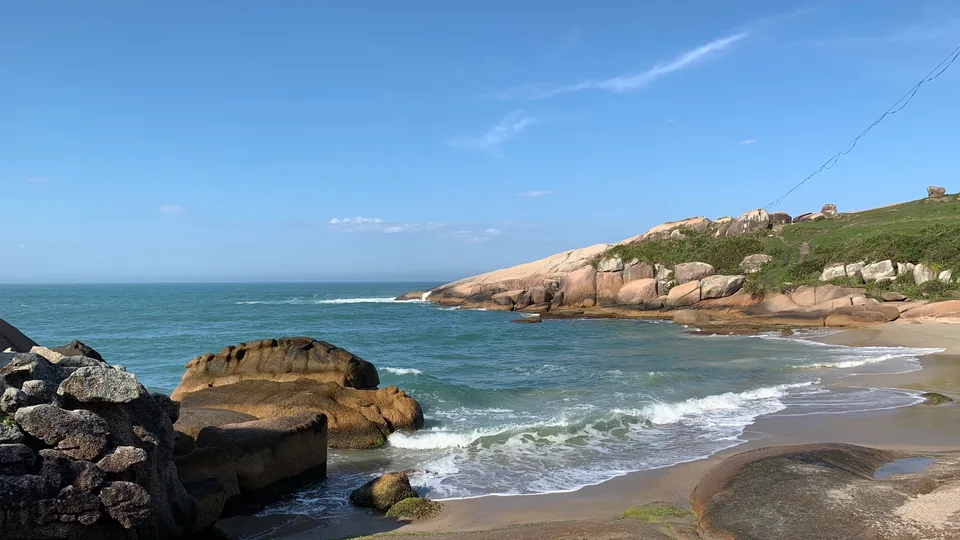
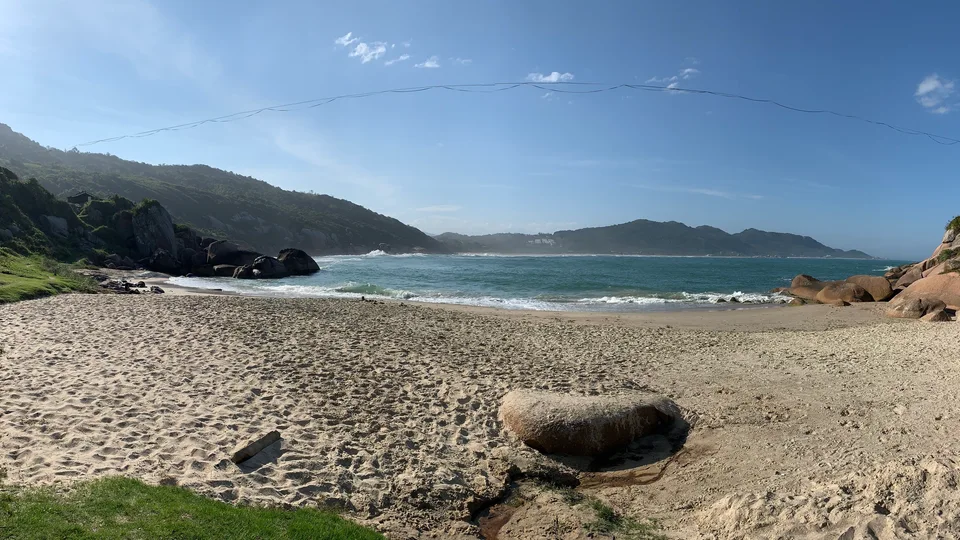
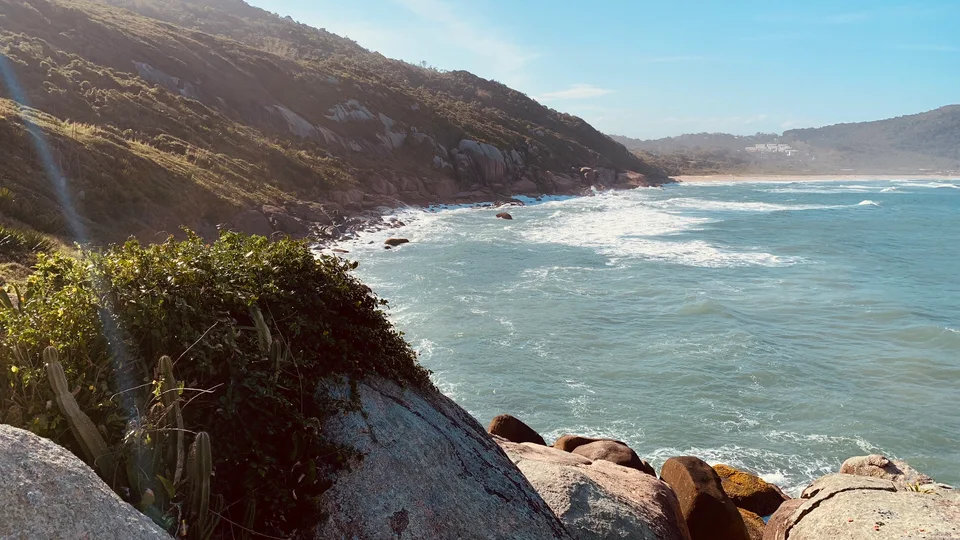
We put the camera down for a moment.
The shore that faces the evening
Santo Antônio de Lisboa changed the water once more. The western shore felt sheltered after the Atlantic beaches. Trees leaned over the waterfront, boats sat offshore, and old stone paths brought us between houses and the bay. The neighborhood’s Portuguese and Azorean heritage was visible without anybody needing to turn the afternoon into a history lesson.
The eighteenth-century arrival of Azorean settlers helped shape this part of the island, alongside the lives and work of the people already here and those who came later. The result survives in buildings, fishing traditions and food. It was more interesting to notice those connections in use than to treat them as a decorative period style.
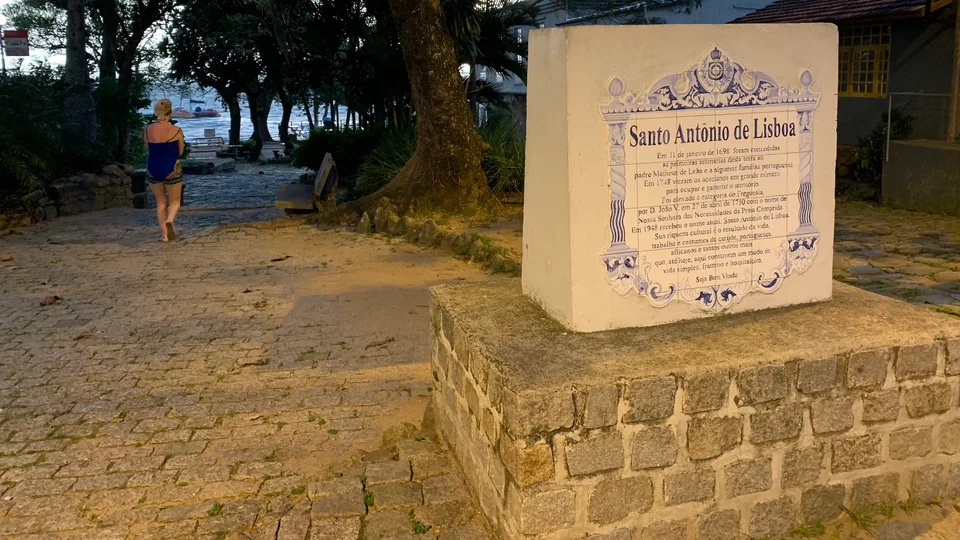
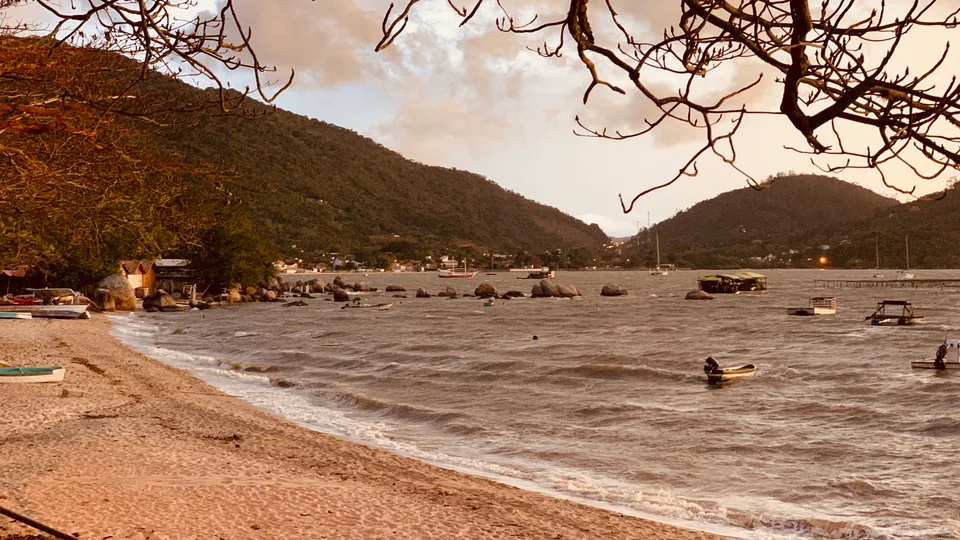
History on the way to the water.
At dusk, masts made thin marks against the light. The water moved gently enough to break their reflections without erasing them. We stayed while the color shifted, enjoying the rare feeling that the most useful thing we could contribute to an evening was our attention.
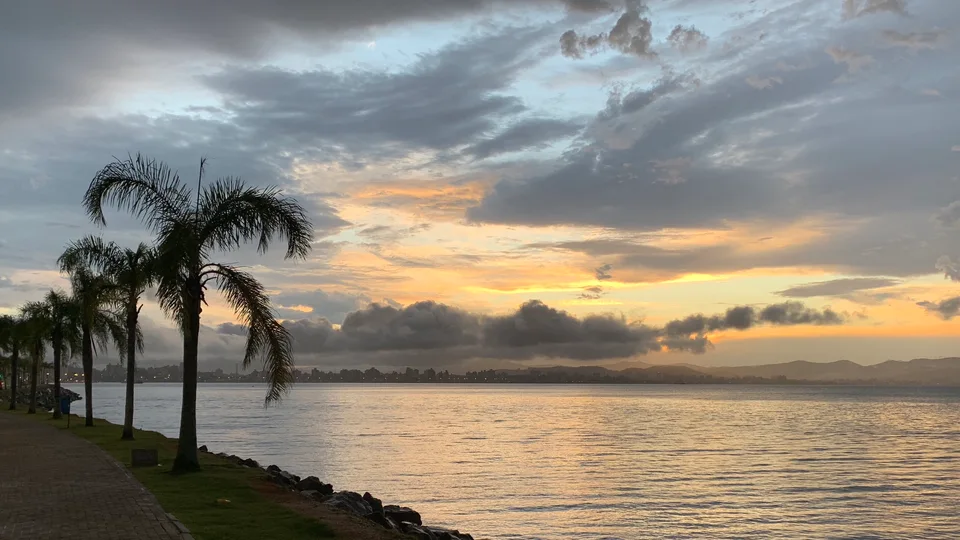
Attention was a sufficient contribution.
Meals gave the island another way to distinguish itself. Seafood appeared often, sometimes elaborately arranged, sometimes with the reassuring directness of a plate that expected to be eaten rather than discussed. Grilled skewers and larger shared dishes made sitting down together feel like a perfectly sufficient plan.
We also found the rhythm of a long table: plates, people, another serving, the meal expanding until it was no longer clear which conversation had begun where. These were the days that kept the trip from becoming a procession of views. A place becomes less abstract when you spend some of your time looking across a table instead of out at a horizon.
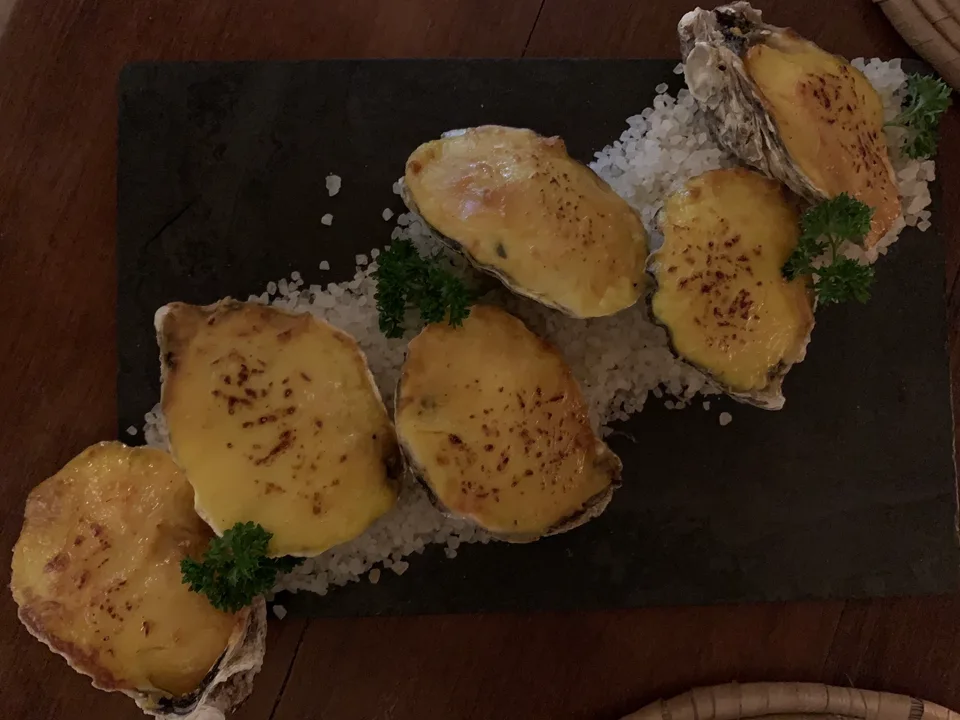
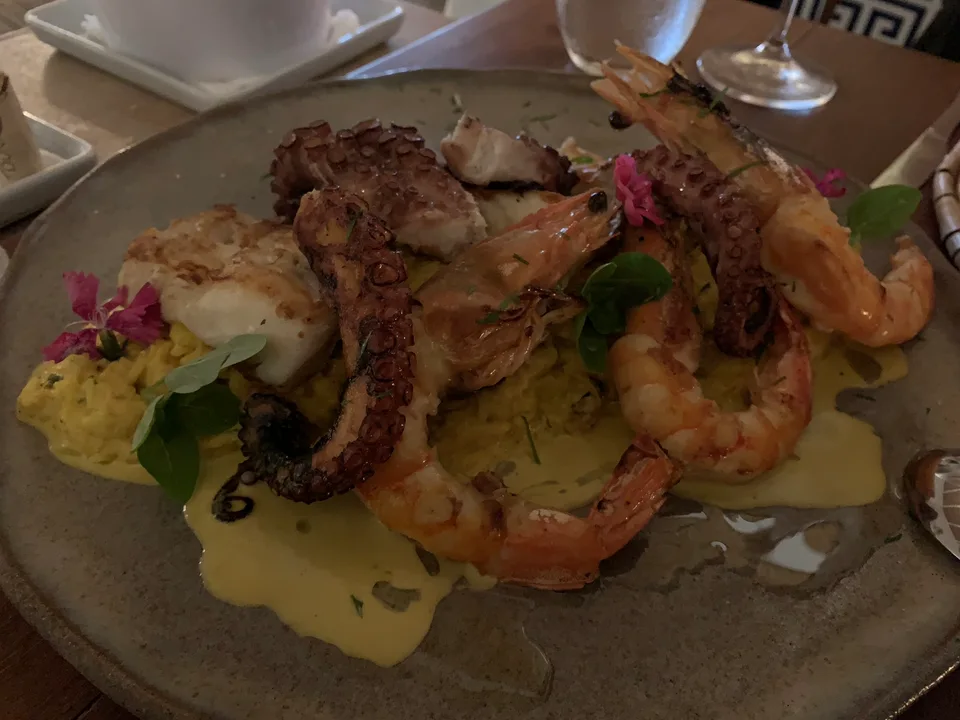
The island had other ways to persuade us.
A city inside the island
Floripa also had streets to walk. The view from Morro da Cruz brought the buildings, bridges and mainland into one frame, a useful correction to the idea that we had spent a week outside urban life. The beaches could make the city easy to forget. From up there, it looked capable of carrying on without our attention.
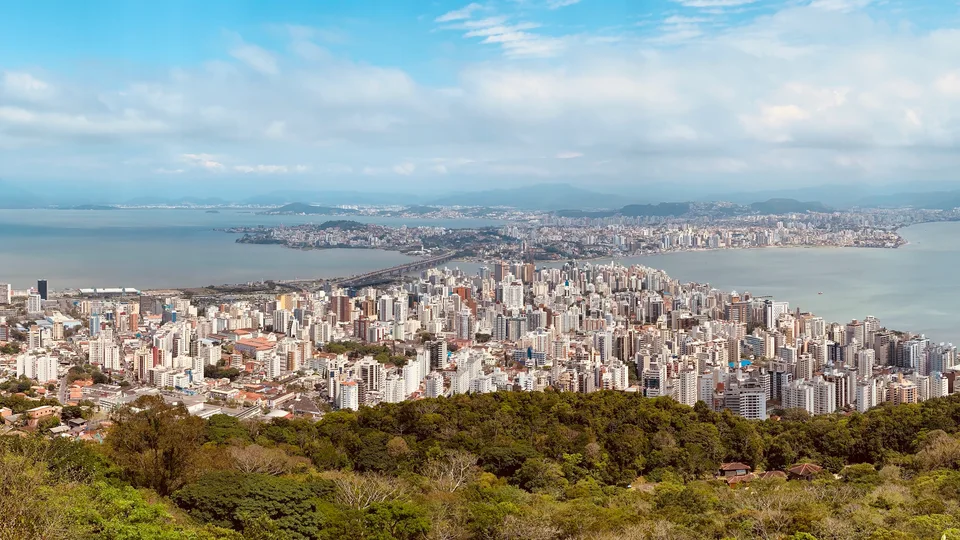
There was a city in here too.
Around the Mercado Público and the historic center, the details pulled us back down. Fruit filled the displays in bright piles. A yellow façade framed a doorway. People gathered around tables and stalls with a purpose rather more immediate than sightseeing. We looked around, stopped for something to eat and continued at the speed the street allowed.
The pink Palácio Cruz e Sousa made a more formal impression, its ornament facing the daily movement around it. Nearby, ordinary shopfronts and market goods kept the city from settling into the role of an architectural display. There was plenty to look at, but most of it had another job.
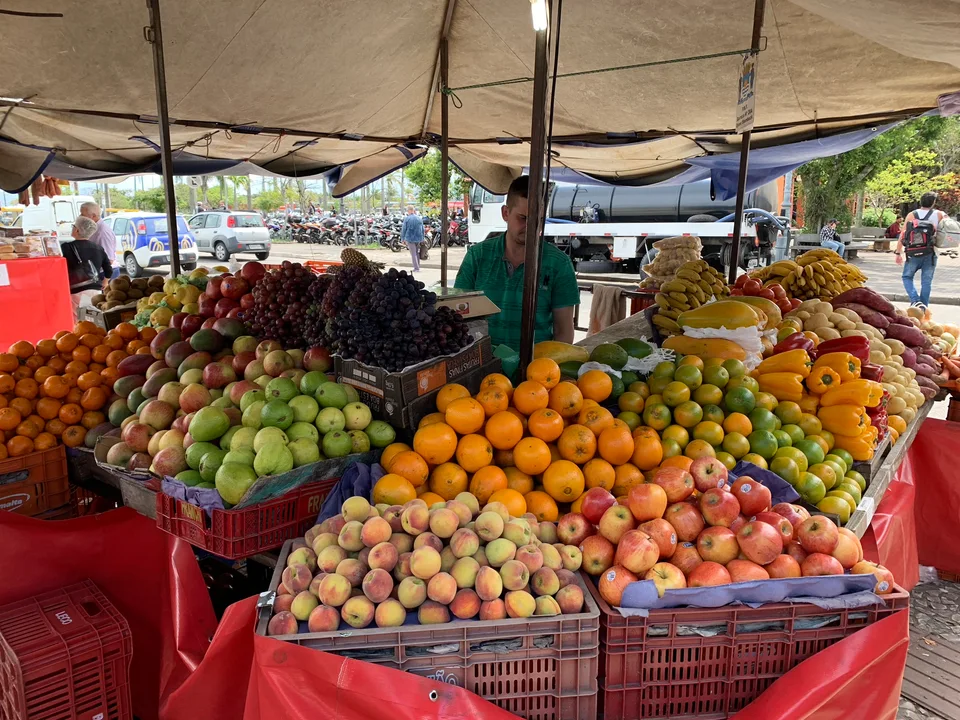
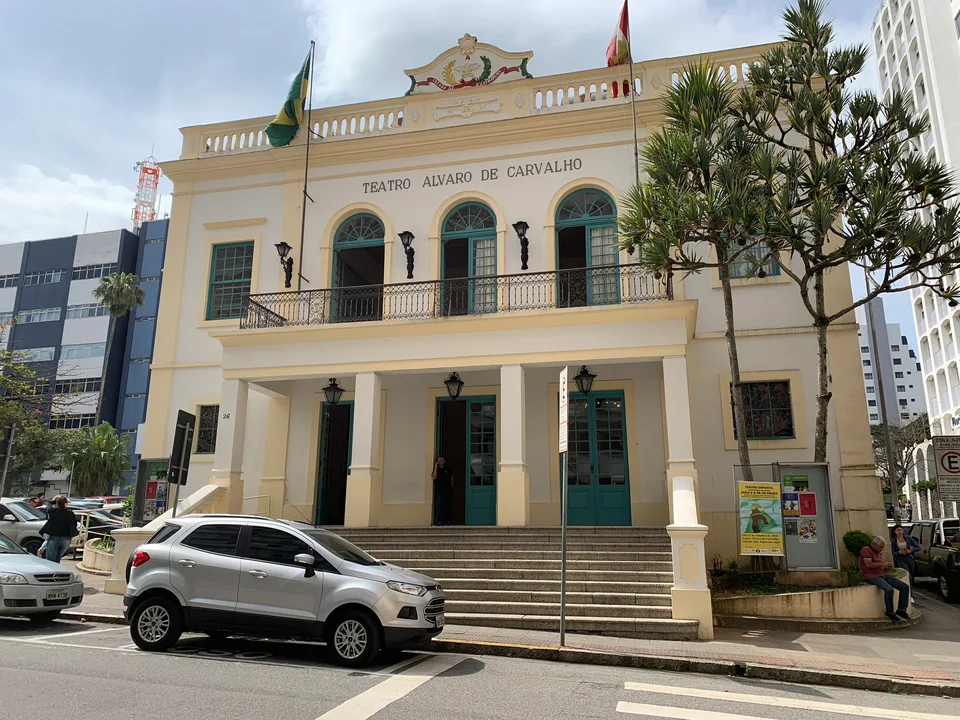
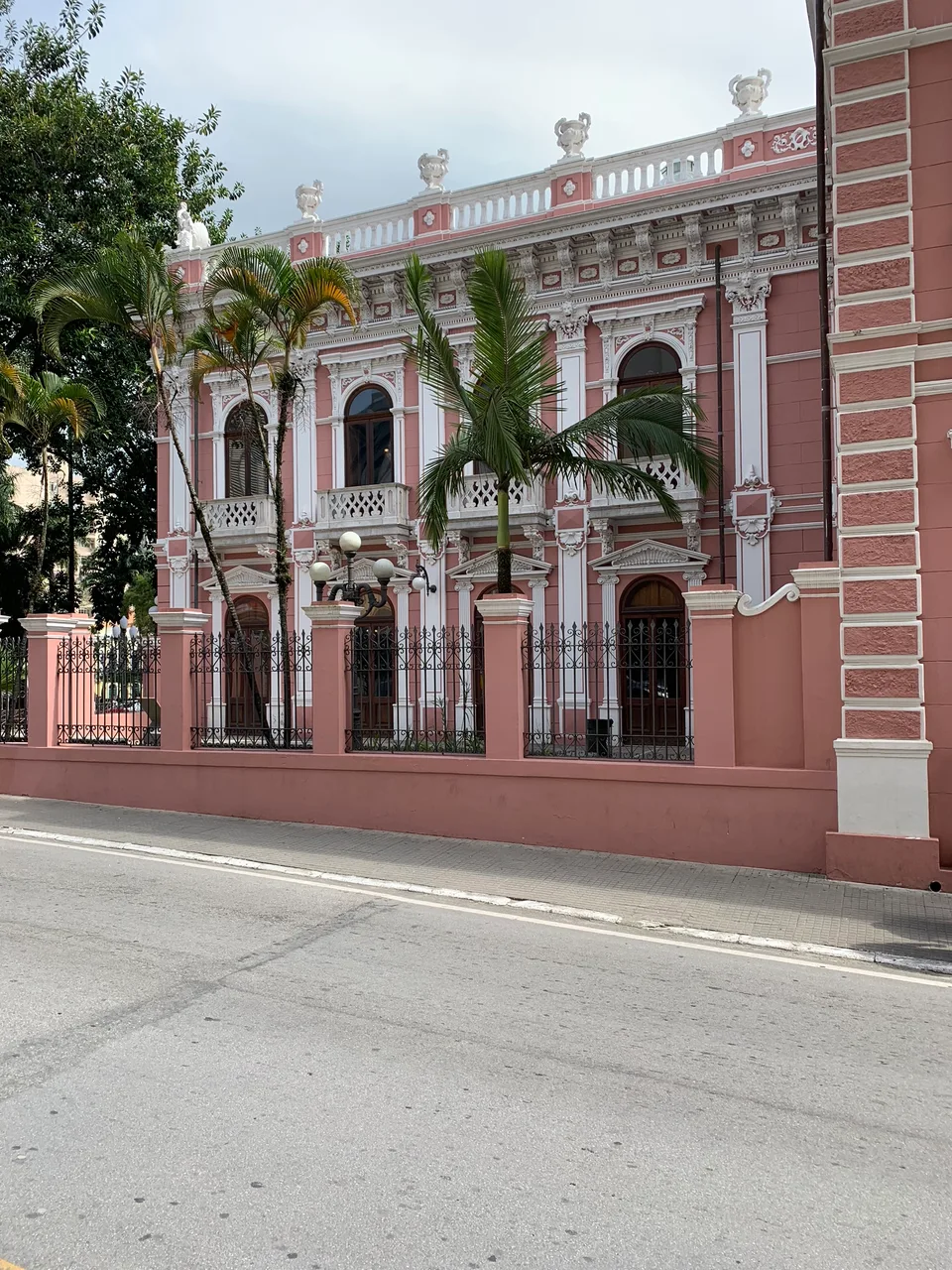
The city had another job.
The Hercílio Luz Bridge stood out across the water. Opened in 1926, it had become as much an image of the city as a means of crossing to it. During our visit, work was still going on around the structure; its reopening came later. We admired it from the island side, where the steelwork looked both delicate and far too complicated to be anybody’s casual undertaking.
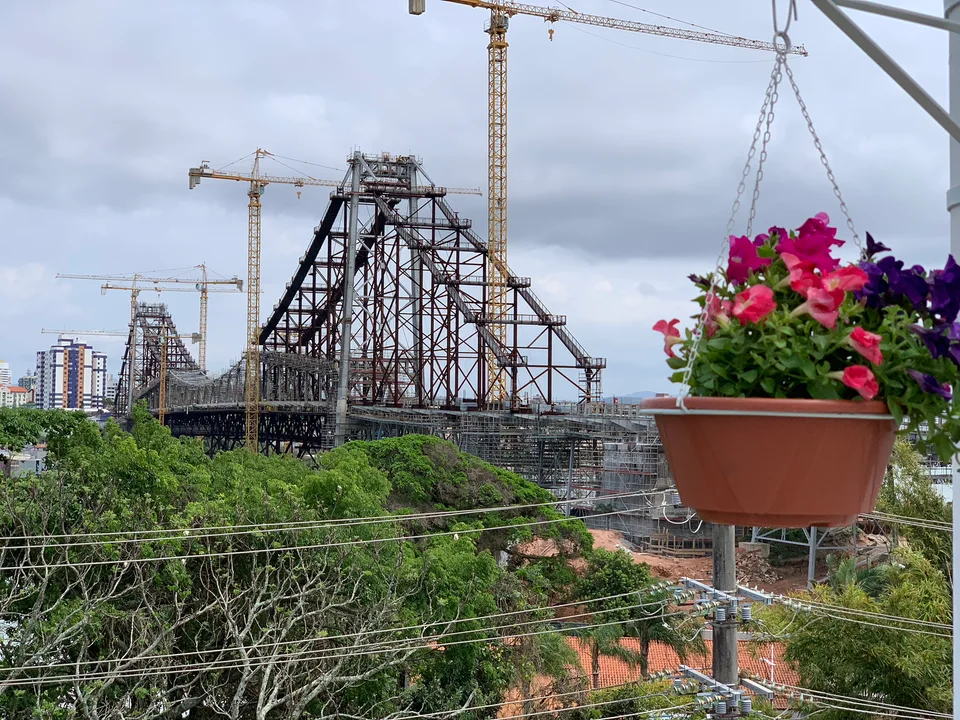
Some things deserved their time.
The old defenses at São José da Ponta Grossa offered an earlier answer to the question of what an island needs. Stone walls followed the slope toward the sea. Cannons pointed across water that now looked very good for an afternoon out. Work on the fortress began in 1740, when the Portuguese authorities were concerned with controlling access to the bay rather than improving the visitor experience.
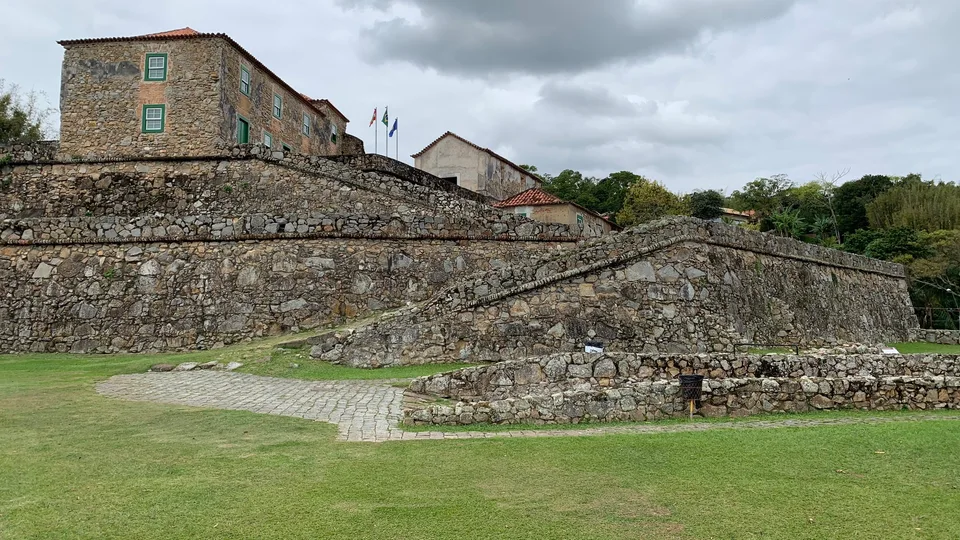
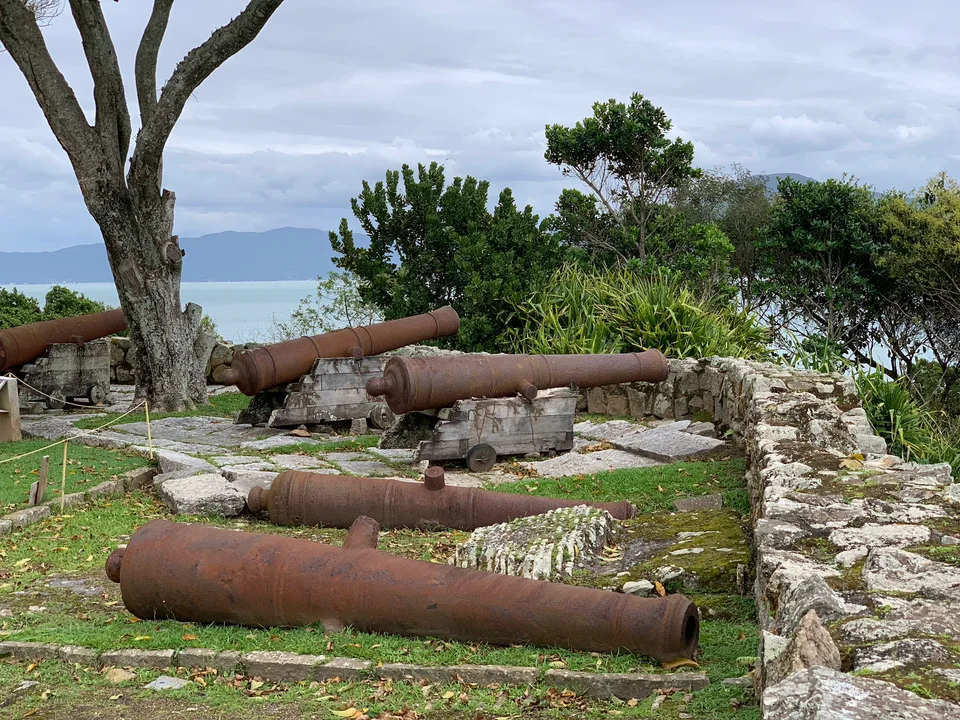
The original brief involved fewer visitors.
We walked through the grounds beneath a cloudy sky, past trees and low buildings. In the chapel, the timber roof and modest altar supplied a quieter space. The setting made the fort easy to enjoy; the gun barrels were a useful reminder that enjoying the setting had not been its original purpose.
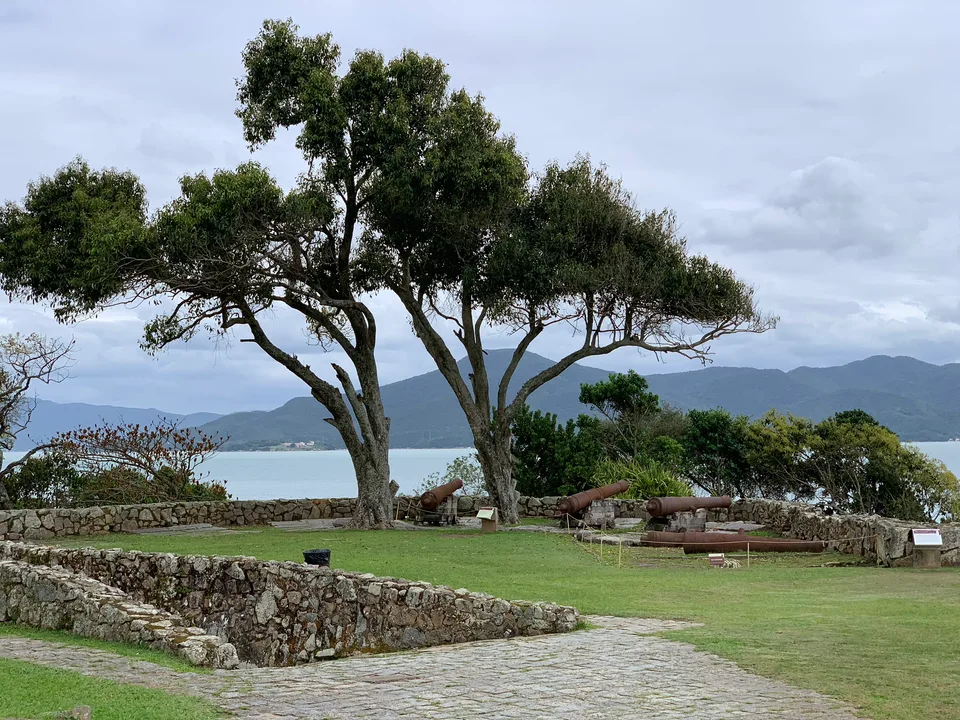
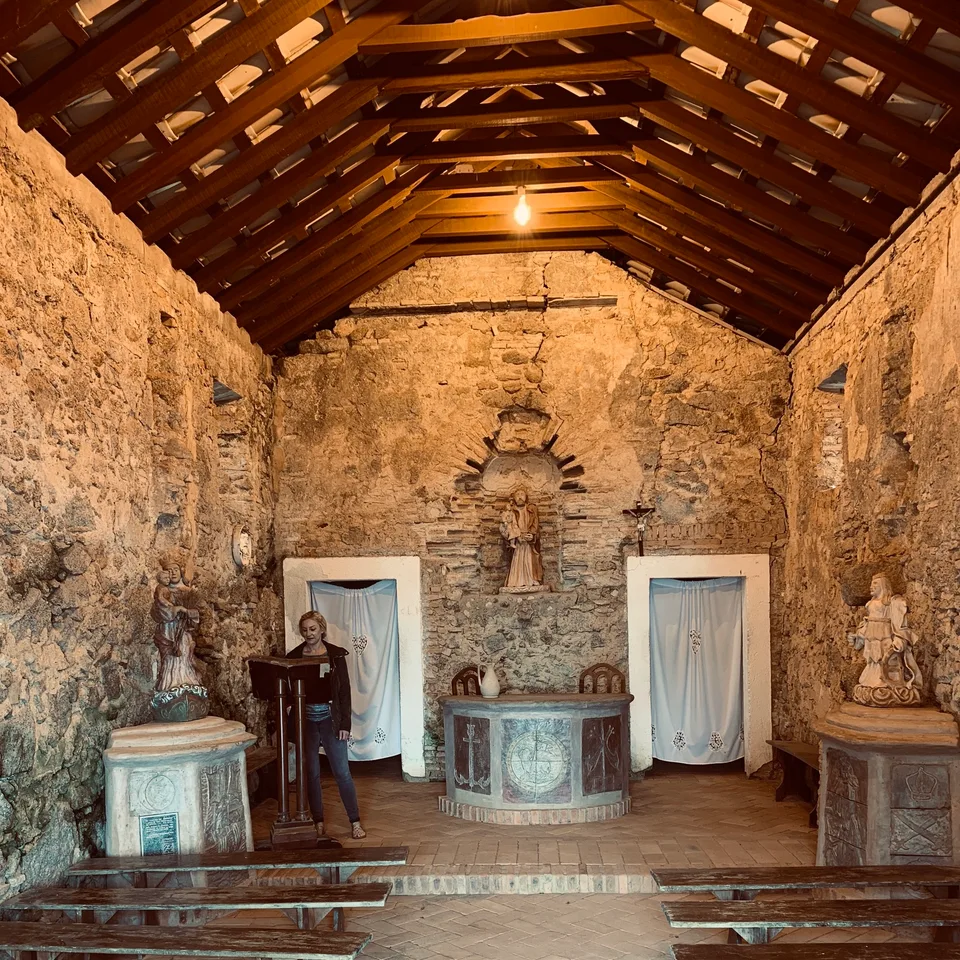
The setting softened the defenses.
Let the horse decide the pace
At Haras Ypê, wooden walls, tiled roofs and waiting horses announced a different sort of outing. The ride took us through trees and sandy tracks toward the ocean at Moçambique. From the saddle, we watched the path over the horse’s ears, which is a good way to discover how little of the day’s navigation you are actually contributing.
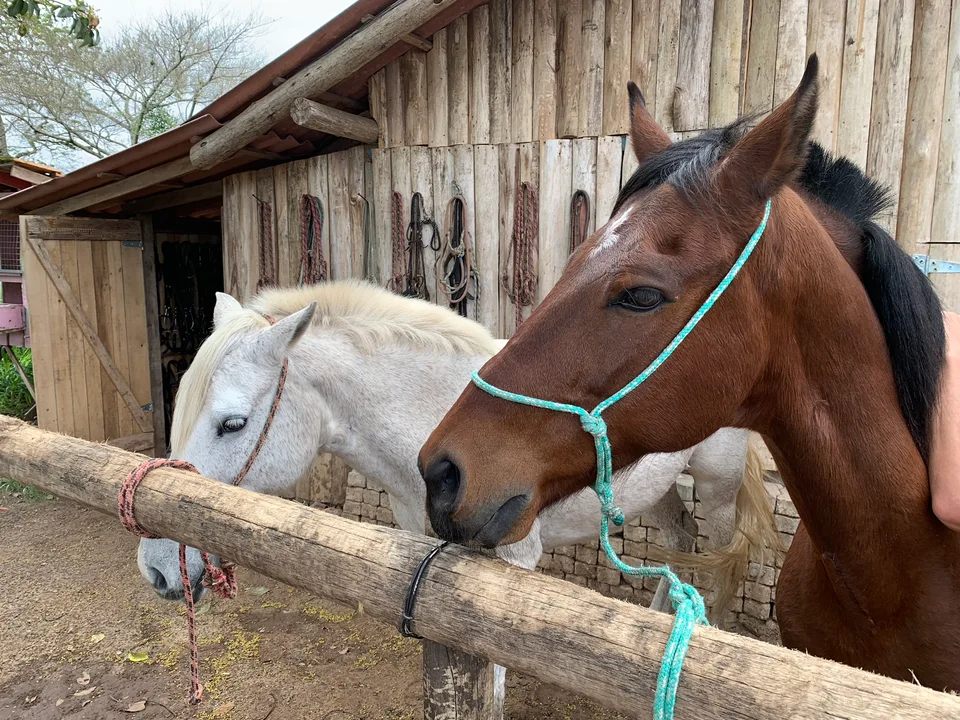
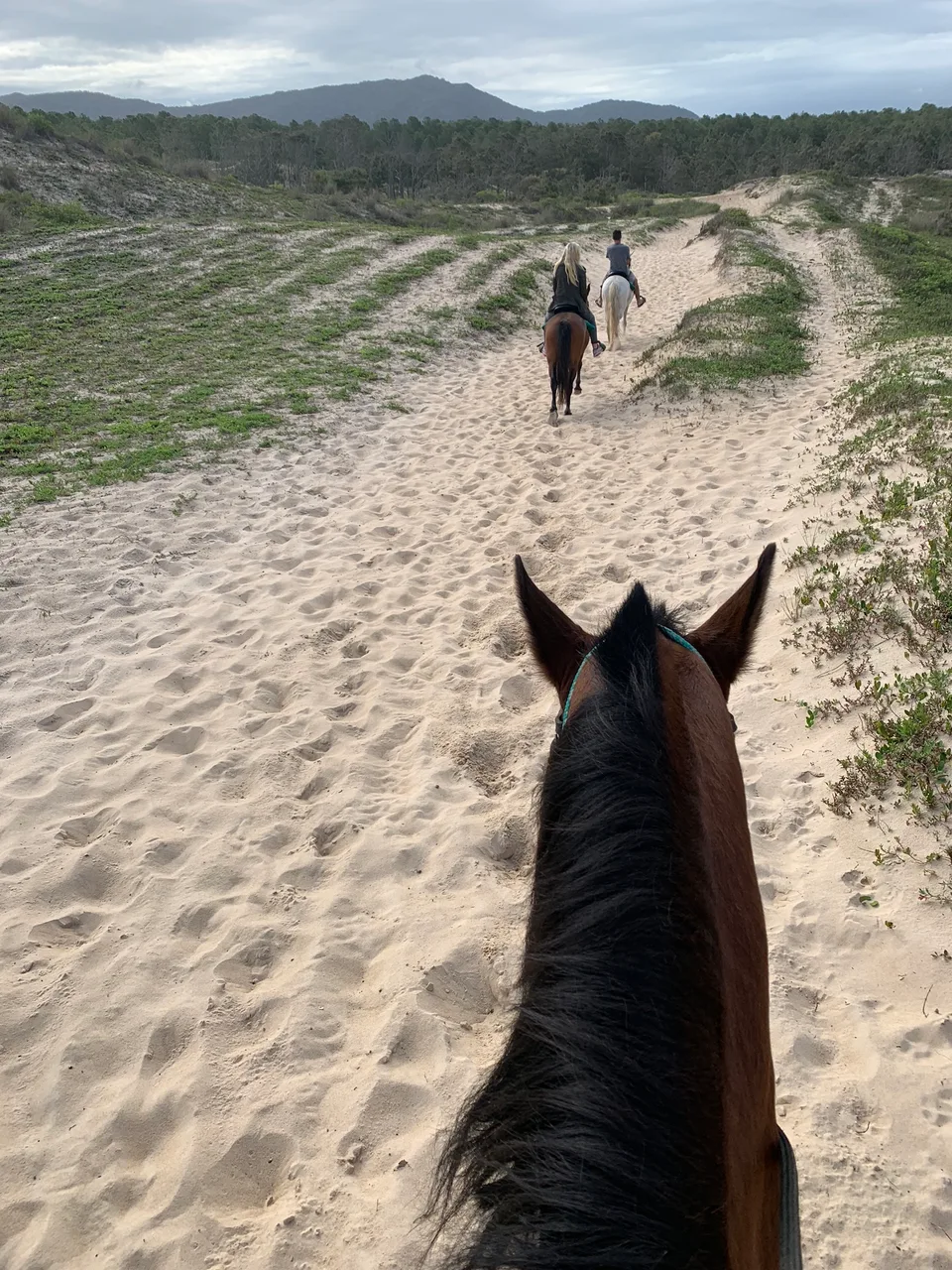
The experienced members of the party.
On the beach, the Atlantic was gray-blue and busy. We rode beside it, took photographs together and let the space around us do the work. After so many views from lookouts, there was pleasure in moving through a landscape slowly, with the ground passing underneath and no need to frame the whole thing at once.
The weather helped. Clouds gave the sand and sea a shared, muted light. Nothing needed to be brighter. Even our photographs of the ride looked less like evidence that we had reached an attraction and more like a stretch of time we would happily have stayed inside.
Toward the end of the visit, Ribeirão da Ilha supplied another long table beside the water. At Ostradamus, the shoreline and the meal were closely related subjects. Floripa’s bays support a well-established oyster-farming culture; here, the connection arrived at the table in shells.
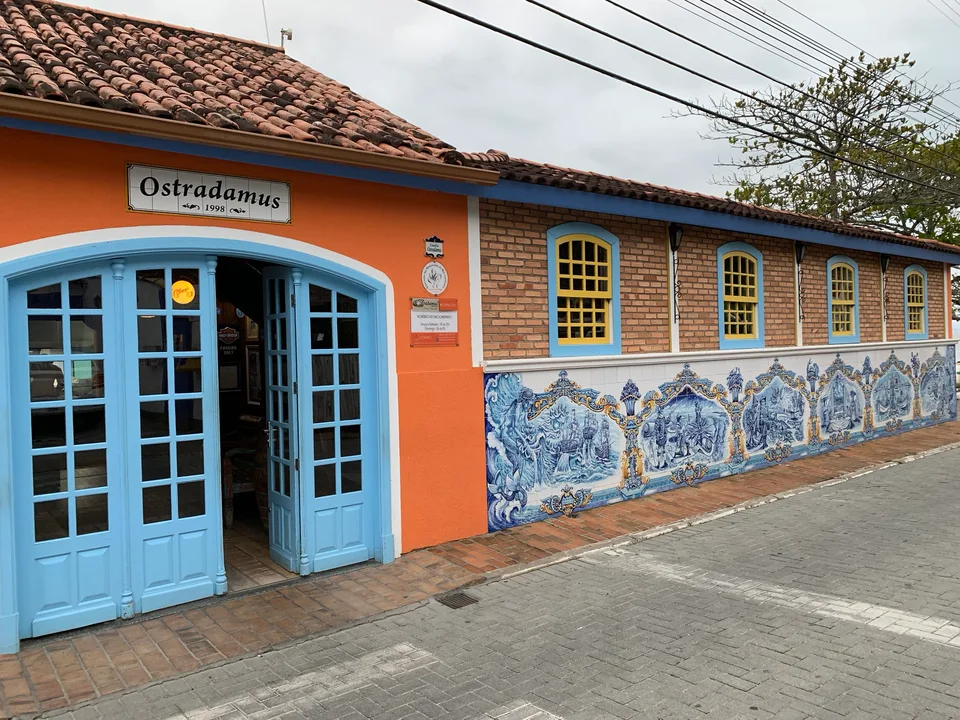
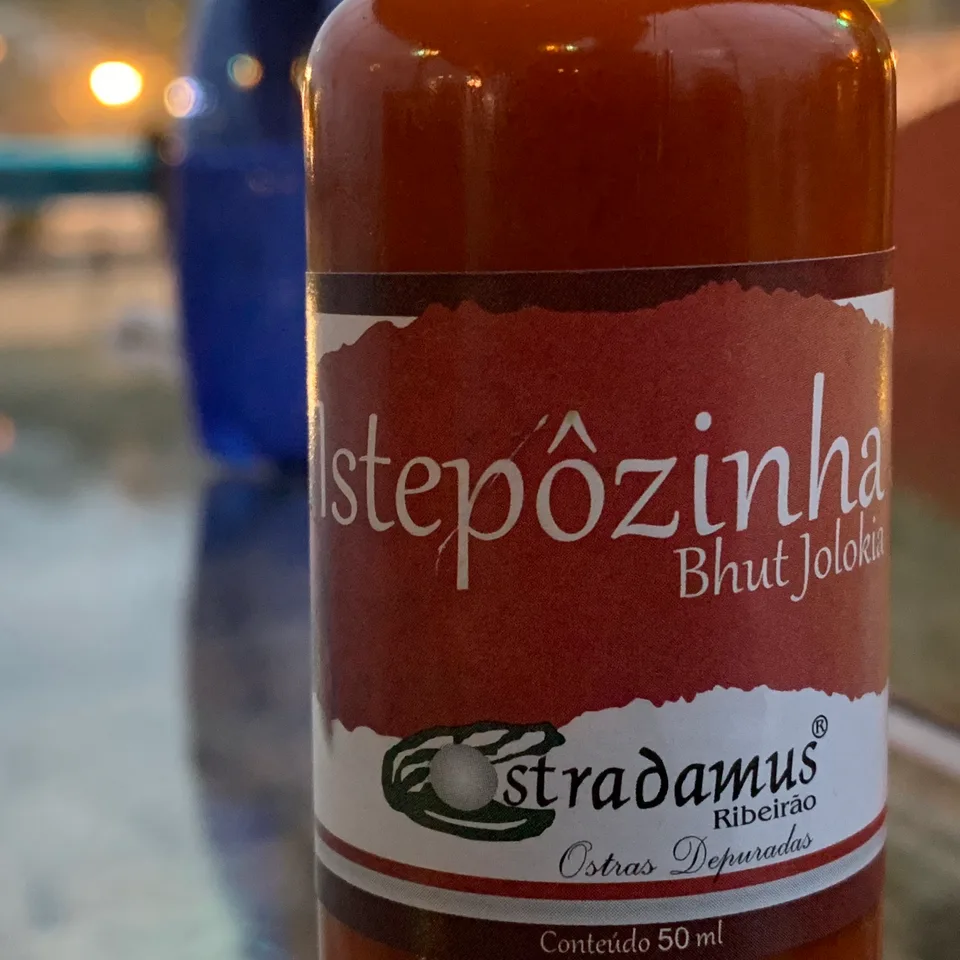
The bay had a table for us.
The restaurant sits beside the bay in a neighborhood whose old houses and maritime traditions carry the island’s history into the present. We lingered over dinner while the light faded outside. There was no need to turn the meal into a verdict about the finest anything. The pleasure was already there, in the company, the water and a table we weren’t in a hurry to leave.
By then, Brazil had given us two very different weeks’ worth of attention. In Rio, we had repeatedly looked up. Floripa had drawn our eyes along the water, across a table, down a sandy path between a horse’s ears.
We had plenty of photographs. The useful thing they couldn’t quite contain was how little we’d wanted to move on.
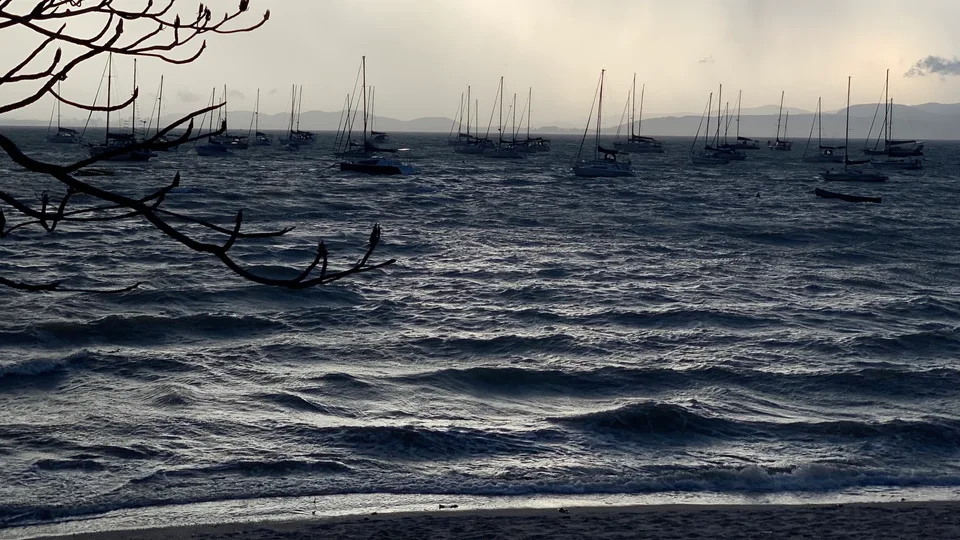
Floripa was in no hurry to help us leave.
Visited 2018 · Written 2026