Rome.
Where we began.
Our first trip together, a city with very little interest in being understated, and the photographs that became our first chapter.
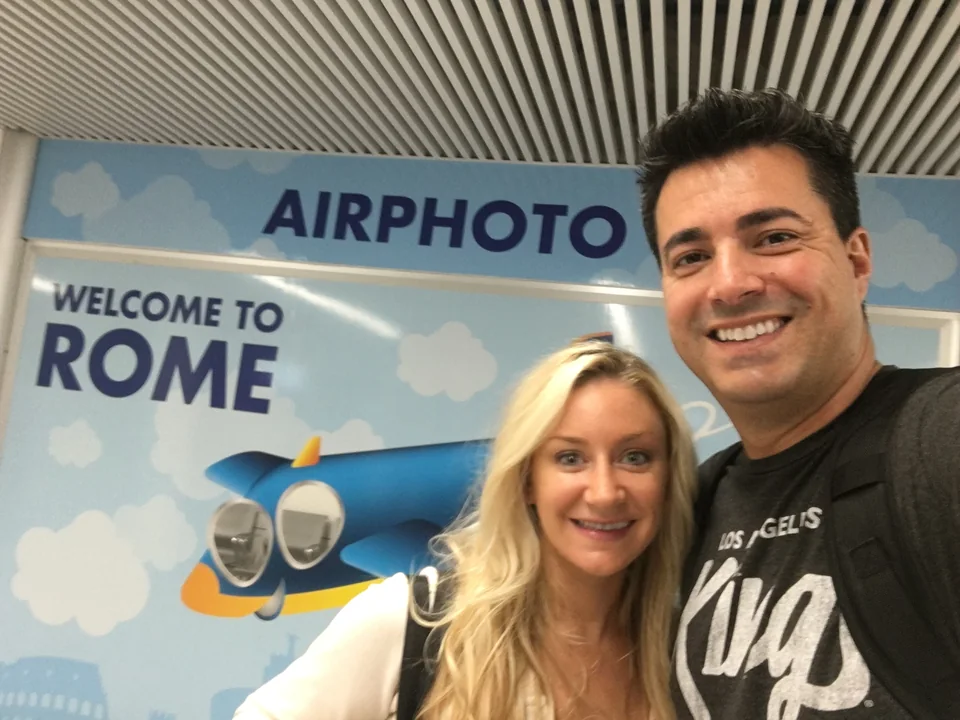
Before Two Dragos had a name, we had Rome.
Our first trip together. No grand origin story required: two people, a new shared chapter, and a city that makes even a casual photograph look as though someone hired a set designer. In the arrival picture, a sign behind us says “Welcome to Rome.” We are both smiling. Sometimes a caption really doesn’t need to work very hard.
That photograph is a useful place to begin this journal. Because the point of traveling together isn’t to return with proof that you completed a city. It’s to come home with something that belongs to both of you. A photograph can do that. So can a place you suddenly have in common.
Rome became ours in September 2016. The pictures take us from an airport to the Colosseum after dark, then into daylight at the Spanish Steps, Trevi and the Pantheon. There are monumental views. There are selfies with questionable control over the angle. There is a table, and there is Kristin smiling across it.
This is where we begin.
After dark, the Colosseum
The Colosseum doesn’t need an introduction. That is part of its problem, and part of its power. You’ve seen it so often before you arrive that it’s easy to confuse recognition with actually knowing a place.
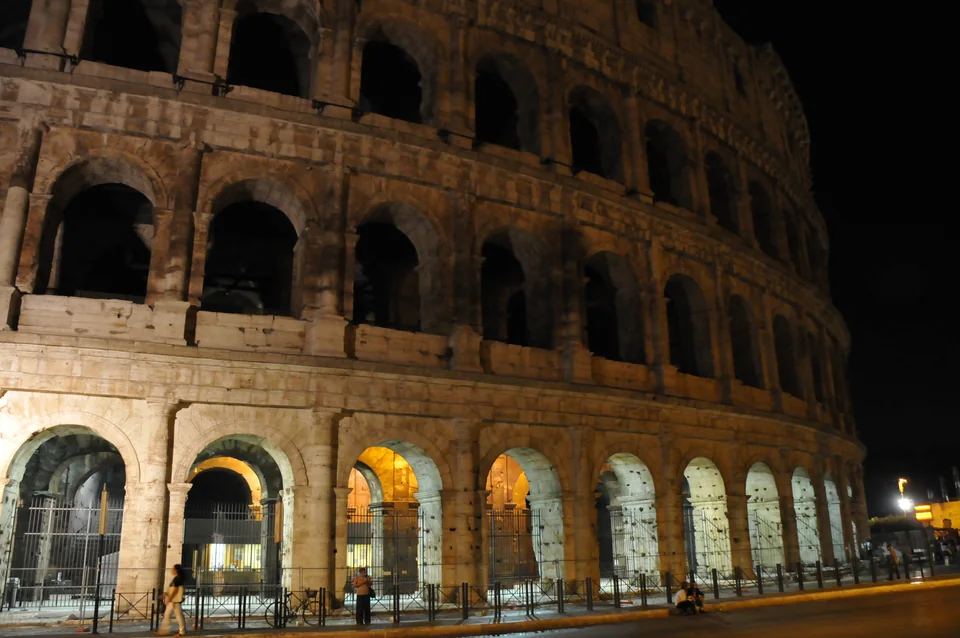
Then there it is, lit against a black sky. The arches read differently at night: warm stone, deep shadow, the curve of the building holding its own against everything around it. Our exterior photograph catches people along the railings at its base. They give the scale away. Without them, a monument this familiar can almost become an abstraction.
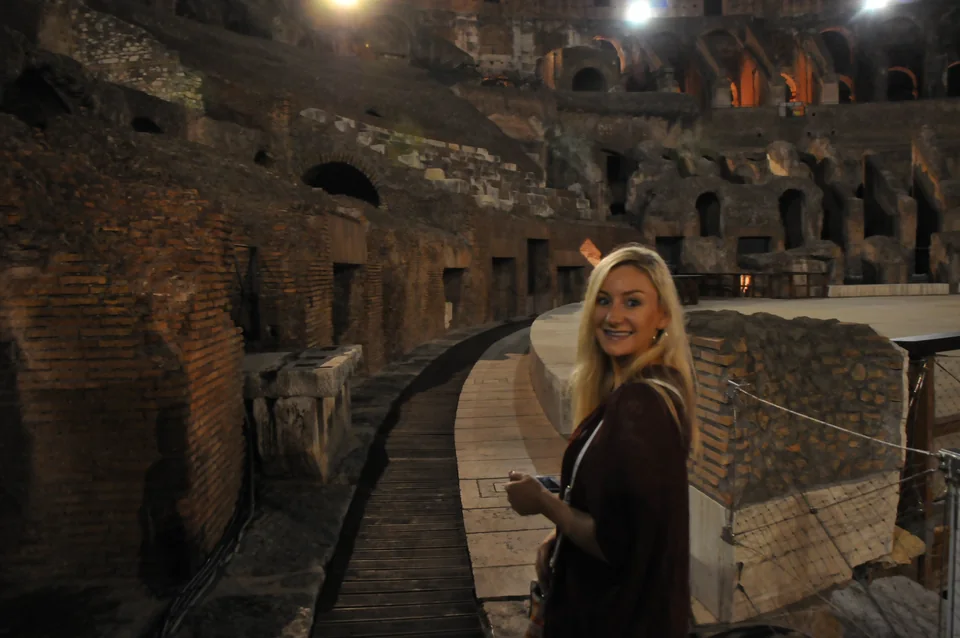
Inside, the view is less tidy. Walls, passages, exposed masonry, layers of structure. The picture of Kristin on a walkway has all that stone behind her and a very present-day person in front of it. It’s one of the reasons to keep people in travel photographs. They interrupt the postcard and return it to the actual trip.
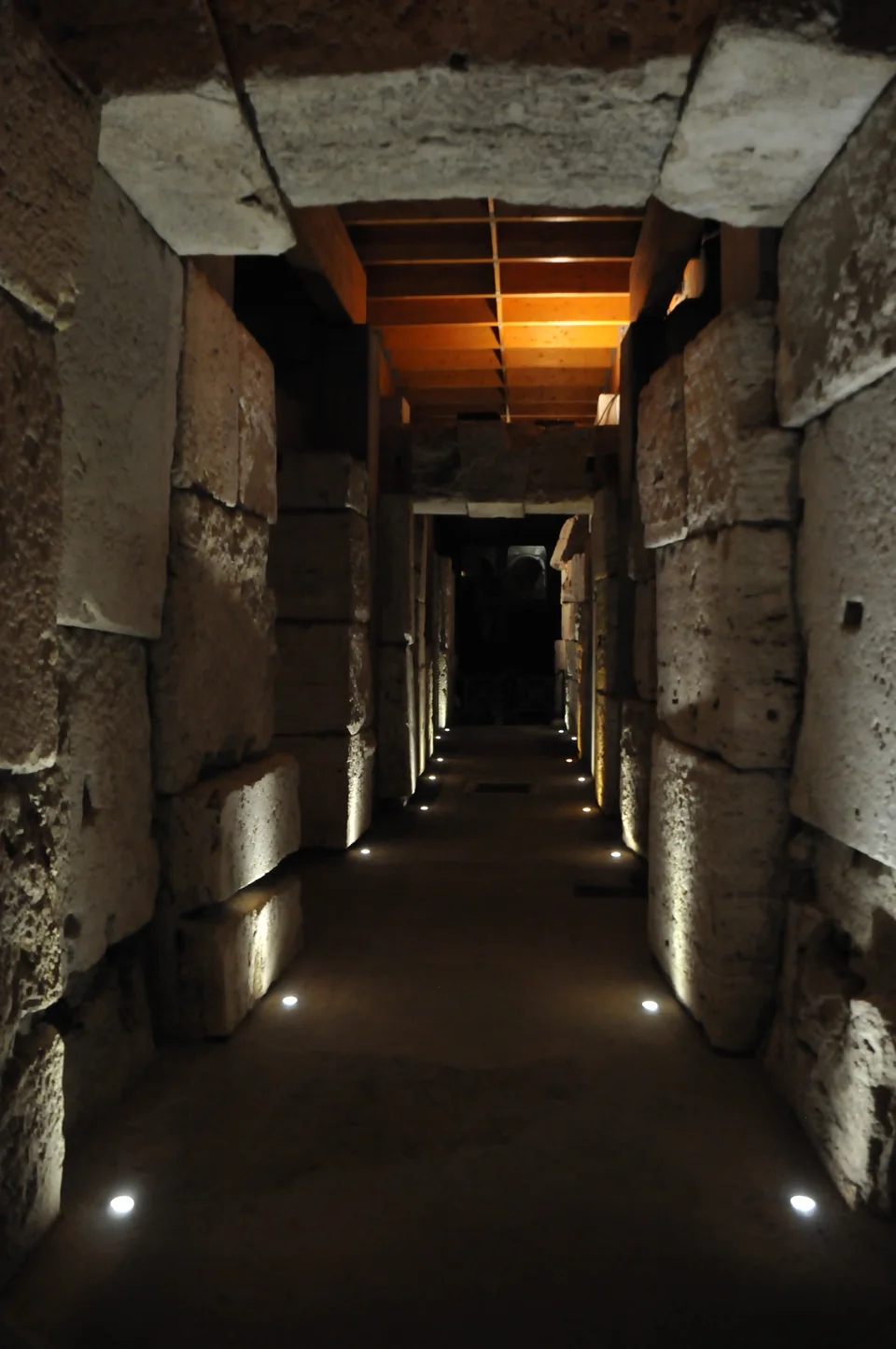
There is another obligation here, beyond admiring the engineering. The arena was a place of violent public spectacle. Its beauty now doesn’t erase what it was built to contain. You can be impressed by a structure and uncomfortable with its history at the same time. In fact, that may be the most useful way to look at it.
For a first visit, the Colosseum deserves more than a photograph from the pavement. Choose the access that interests you, understand what your ticket actually includes, and let the place become more complicated than its outline. Our night pictures make a good case for considering an evening visit when one is offered. They aren’t evidence that a particular 2016 tour still exists today.
Daylight, and the famous places
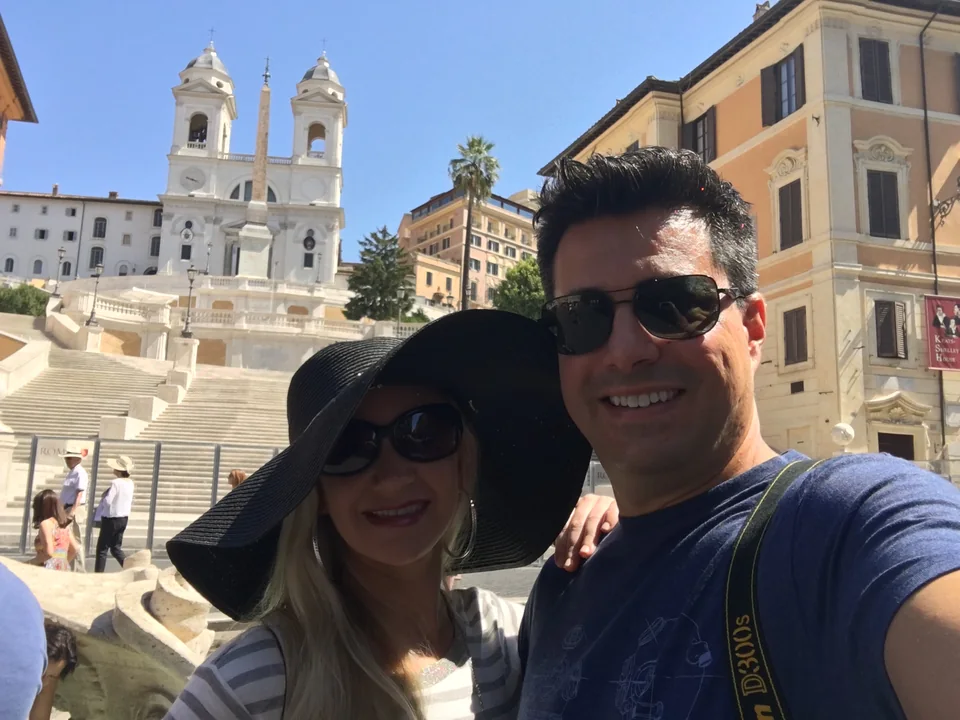
By the next day’s iPhone photographs, we are in the bright, unsentimental light of the Spanish Steps. Sunglasses. A broad black hat. The twin towers of Trinità dei Monti behind us. The light is doing nobody any subtle favors, which is a good reminder that a holiday photograph and a fashion campaign have different job descriptions.
The stairs connect Piazza di Spagna with the church above. In a wide photograph, the geometry is the attraction: pale flights of steps opening and dividing, the buildings framing the space, the church holding the top of the composition. In our selfie, the attraction is that we were there together. There is room in an album for both.
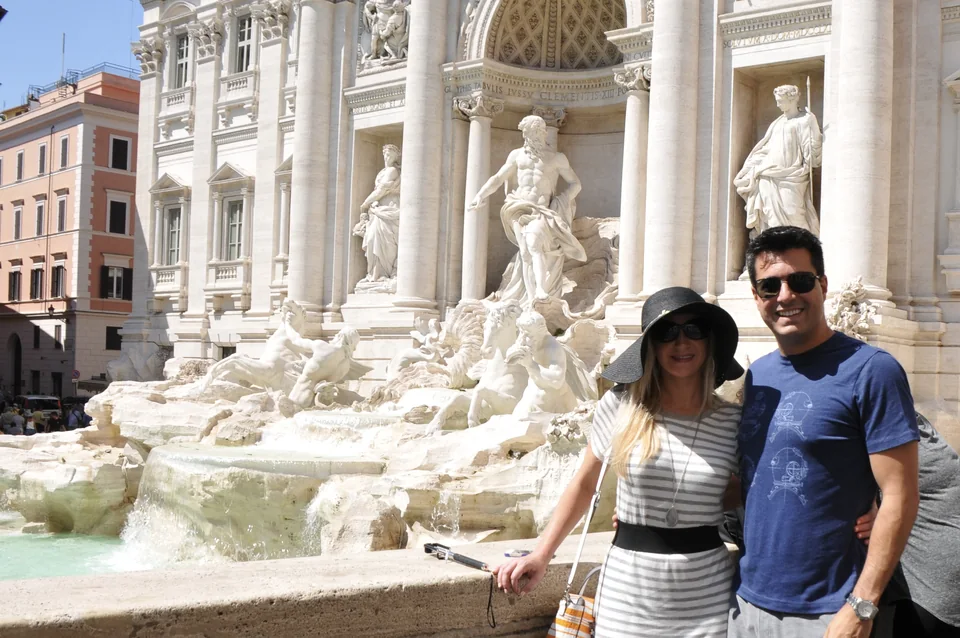
Trevi follows in the archive. It has no intention of being discreet. The fountain occupies the scene with rock, sculpture and water, attached to a palace façade as if the ordinary business of a street required this much theater.
In one photograph, we stand beside each other with the fountain behind us. In another, more of the crowd stays in the frame. Keep that crowd. It is part of the experience. The fantasy of having a famous place entirely to yourself can become an oddly demanding way to travel.
The central figure at Trevi is Oceanus. Knowing even that small detail changes the picture: a familiar backdrop becomes a composition with a subject and a story. You don’t need to arrive with a degree in art history. It helps to give the place a little more attention than the time required to turn your back and take the shot.
The pleasure of looking up
At the Pantheon, the photographs change direction.
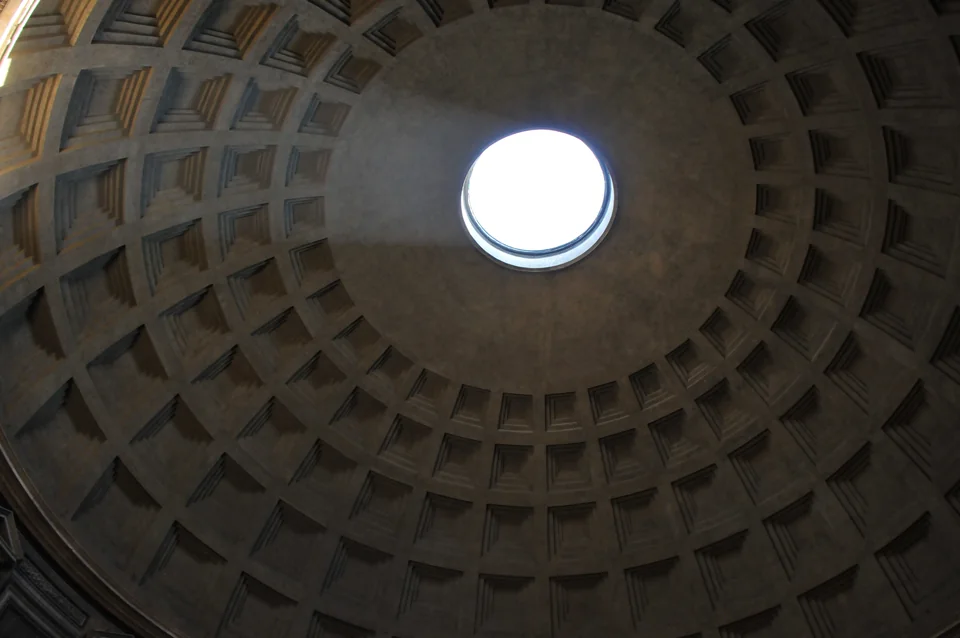
Outside, there is the portico and the inscription. Inside, the camera points upward: rings of coffers, the curve of the dome, and the open circle of the oculus. Then comes a photograph that manages to fit the two of us beneath it. Architecture with a selfie attached. A perfectly respectable genre.
The present building dates to the reign of Hadrian; it later became a Christian church. Its history is one reason to visit. The way it organizes space and light is another. The opening at the top is real, not a glazed skylight. The sky belongs in the room.
That is the kind of detail a photograph can send you back to investigate. Travel doesn’t have to end when the suitcase is emptied. Sometimes the understanding comes later, when you look closely enough to ask a better question.
Leave something for the table
A first visit to Rome can easily become an exercise in administration. Reservations, entrances, the next important thing. The city offers more than enough to keep a determined person occupied until neither the person nor their feet has anything left to contribute.
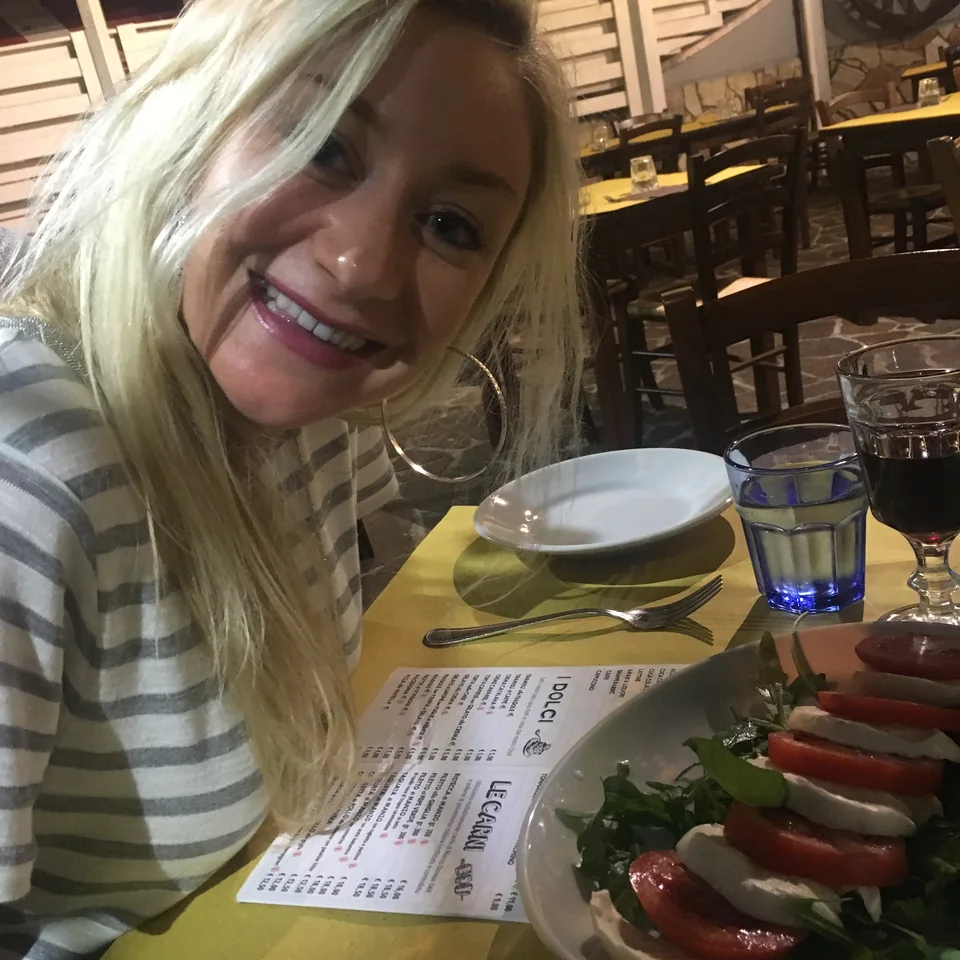
Our album has a useful counterweight. Kristin at a table. A plate of tomatoes and mozzarella. A blue glass. A menu partly in view. We aren’t turning that photograph into a restaurant recommendation: the picture doesn’t establish enough to do that honestly. It does belong in the story.
Because sitting down is part of being somewhere. So is giving the person across from you at least as much attention as the building behind them. For two working adults with the freedom to travel, time together is one of the things worth spending deliberately.
The beginning is enough
We could attach a much longer list of places to this trip. Rome certainly has them. But a longer list wouldn’t make this a more personal story.
What these photographs give us is a beginning: the two of us at an airport, at an ancient arena, beneath a dome, beside a fountain, across a table. A collection of places that became part of the same shared history.
That is the idea behind Two Dragos. Travel as something lived and then told with care. The famous places can stay. So can the unpolished photographs. The stories get better when there is room for both.
Rome was our first trip together. It makes a good first chapter.
Sources & notes on this story
A retrospective built around Alex & Kristin's first trip together and the photographs they supplied. No dialogue, restaurant endorsement or separate personal reactions have been reconstructed. The iPhone records place these scenes in September 2016. Nikon timestamps conflict, so exact dates are not assigned to those images.
Historical and practical context was checked October 20, 2026. Current booking information is separated from the trip narrative.
- Parco archeologico del Colosseo — the Colosseum
- Turismo Roma — the Spanish Steps
- Turismo Roma — Trevi Fountain
- Turismo Roma — the Pantheon
Writing developed with AI assistance from the hosts' supplied trip details and photographs. Photography: the Drago travel archive. Image metadata is removed from public derivatives.
Our photographs.
A shared beginning.