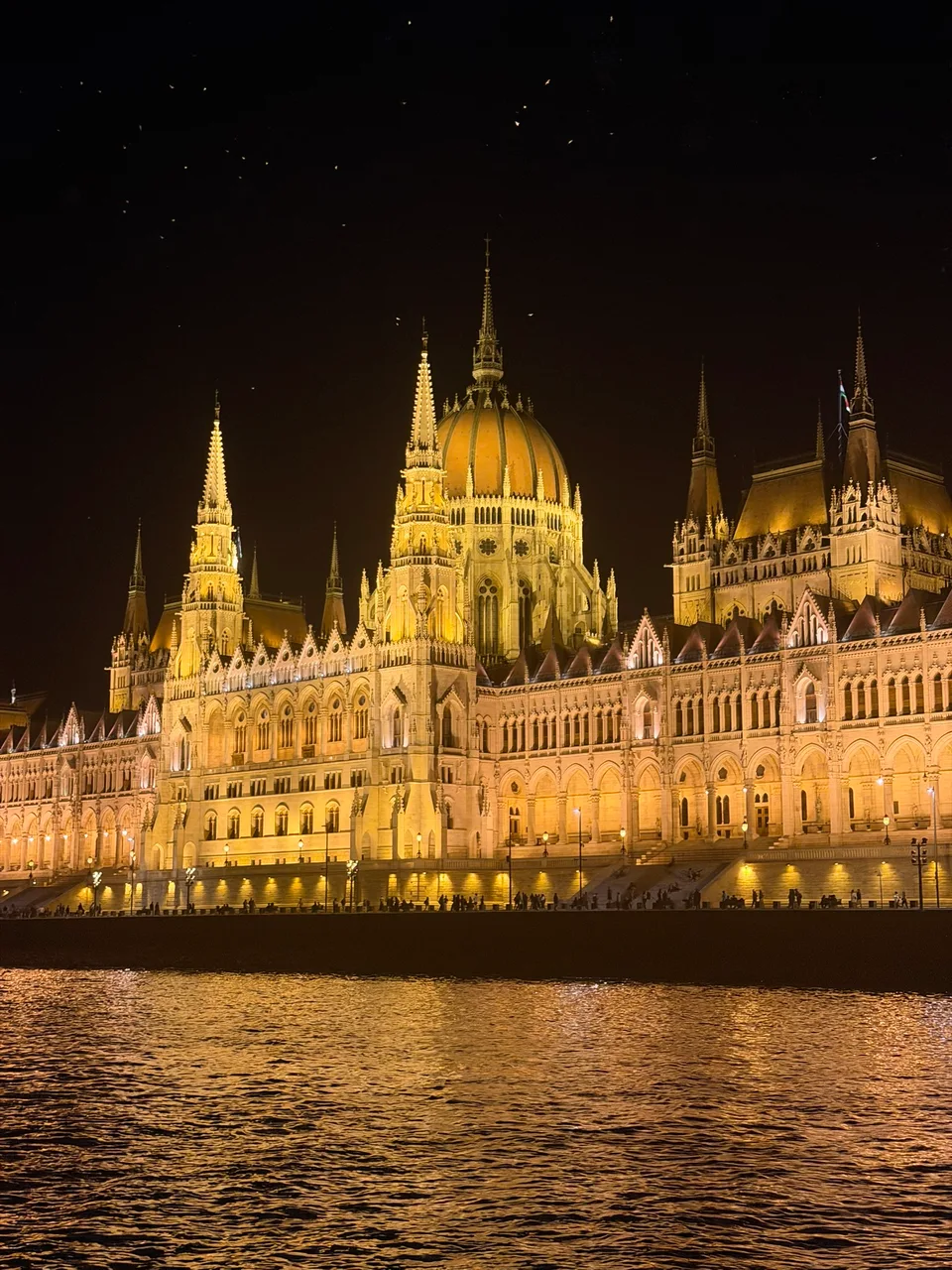
Budapest’s Parliament building lights up at night as though democracy has hired a very expensive wedding planner. The dome glows, the spires line up along the river, and the Danube takes the whole thing apart into trembling strips of gold.
From our boat, it was hard to decide where to look. Buda Castle held the hill on one side. Pest spread along the other. Between them, the river carried us through a city that seemed to have saved a second set of clothes for the evening. We had already walked among some of these buildings in daylight. On the water after dark, the familiar outlines acquired an entirely different temperament.
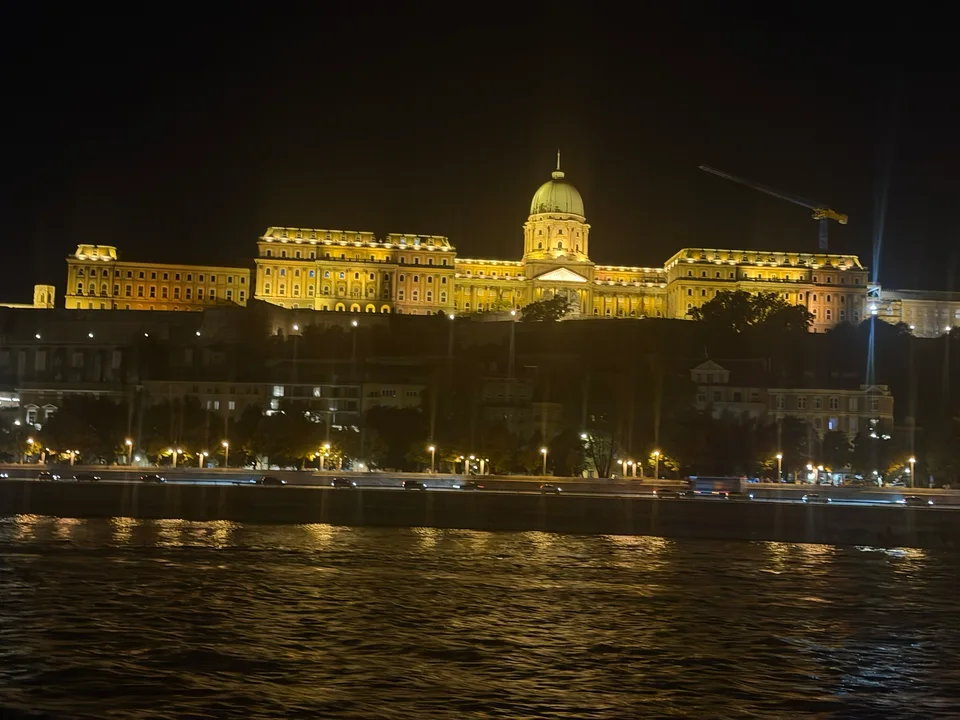
Buda had dressed for the evening.
Two banks, several perspectives
In daylight, the shape of Budapest is easier to read. The hills rise on the Buda side; Pest stretches out across flatter ground opposite. The united city dates from 1873, when Buda, Pest and Óbuda came together. The river still gives each side room to maintain its own character.
We went up to the Castle District, where the view began doing the useful work of joining our impressions into a place. Roads, bridges and roofs that had felt separate at street level came into a single arrangement. Across the water, Parliament occupied its enormous patch of riverbank. It looked almost composed for the person standing precisely where we were.
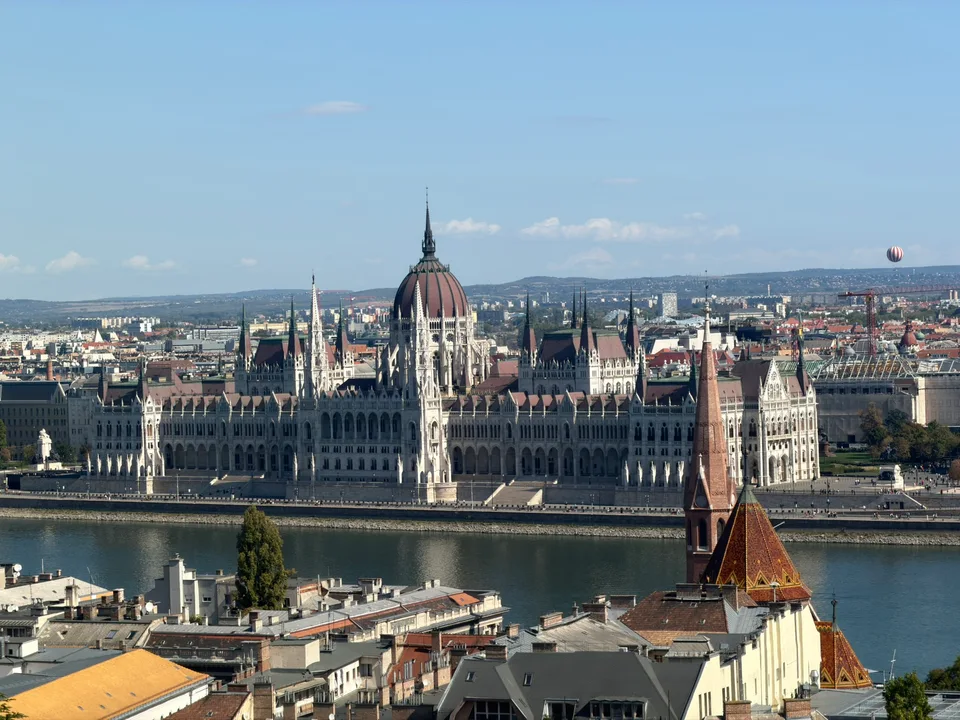
The city became easier to read from upstairs.
Matthias Church raised a white spire above its patterned roof. The tiles made an unexpectedly colorful argument against the idea that an old church ought to be solemn in every possible way. Beside it, Fisherman’s Bastion offered pale arches and conical towers, turning the edge of the hill into a place to look both at and through.
We moved between the viewpoints and kept finding reasons to stop. An arch could frame the opposite bank. A few steps shifted the whole skyline. The pleasure was partly architectural and partly the ordinary satisfaction of having climbed to a place where the city suddenly made more sense. We were willing to take several photographs to celebrate our improved understanding.
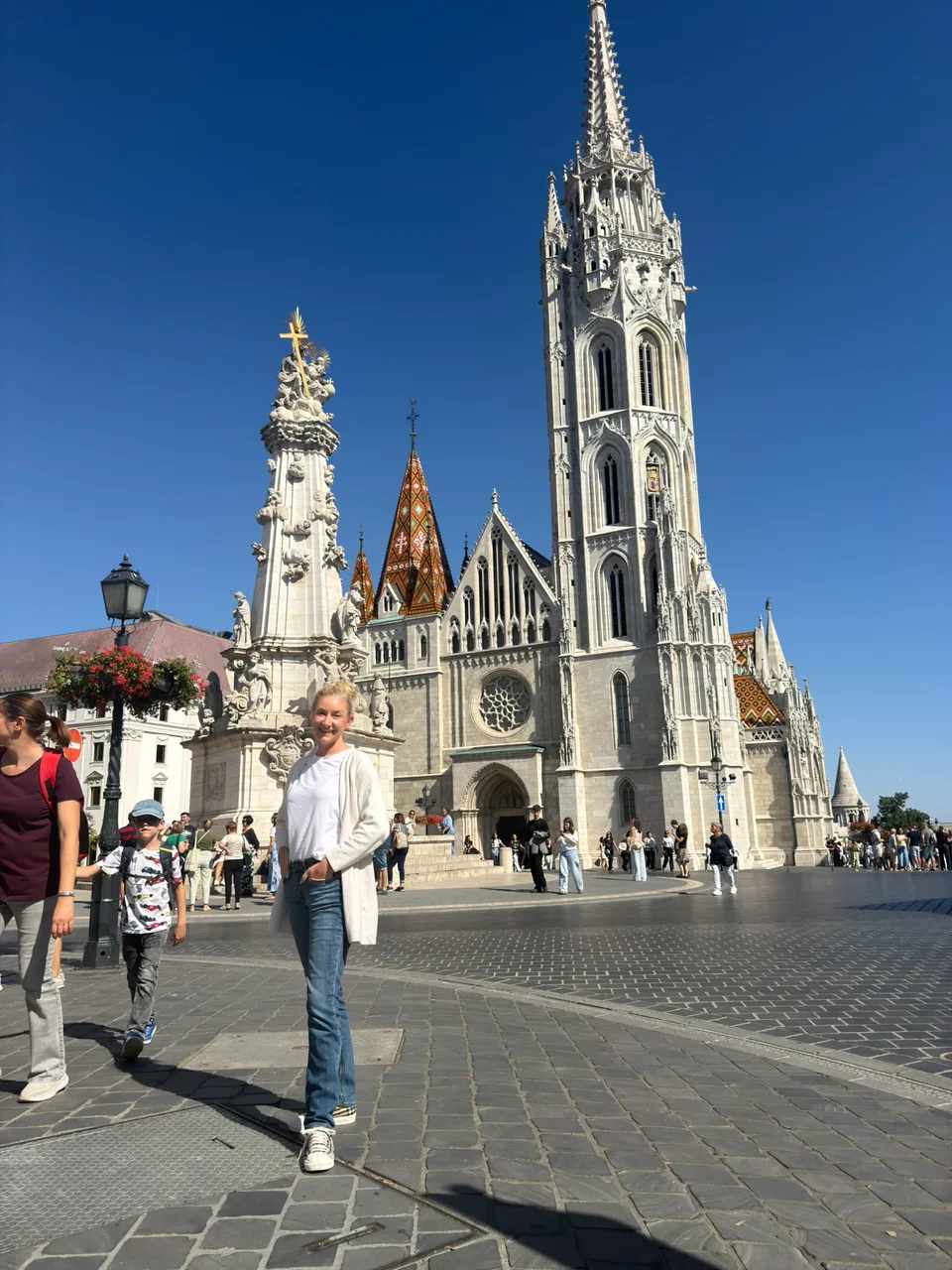
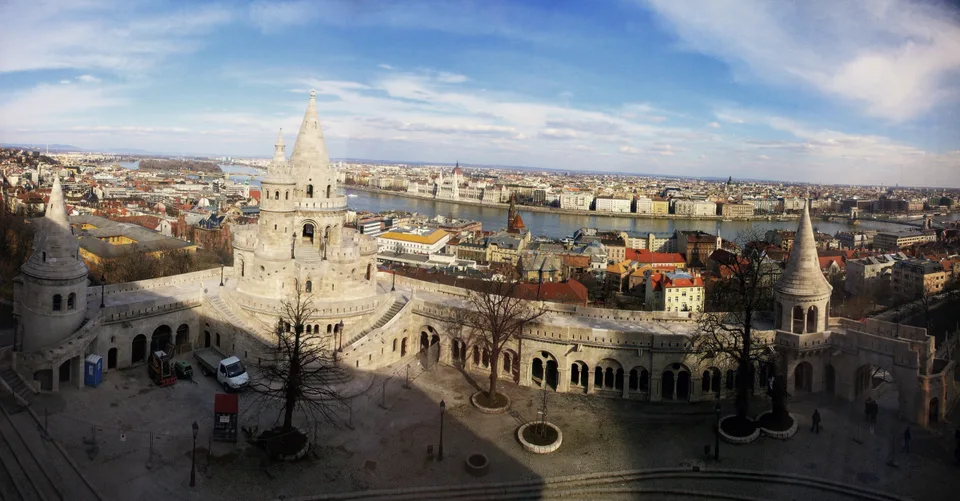
The roof declined to be discreet.
The towers of Fisherman’s Bastion look as though they might belong to a medieval defense, but the present structure is a much later, romantic vision of the past. Budapest has plenty of these layers: buildings that commemorate an earlier world, rebuilt monuments, and façades whose apparent certainty conceals a complicated history.
That makes looking a little more rewarding. A beautiful outline need not be ancient to mean something. Here, the view across the Danube was the immediate gift. We stayed with it before trying to turn every stone into a lesson. The city would supply enough history without our assigning homework to the afternoon.
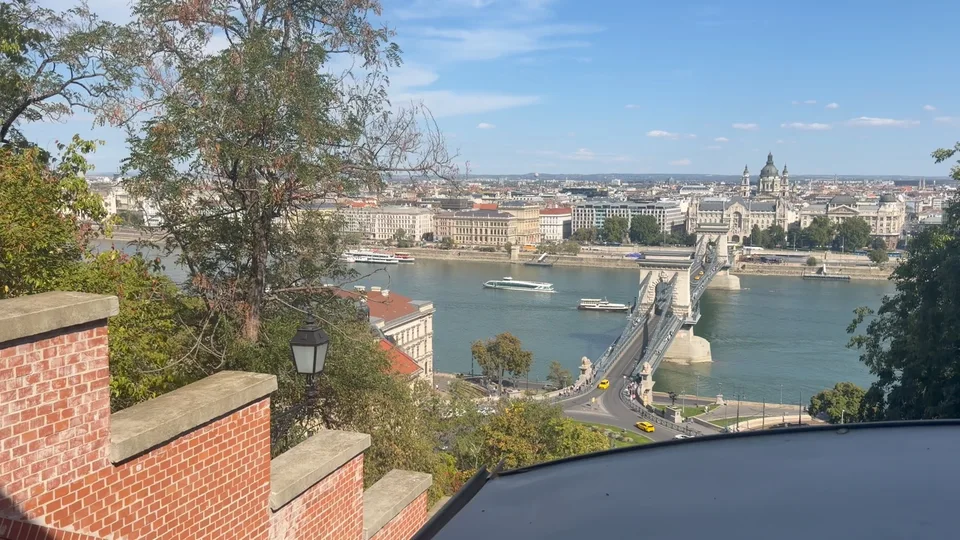
A bridge, conveniently connecting the view.
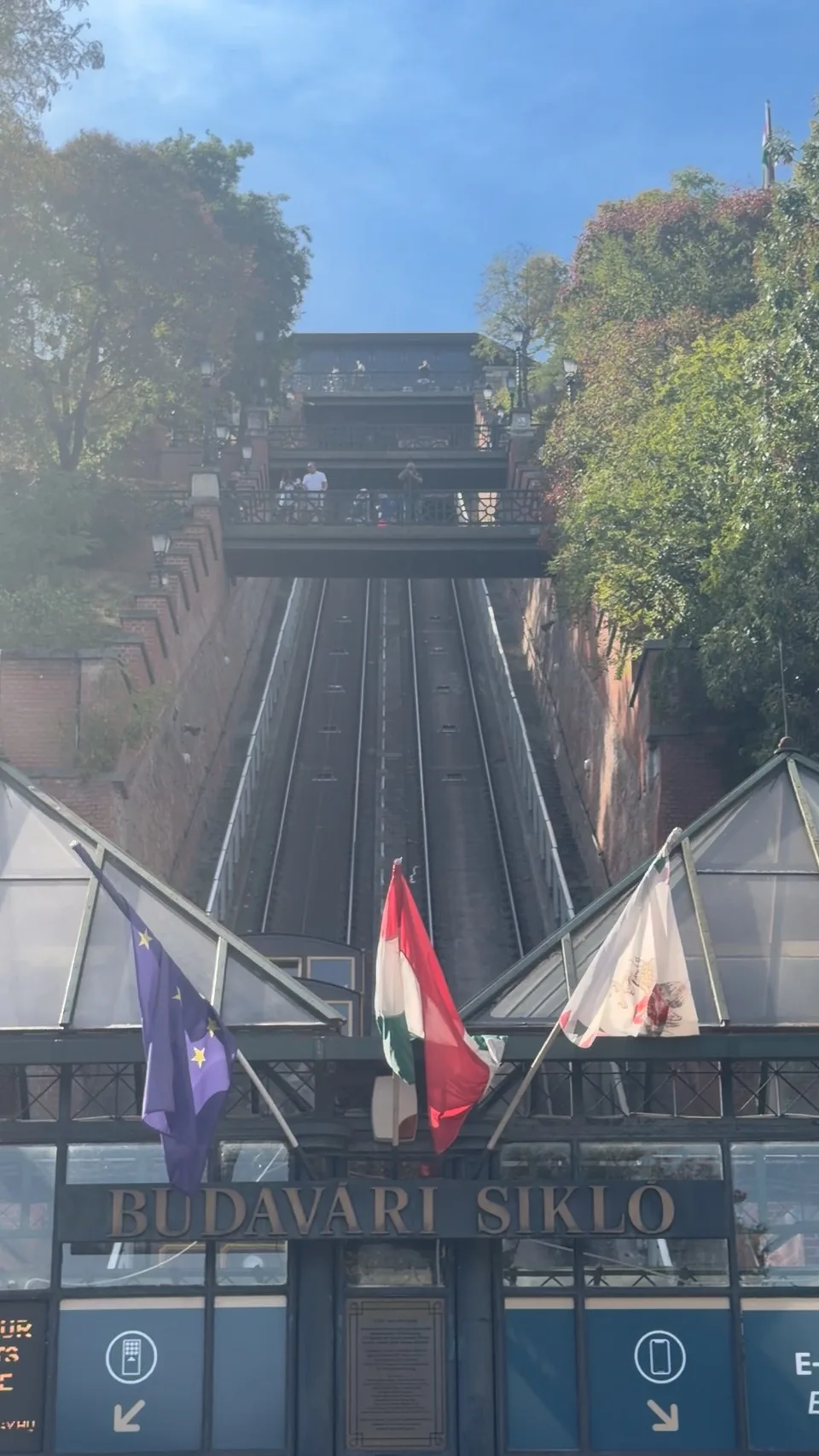
Near the castle, the funicular’s paired tracks drew a decisive line down the slope. It was a pleasing piece of machinery in a district otherwise inclined toward stone and ceremony. The city could offer a grand prospect and a practical way to negotiate the hill, which we considered a civilized combination.
At the Chain Bridge, we paused beside one of the stone lions. Up close, the span became a structure again: supports, chains, masonry and the long business of connecting two banks. A bridge can be photographed as an emblem until you almost forget that somebody had to work out how it would stay there. Standing beside it helped.
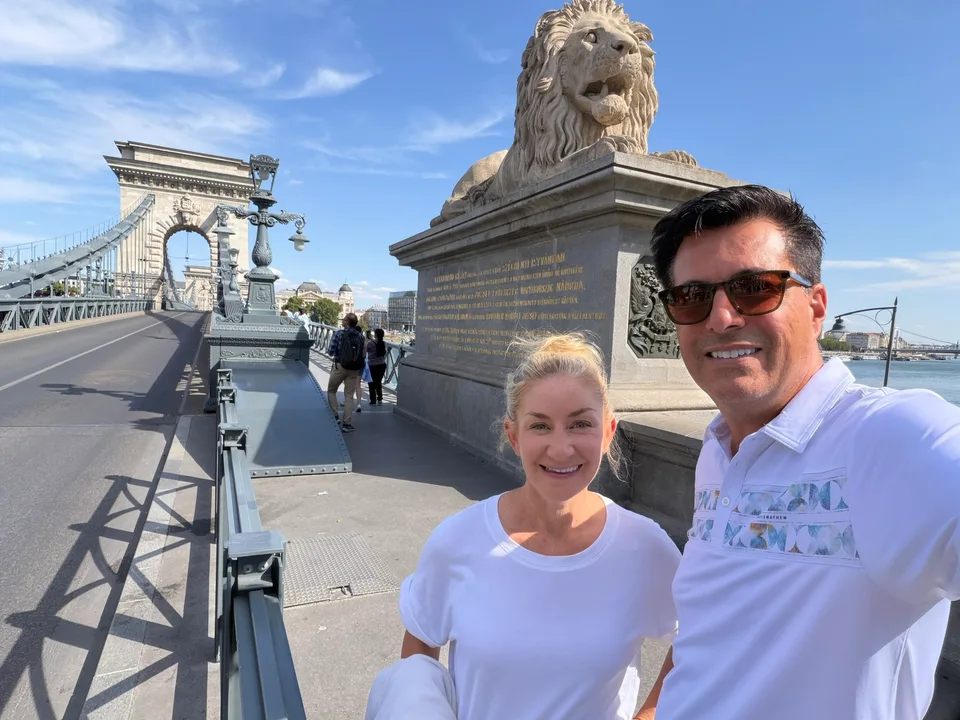
The lions kept an eye on the crossing.
Coffee, with a ceiling attached
New York Café answered the question of how much decoration a coffeehouse can accommodate with an enthusiastic refusal to recognize limits. Gilding climbed the columns. Painted ceilings opened overhead. Chandeliers appeared where an ordinary room might have settled for adequate lighting.
We looked up before giving the rest of the room its due. The café opened in 1894 and became a gathering place for writers and artists. It is easy to imagine how a room like this could encourage someone to linger over a page. It is also easy to imagine spending an impressive amount of time looking busy without producing a sentence. We would not have been the first travelers to find the ceiling more compelling than their responsibilities.
“A market can be a monument and still leave room for the daily question of dinner.”
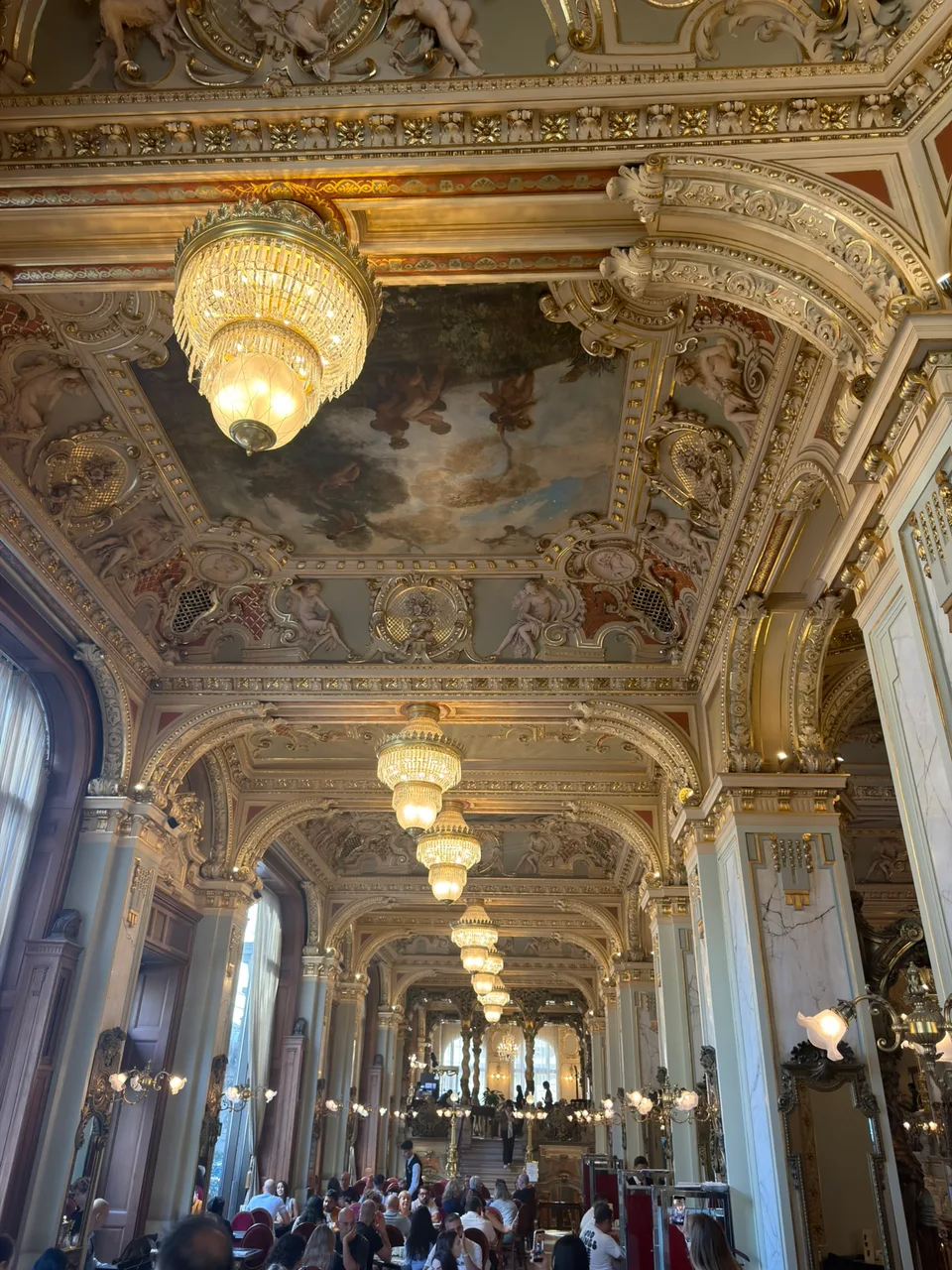
The coffee came with considerable overhead.
The pleasure of the room was not subtle, but it did not need to be. After walking around a city of grand public buildings, here was grandeur brought down to the scale of a table. You could sit inside the ornament instead of looking at it from a pavement.
Budapest kept making that shift available. From a hilltop panorama to the stone beside your hand. From a riverfront façade to a room full of conversation. The changes in scale stopped the city from becoming an uninterrupted procession of impressive things. We needed somewhere to sit and look for a while, and it had provided a spectacular answer.
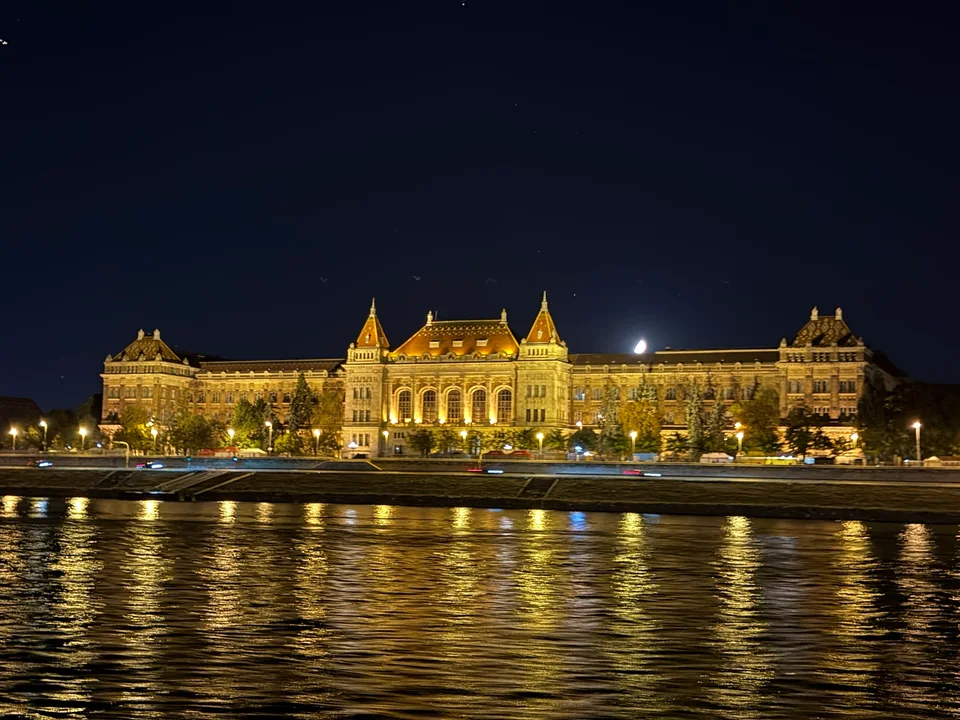
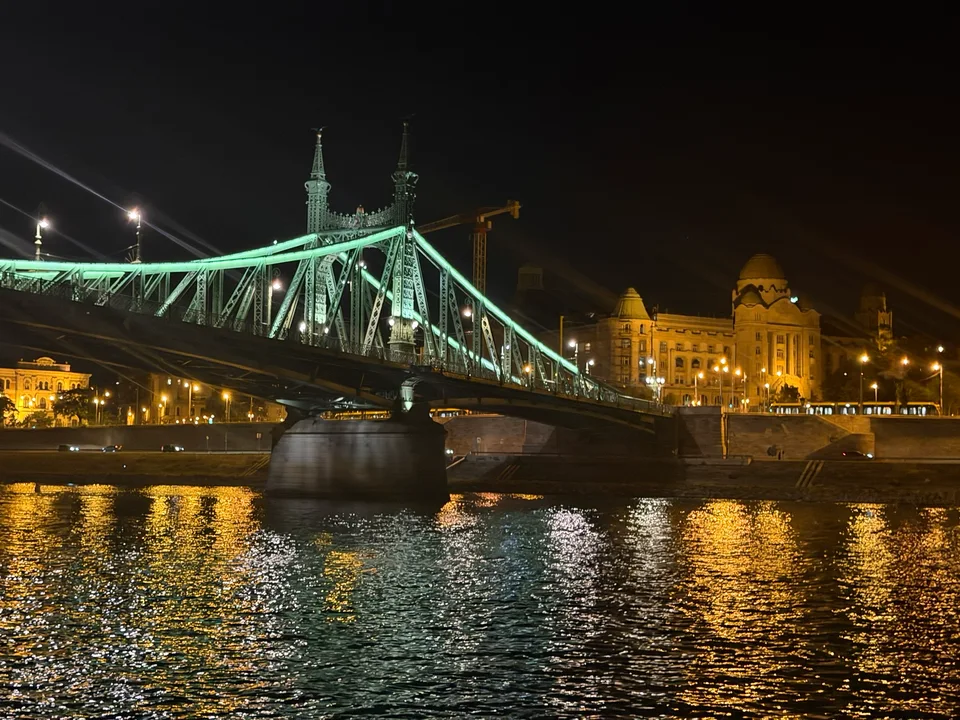
The city had several ways to keep the lights on.
At the Central Market Hall, the roof made another ambitious gesture, this time in iron and glass. Below it, the market got on with a less abstract kind of work. Rows of stalls divided the floor; people moved between counters, their interest in the city taking the entirely reasonable form of something to eat or carry home.
The hall opened in 1897, part of Budapest’s late nineteenth-century appetite for building on a public scale. We liked looking down over the stalls and seeing the structure spread above them. A market can be a monument and still leave room for the daily question of dinner. That practical purpose gave all the engineering something warm to do.
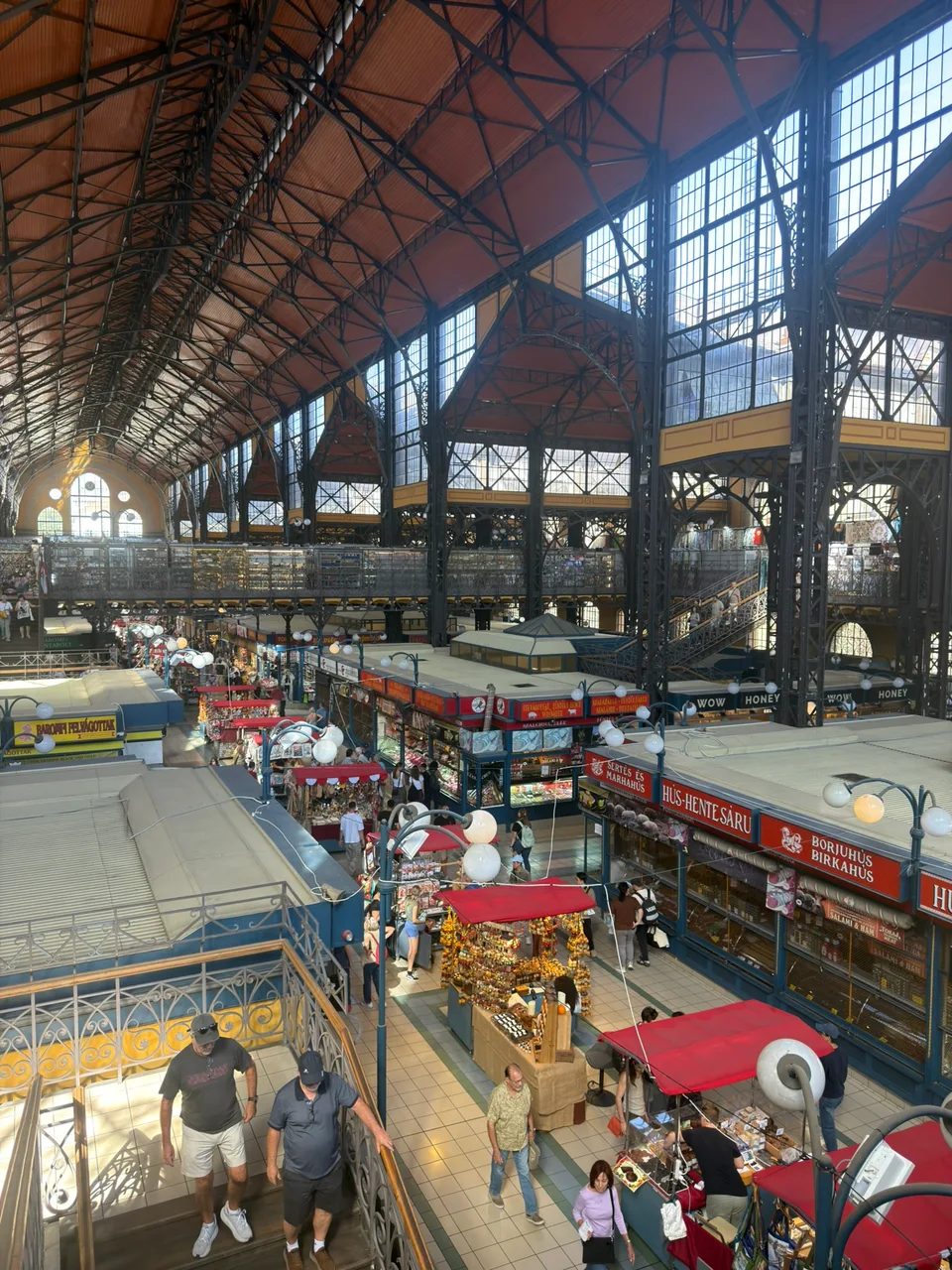
A fine roof over the important business of lunch.
Dinner had its own music. A violinist stood beside our table, bow moving across the strings while Kristin listened. After the enormous views and buildings, it became one of the trip’s smaller, more immediate scenes: somebody playing, somebody paying attention, a meal briefly organized around the sound.
There was no need to attach a grand conclusion to it. We had been given a good evening. The room, the music and the company were enough to occupy it. Travel accumulates famous places very efficiently; the moments that remain clear are often much smaller than the photographs on the ticket websites.
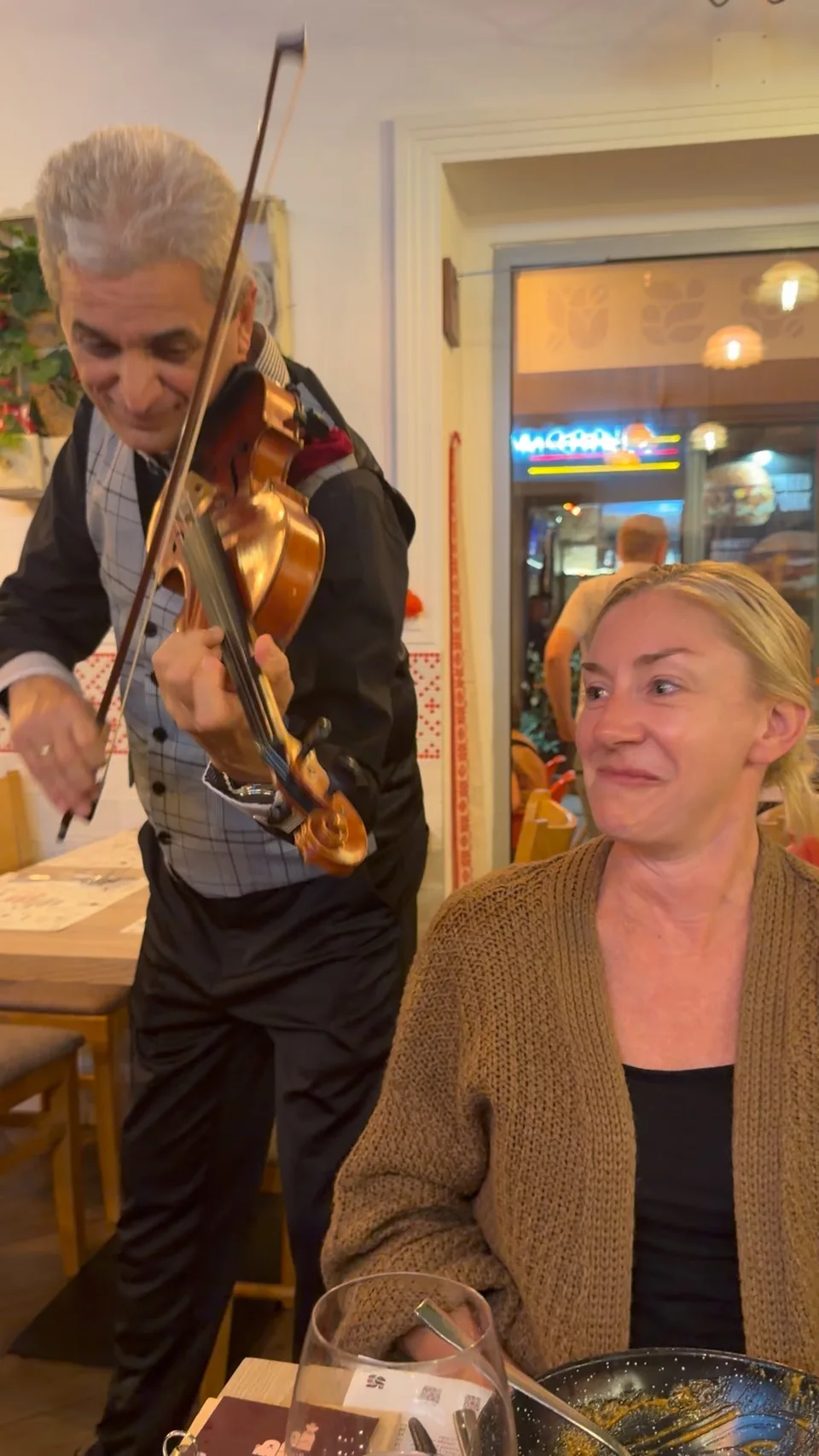
Dinner acquired a soundtrack.
A city that understands water
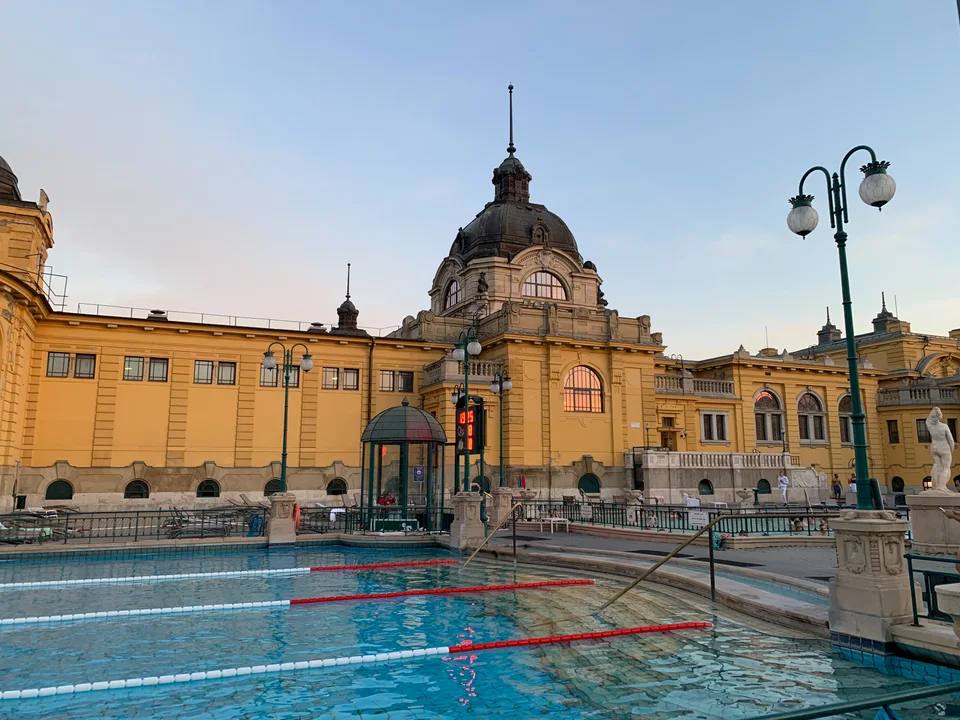
The river is only part of Budapest’s relationship with water. The thermal baths make it a place to enter as well as look across. At Széchenyi, yellow buildings enclose outdoor pools, and the architecture lends an almost ceremonial setting to the very sensible idea of getting into warm water. The baths opened in 1913, adding another layer to a much older bathing tradition.
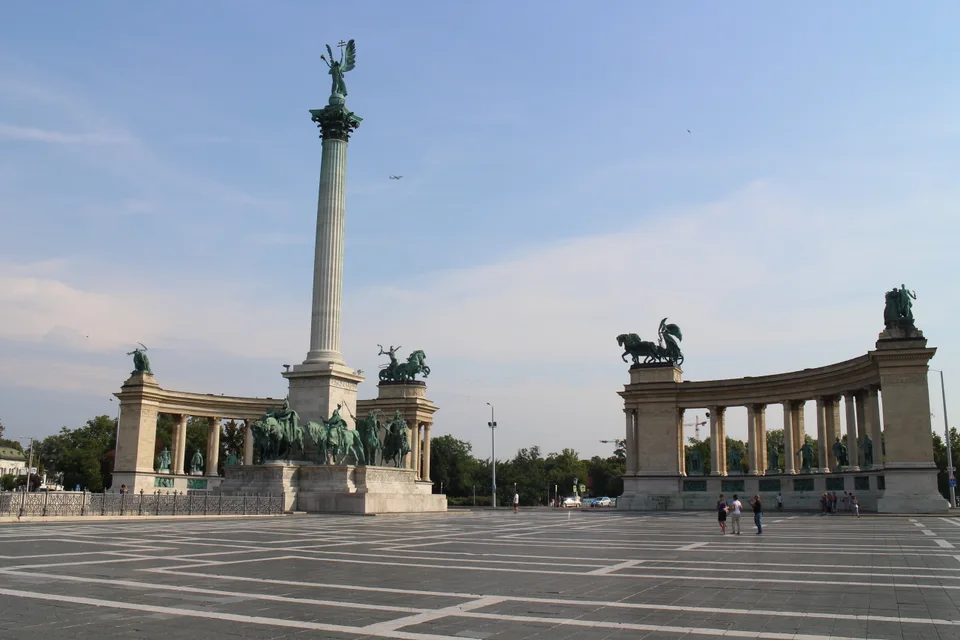
For a visit, give the baths a proper stretch of time rather than treating them as a photograph to collect. Nearby, Heroes’ Square gathers statues and colonnades at the edge of City Park. The square began taking its present form around the millennium celebrations of 1896. It offers public history on a scale that leaves little danger of missing the point.
Our clearest view of Budapest’s theatrical instincts came back on the Danube. The bridges appeared one after another, each arranging its lights differently over the dark water. A green span gave way to a suspension bridge, then the illuminated buildings on the hill drew our attention away again.
From a moving boat, you cannot hold the composition still. A column slips behind a railing; reflections stretch and break; the building you were looking at becomes the one you are passing. We liked having to surrender the perfect angle. The city was doing something larger than posing for us, and the river kept us moving through it.
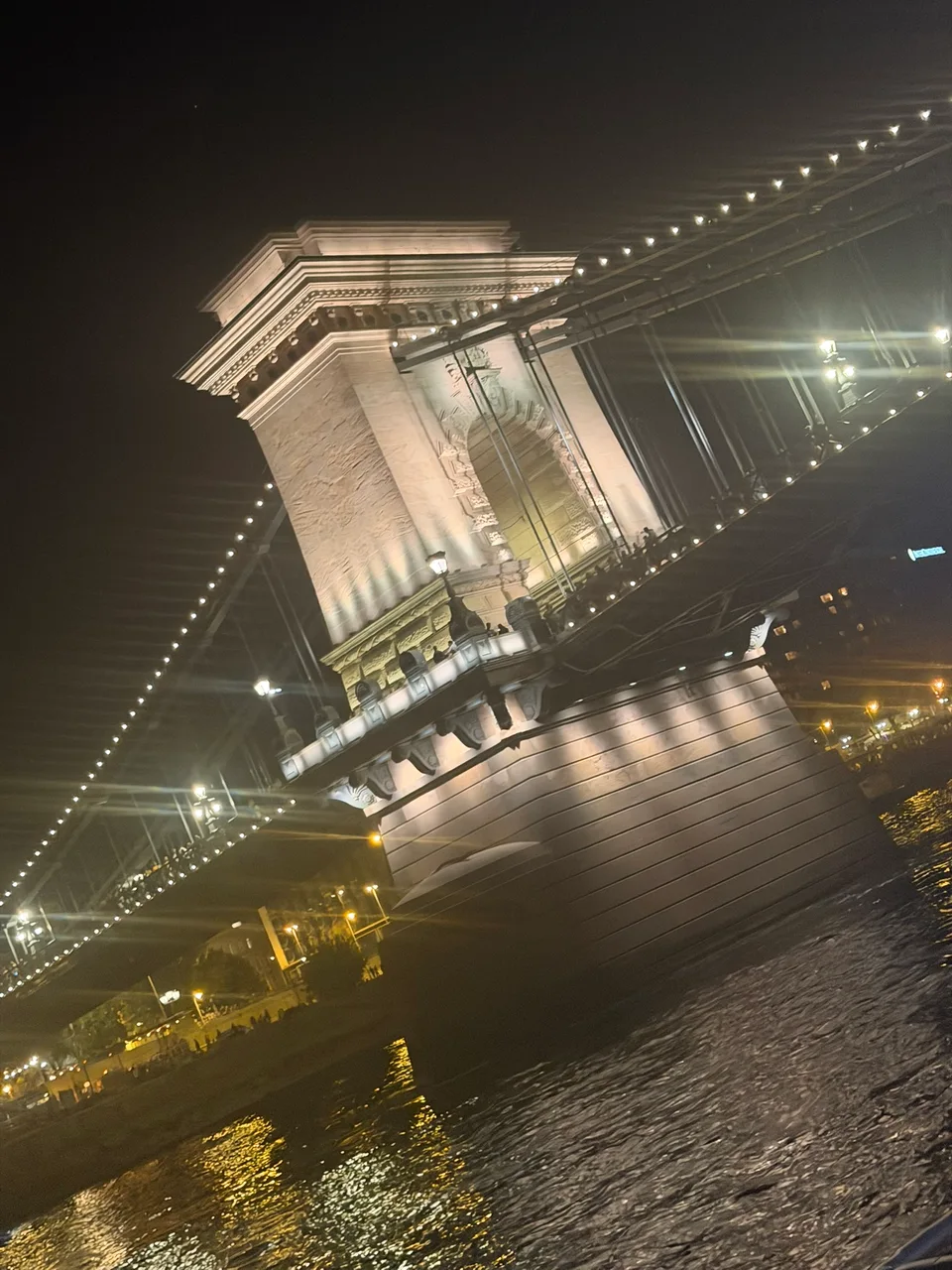
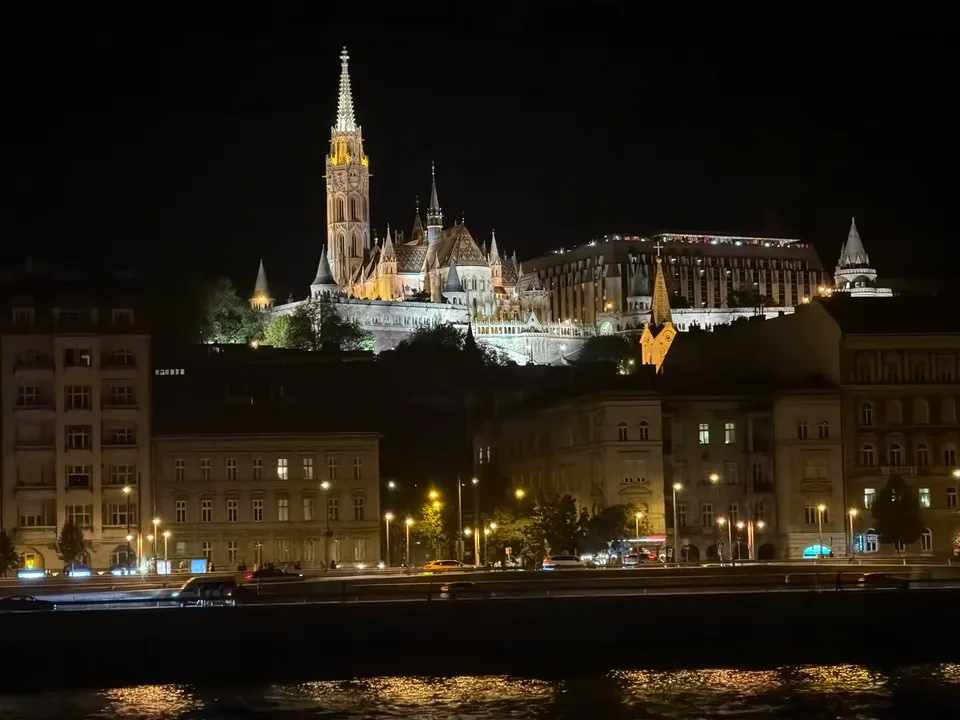
The scenery refused to stay still.
Then Parliament came close enough to fill the view. The long façade, dome and pale spikes glowed above the riverbank. Seen from the hill it had been an anchor in the panorama. At night from the water, it was almost absurdly present.
We took the photographs, of course. Then we lowered the camera and watched the gold scatter across the surface. Budapest had plenty more to say about itself. For a moment, we were content to let it use the lights.
Visited 2026 · Written 2026