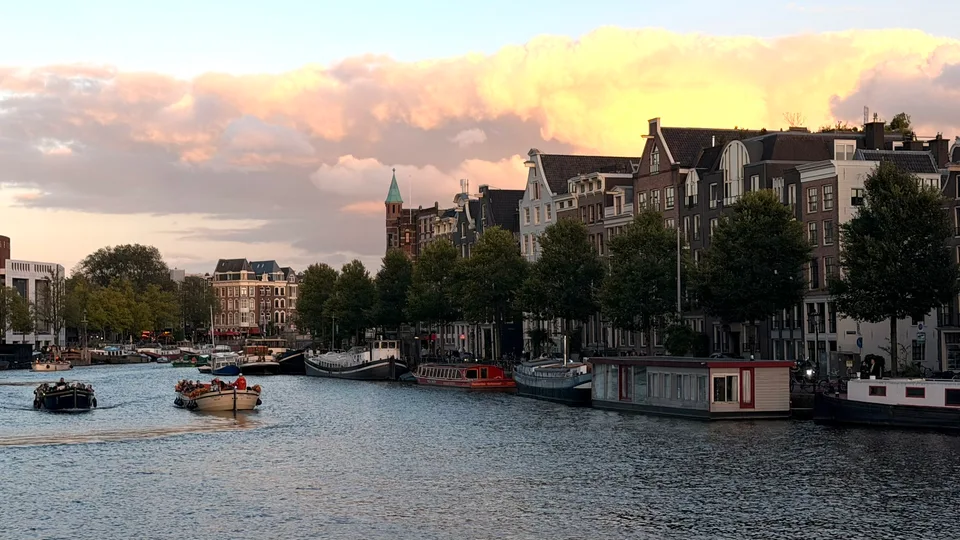
Amsterdam looks wonderfully calm until you try to cross a cycle lane. Then you discover that the still-life quality belongs to the houses. Everything between them is moving, quite efficiently, and would appreciate it if you did too.
We joined in on orange bicycles. This seemed the appropriate way to begin a trip that would eventually take us to Italian lakes, the Riviera and Budapest: two people, two wheels each, and a city that had already thought rather carefully about how to get around. Above the canals, the houses stood shoulder to shoulder, narrow and serious. Below them, their reflections had abandoned any interest in standing straight.
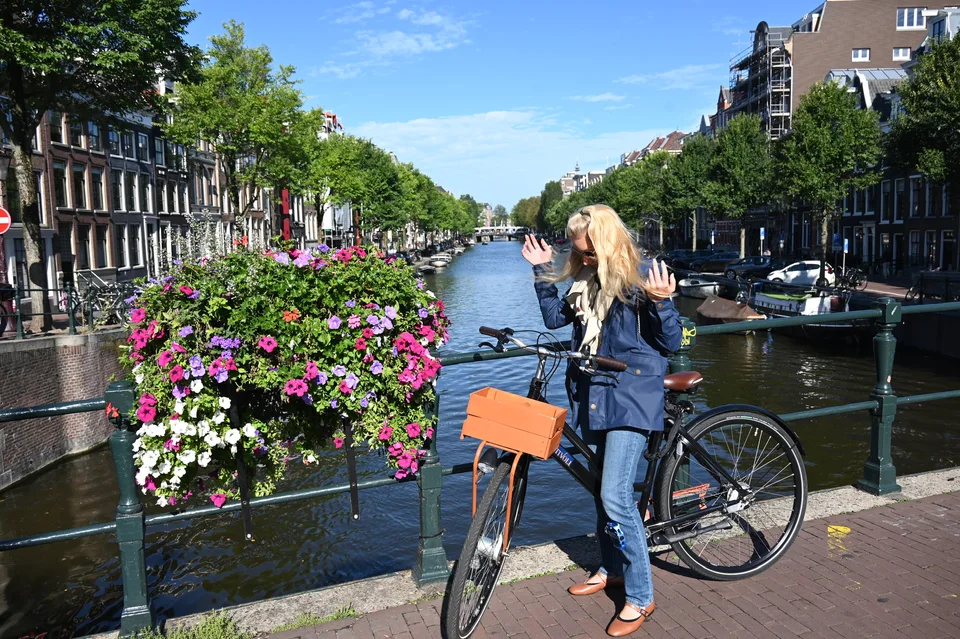
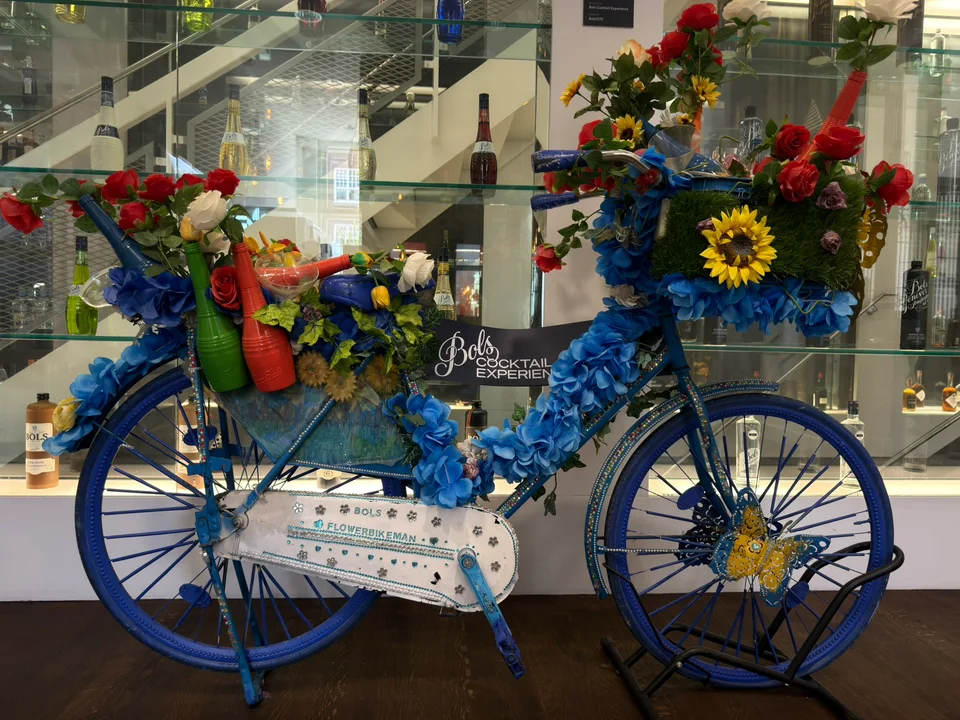
A city with very little patience for your training wheels.
The bridges kept interrupting our progress. A line of gables would appear between trees, or a boat would slide into an exceptionally good patch of light, and suddenly the practical business of going somewhere became less urgent. Amsterdam makes wandering feel organized. The canals provide the lines; you supply the deviations.
From street level, we noticed the small arrangements: flowers over railings, bicycles propped against brickwork, windows close enough to make you conscious of other people’s living rooms. A canal house can look like an ornament from a distance. Walk beside it and the city becomes inhabited again, with deliveries, doorbells and someone who actually needs that bicycle.
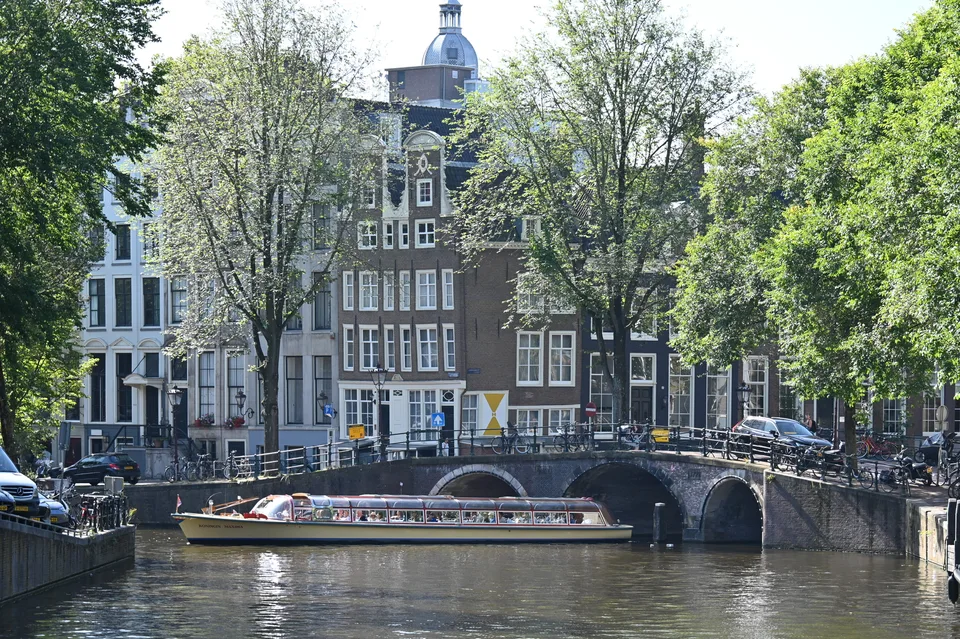
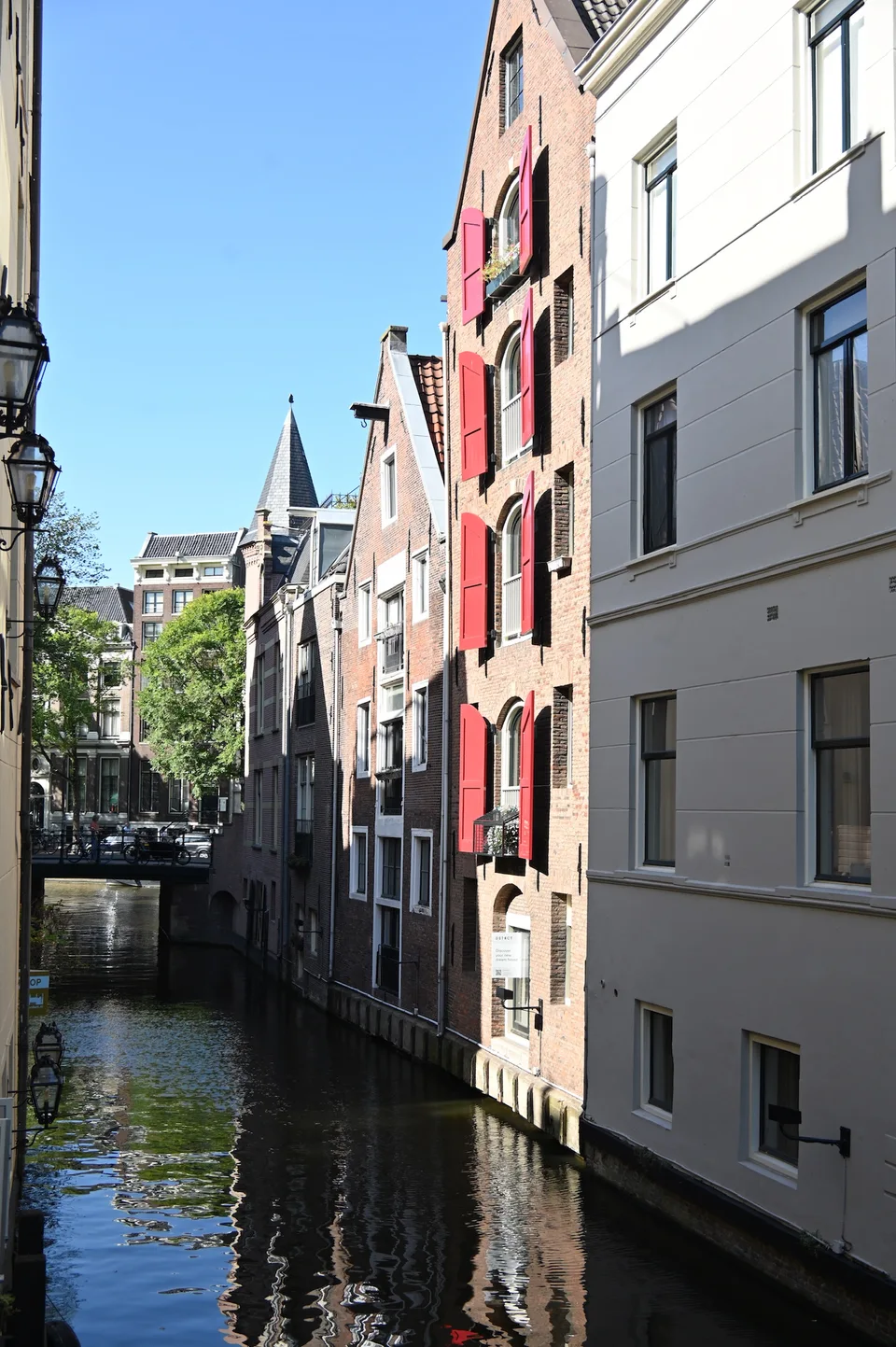
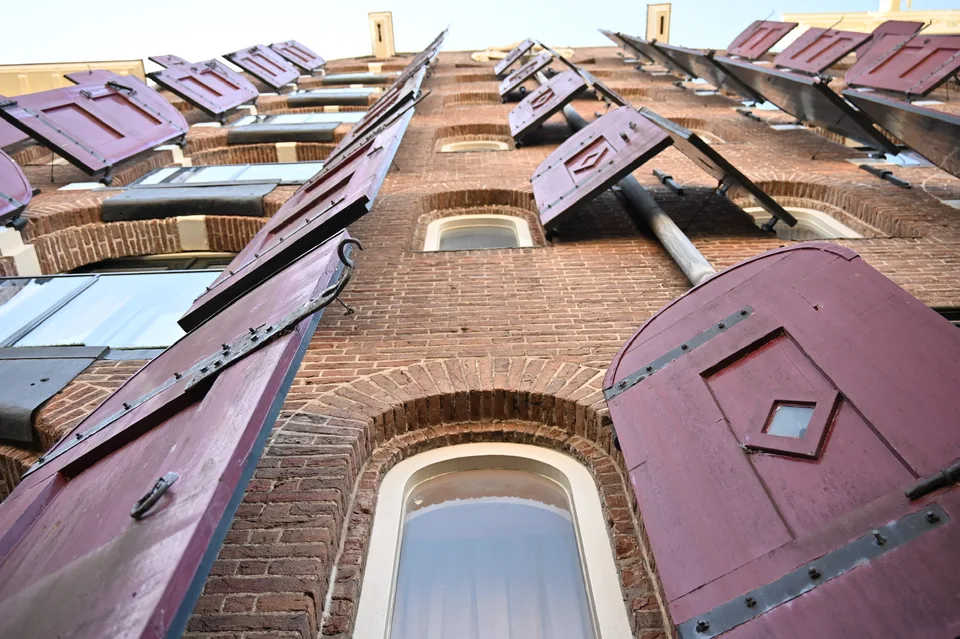
The houses had excellent posture. Mostly.
A very convincing argument for going indoors
At the Rijksmuseum, the brick towers offered a change of scale. Inside, entire rooms had been given over to people who could turn a table, a face or a shaft of light into something worth crossing a continent to see.
Vermeer’s The Milkmaid is a small painting with an unreasonable ability to hold your attention. Milk falls from a jug. Bread rests on the table. Nothing especially dramatic appears to be happening, which may explain the relief of looking at it. So much of travel involves getting to the important thing. Here was a woman absorbed in the thing directly in front of her, while the rest of us crowded around to study her concentration.
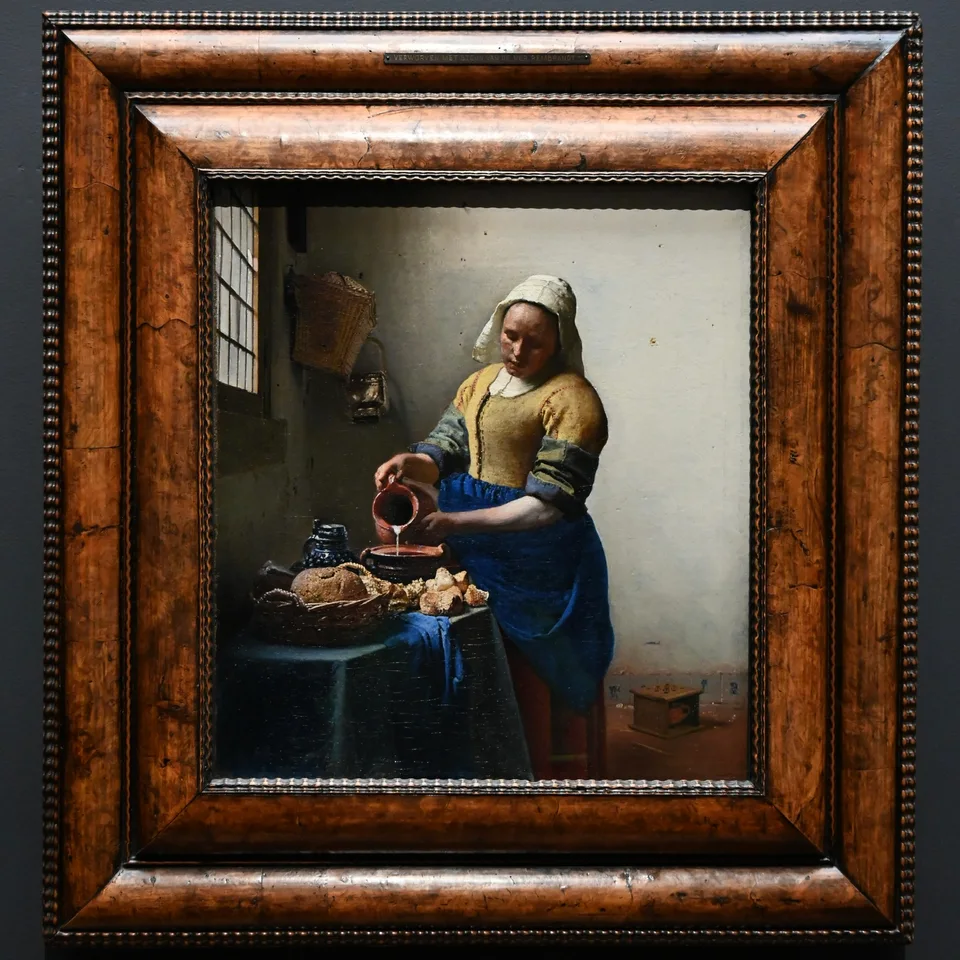
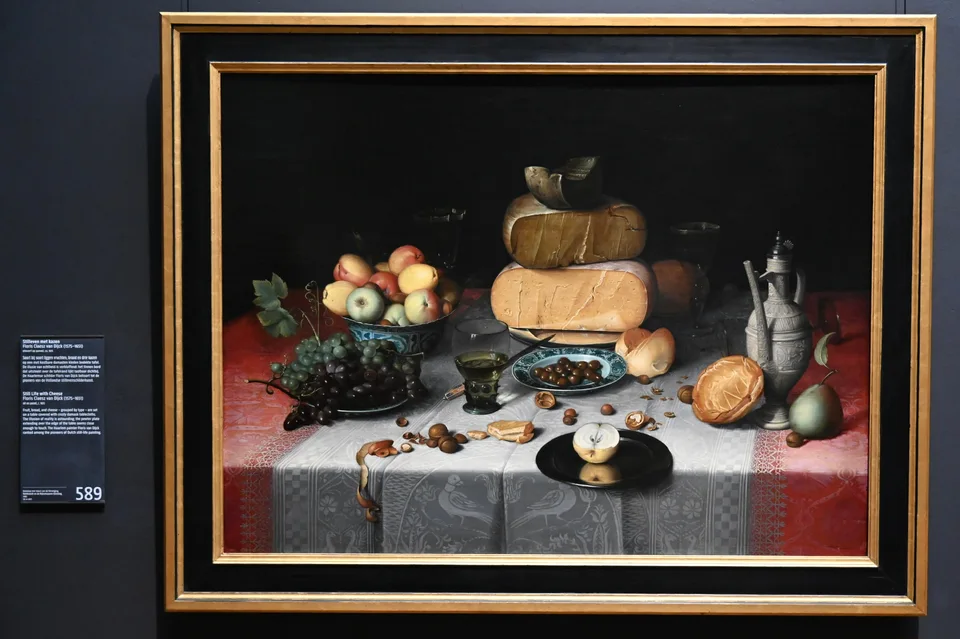
One poured the milk. Everyone else made a day of it.
Rembrandt had rather different plans for a group portrait. The Night Watch gathers people into motion and shadow, instead of asking them all to look pleasantly available. Through the glass enclosure around the painting, we could see a famous work receiving the sort of attention most of us reserve for a mysterious noise in our car. Conservation makes a useful interruption to the myth of effortless genius. Someone has to keep the masterpiece alive.
Nearby, the men in The Syndics looked up from their table with the collective confidence of people who expected their meeting to matter. Across another wall, Jan Asselijn’s swan spread its wings in a furious white defense. We were delighted by the range of personalities available without anyone having to say a word.
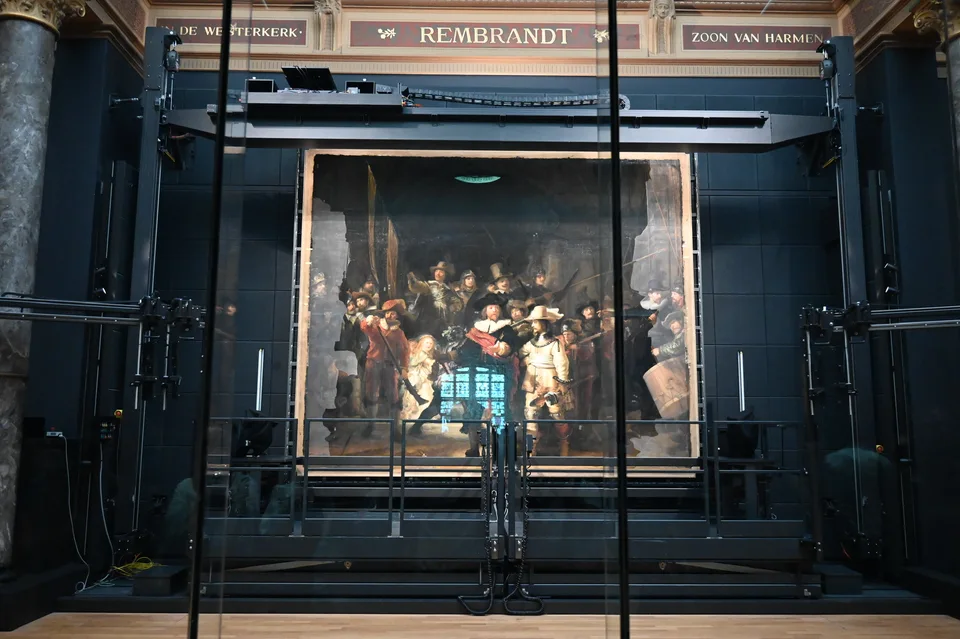
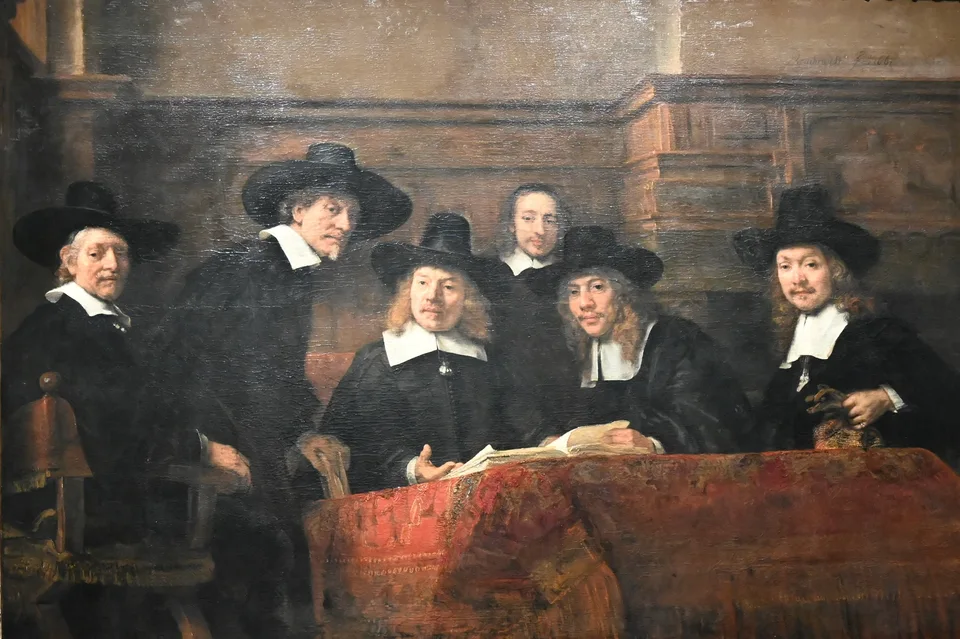
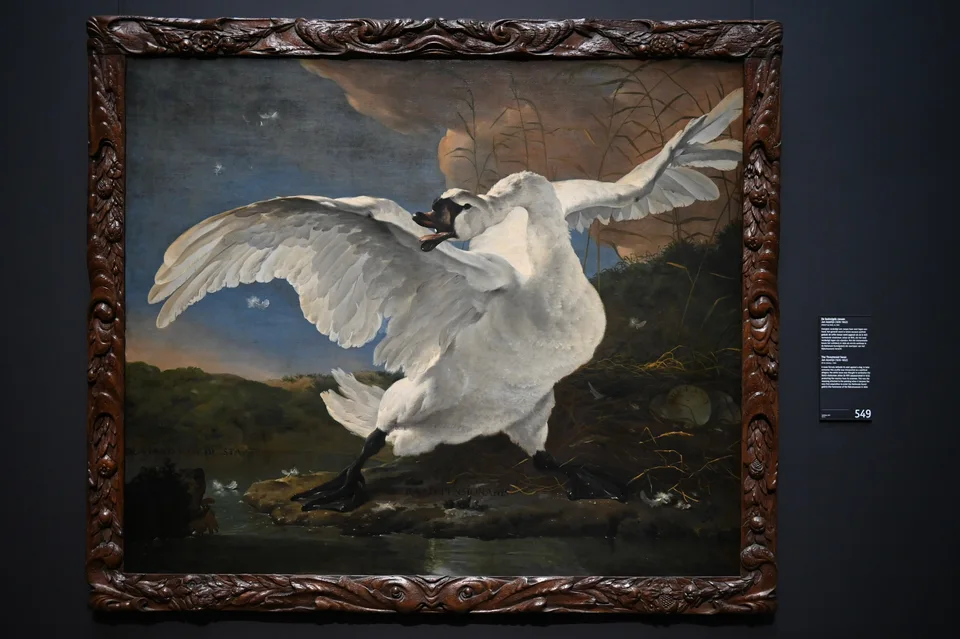
Several centuries of strong opinions.
The museum refused to stay within the boundaries of painting. A ship model carried enough rigging to reward a long inspection. A historical keyboard instrument made even the lid worth decorating. Small carved figures and gilded religious images had their own gravity, their makers’ patience still visible in the surfaces.
Then the Cuypers Library opened below us: shelves, railings, staircases, books stacked into an architectural argument for knowing more. It is still a working research library. From the visitor gallery, it looked like the room a person might design after deciding that one more bookshelf would probably solve everything. We understood the temptation.
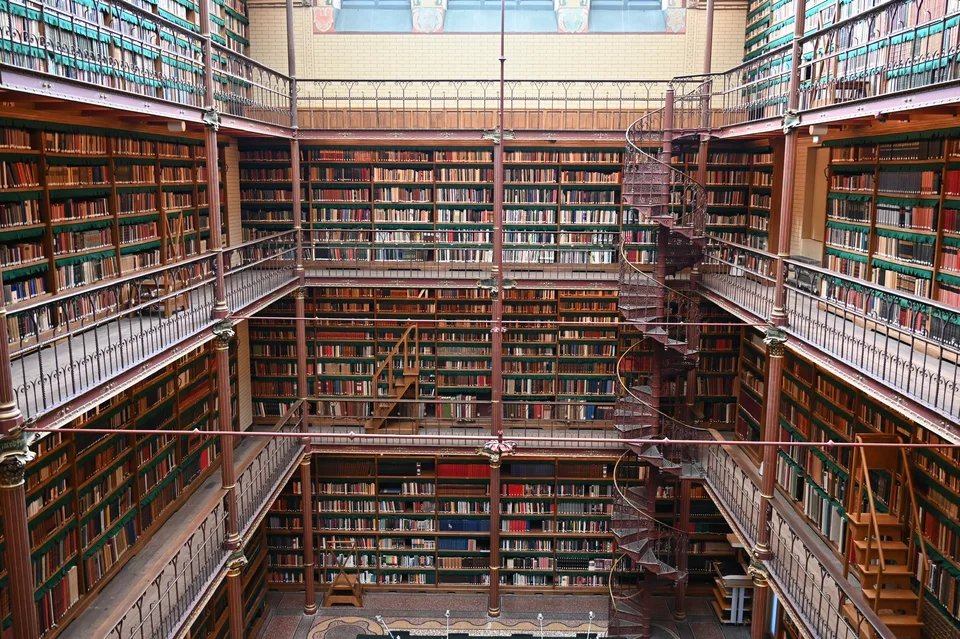
A modest collection of things we haven’t read.
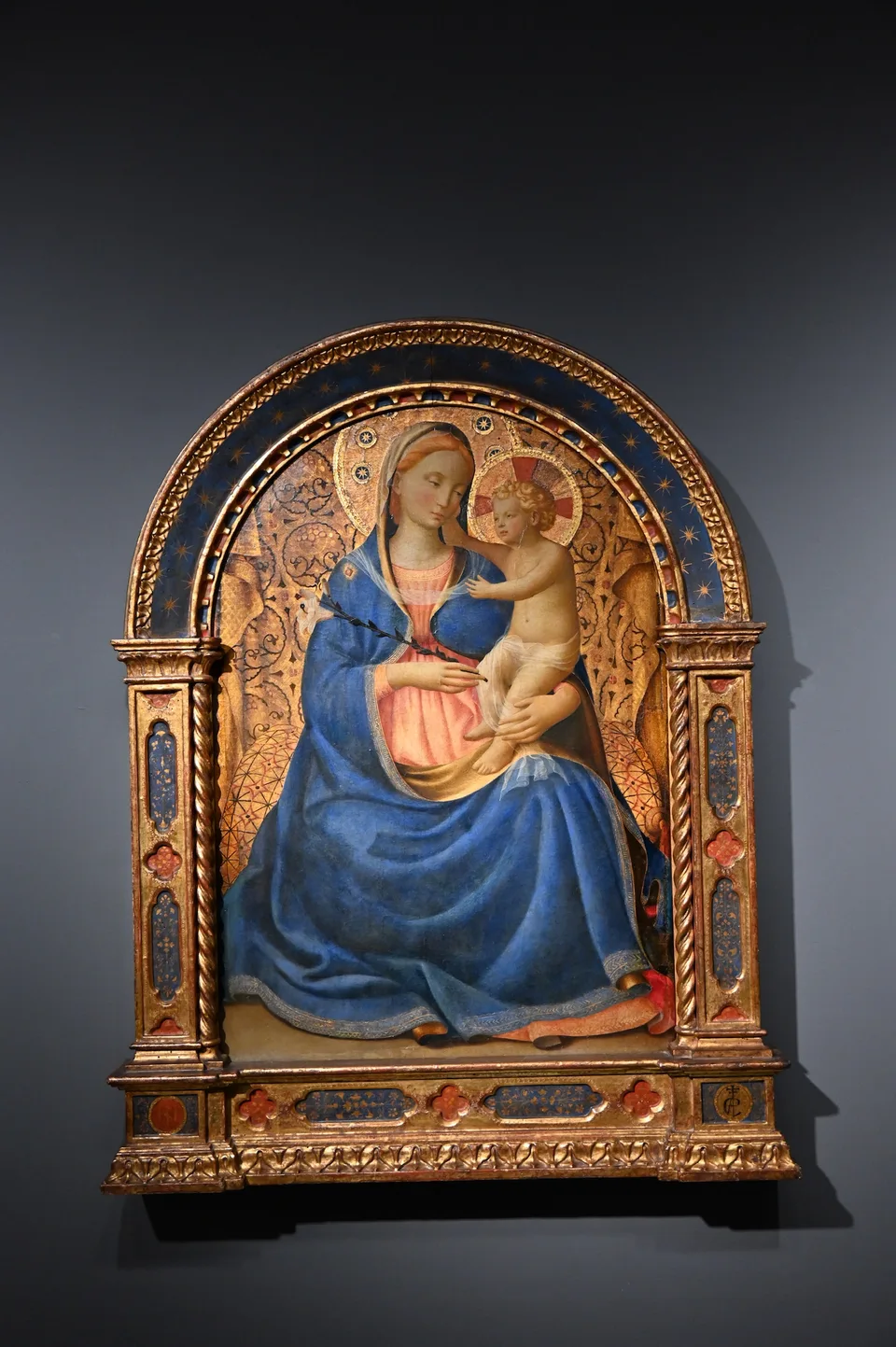
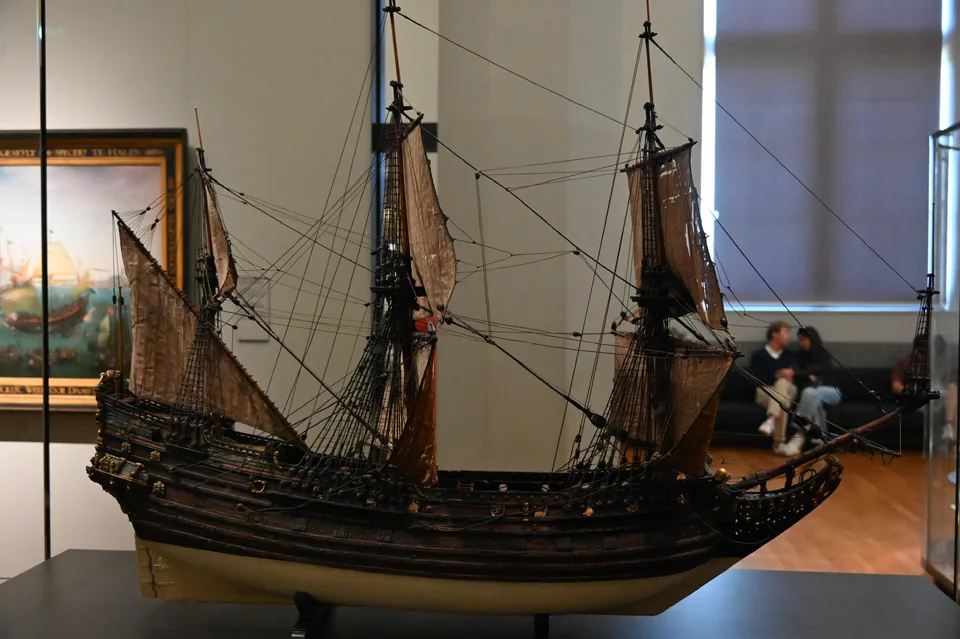
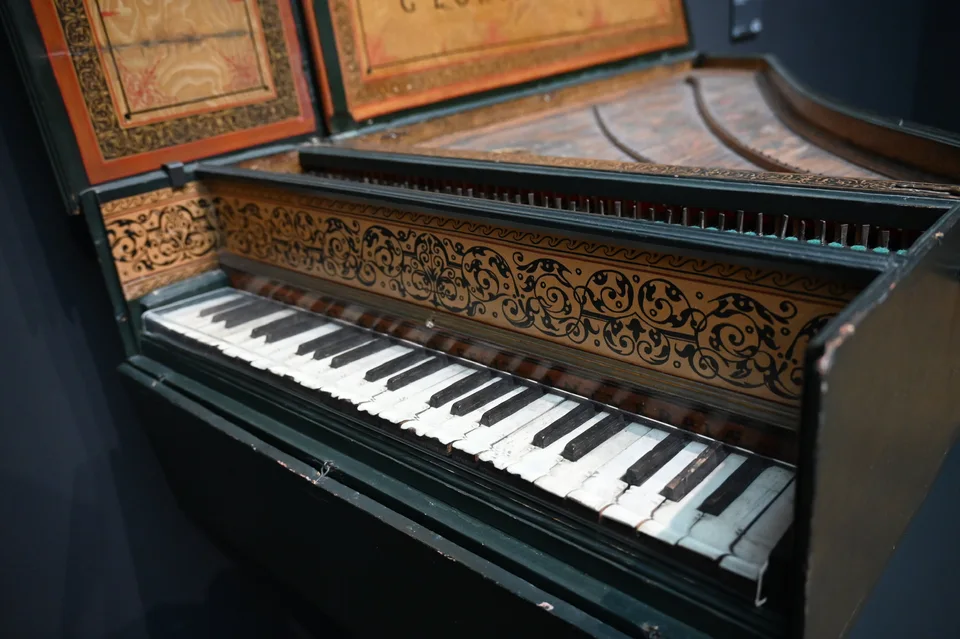
Even the supporting cast had dressed for the occasion.
“We had just spent time admiring cheese in a frame. Encountering it on a counter felt like a sensible progression in our education.”
Outside, an accordionist sat against the brickwork. After rooms full of elaborate objects made to survive their owners, here was music that would disappear as soon as the next note arrived. We stopped long enough for the change to register.
Back on the streets, the scale narrowed again. A boat passed beneath a bridge. Leaves broke up the light on the water. The Westerkerk tower appeared above the trees, a familiar vertical marker in a city that mostly asks you to look along things: a canal, a row of houses, the next stretch of pavement.
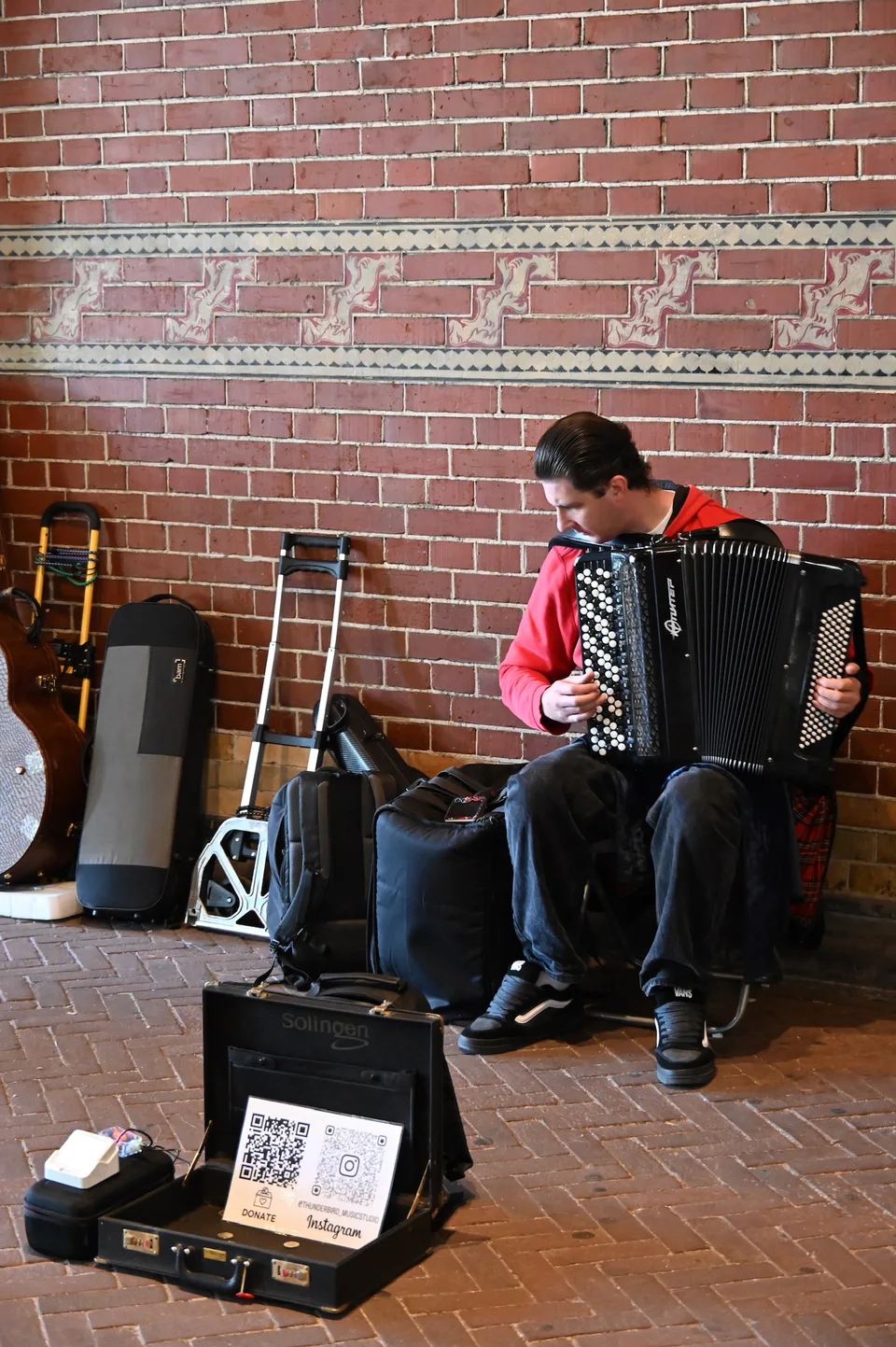
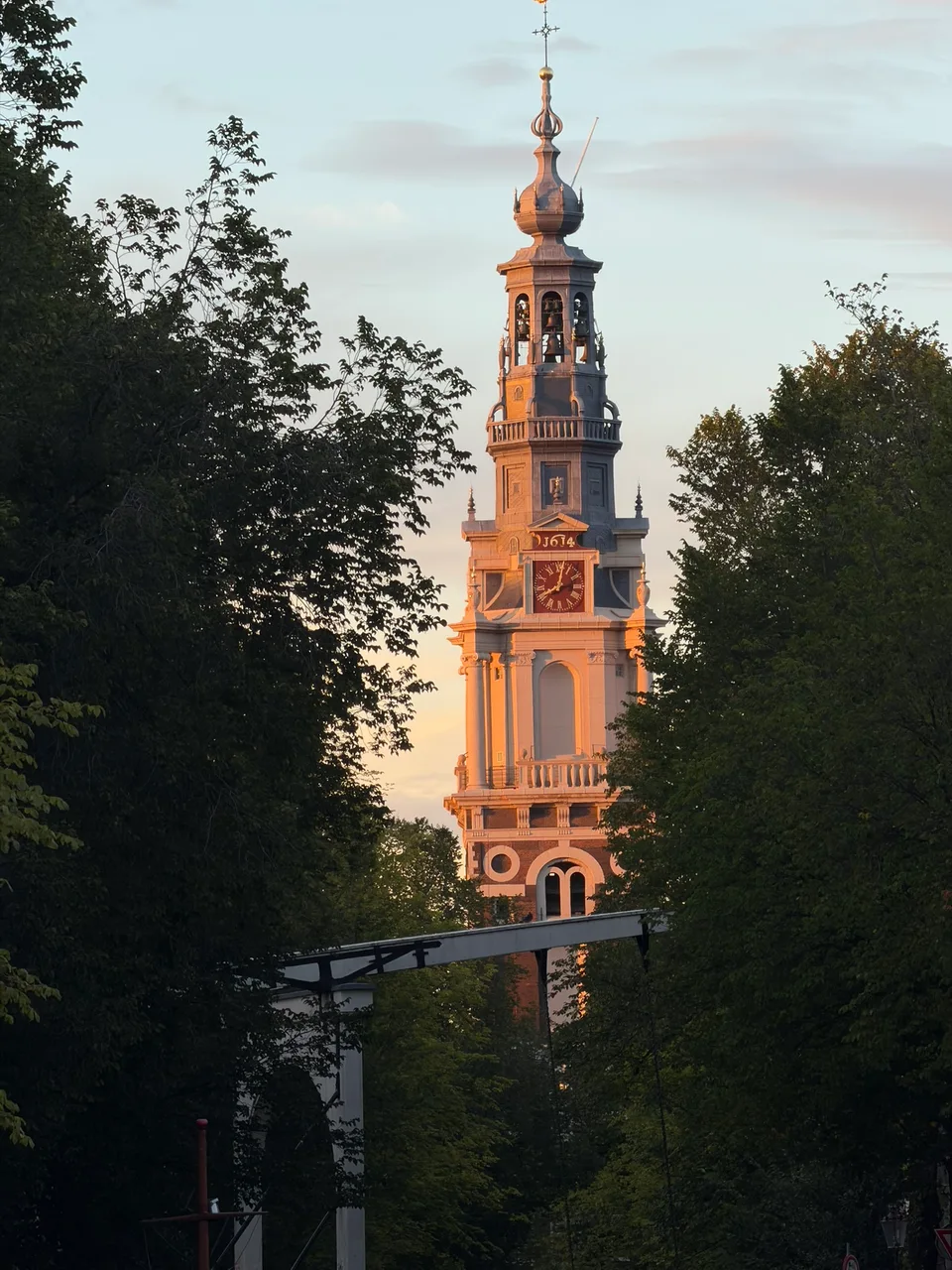
The soundtrack wasn’t in the collection.
Serious business, involving cheese
The flower market offered the optimistic prospect of taking Amsterdam home as a bag of bulbs. Rows of them sat among bouquets and bright displays, each apparently capable of becoming a much better gardener’s garden than ours. Flowers have a persuasive business model: show you the result, sell you the possibility.
The cheese shops were more immediate. Wheels and wedges filled shelves; small samples made a compelling case for further investigation. Dutch still-life painters had clearly understood the appeal. We had just spent time admiring cheese in a frame. Encountering it on a counter felt like a sensible progression in our education.
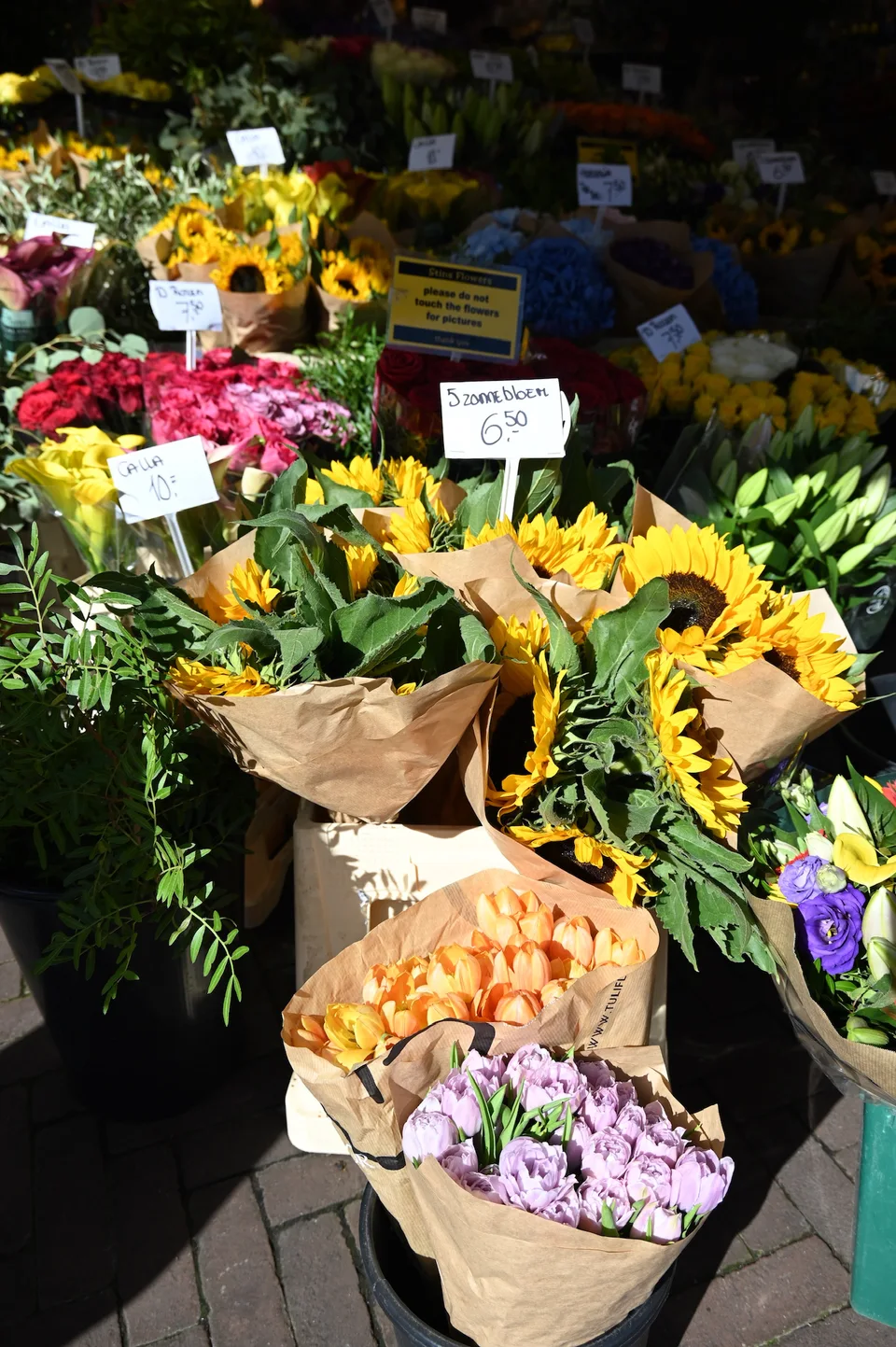
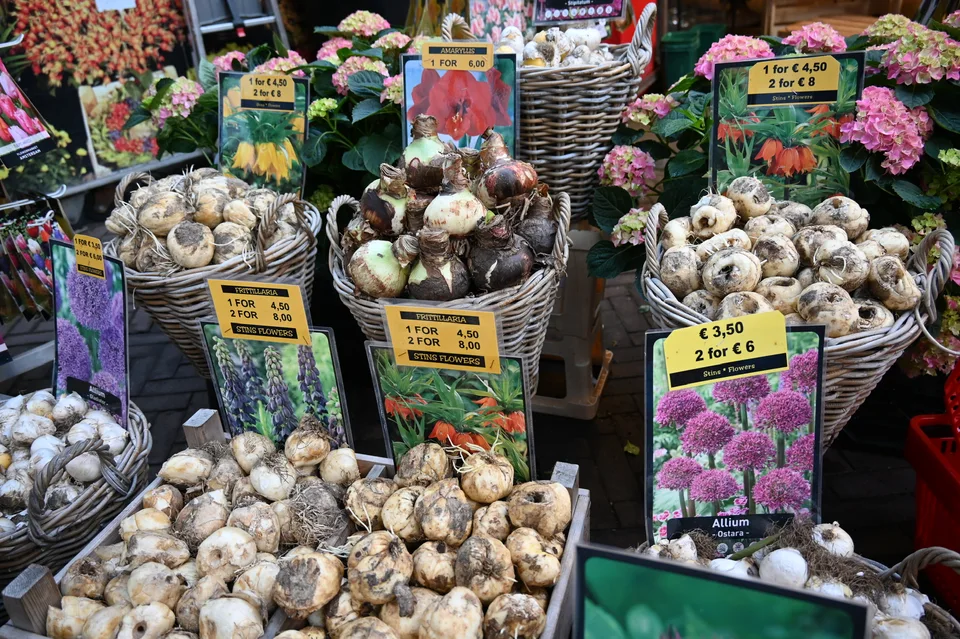
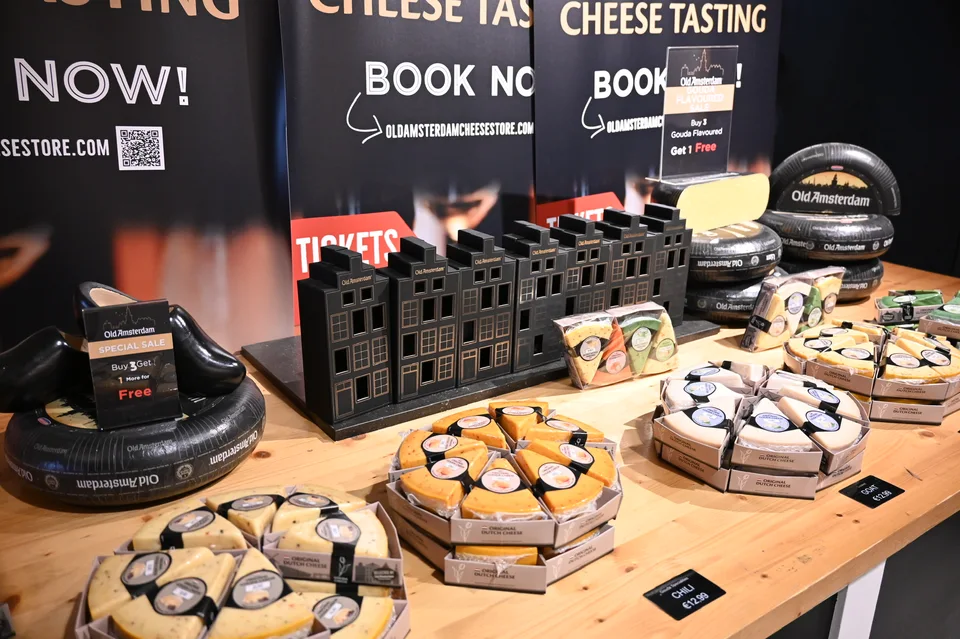
Some souvenirs require a garden. Others require a knife.
There were shops with bicycles in their windows and records lined up in bins, inviting the slow, pleasantly indecisive browsing that online shopping has tried so hard to eliminate. You could spend a good part of the afternoon moving between things somebody had chosen to keep, repair, sell or play.
We liked this Amsterdam as much as the monumental version. It gave the beautiful streets a reason to exist beyond being photographed. A record shop needs listeners. A cheese counter needs hungry people. A bicycle needs someone going somewhere, even if that someone keeps stopping on bridges.
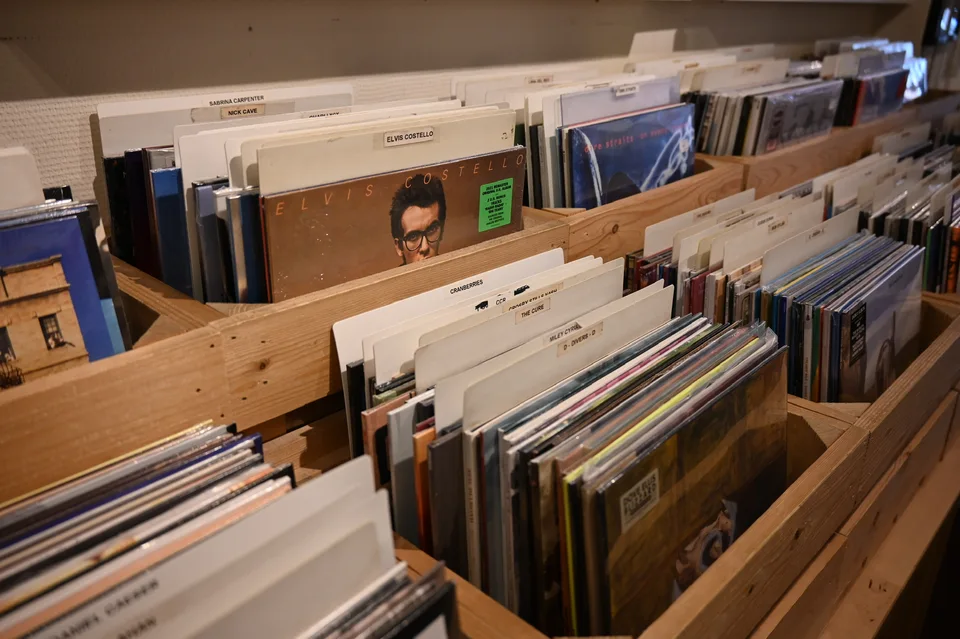
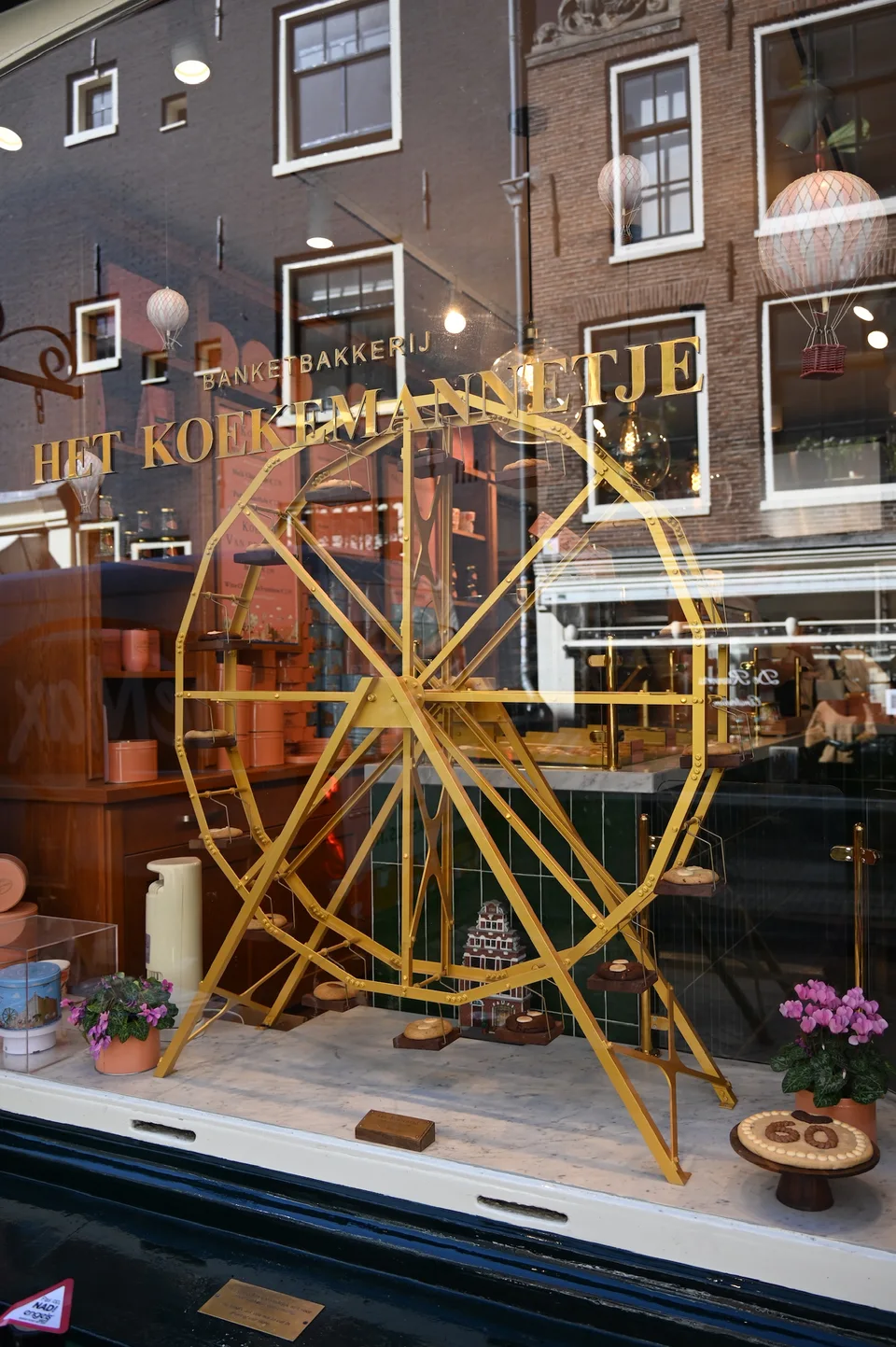
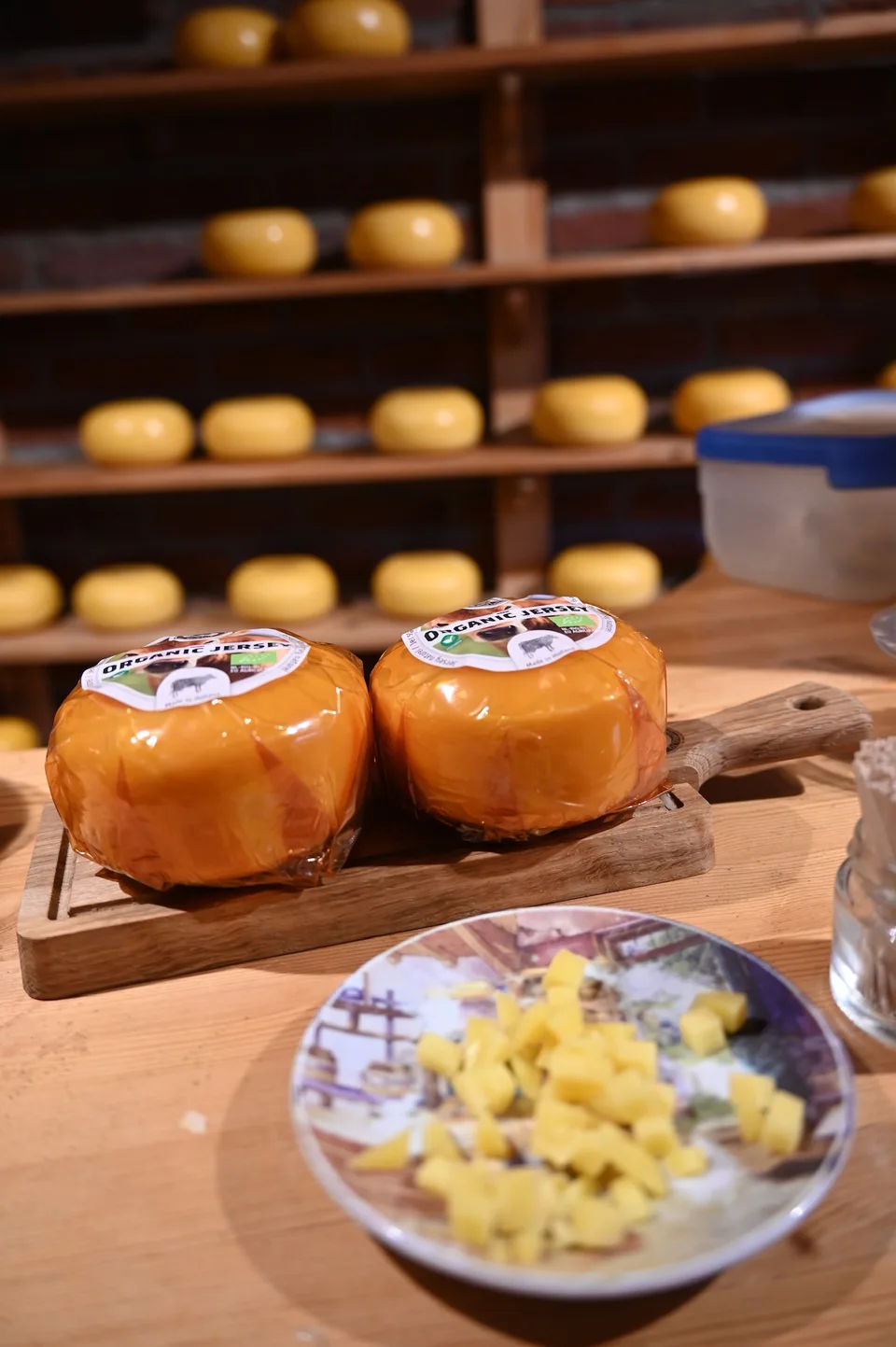
Our cultural interests remained admirably broad.
At De Krijtberg, the interior rose into an elaborate world of pointed arches, color and carved detail. Outside, the canal continued with its boats and bicycles. Inside, the eye kept traveling upward. The city had changed the direction of our attention without requiring us to go very far.
That was becoming the pleasure of Amsterdam: how much could fit behind a comparatively restrained façade. A church, a shop, a museum room, a whole life carried on a few steps above the water. It rewards the person willing to look through the next doorway rather than make a decisive announcement about having understood the place.
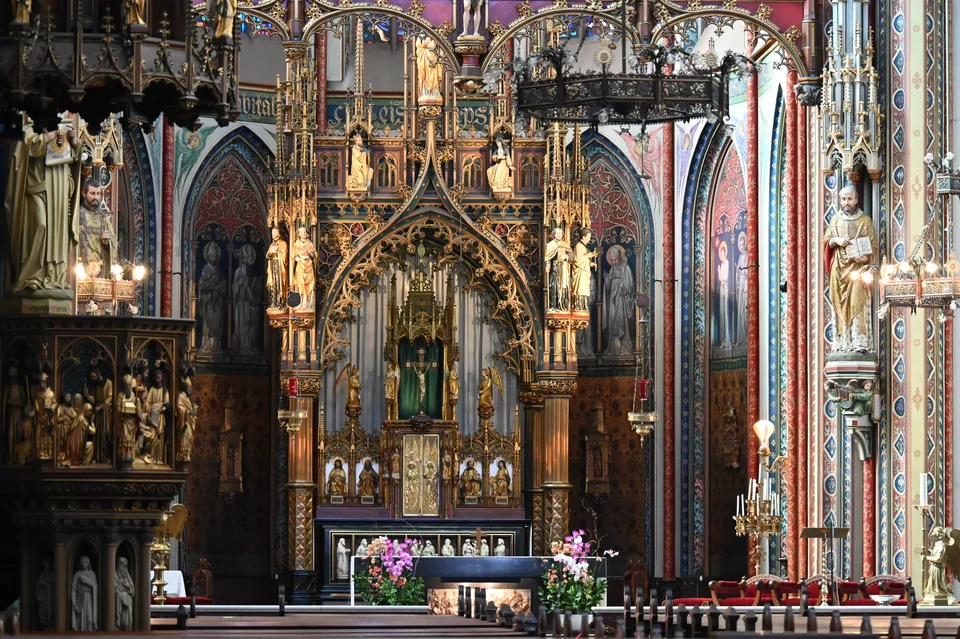
A rather ambitious ceiling to look up to.
The color comes loose
At the Van Gogh Museum, restraint gave way to strokes of paint that seemed to carry the force of the hand making them. The Potato Eaters stayed close to the dark earth of its subjects. Sunflowers pushed their yellows against one another. In Almond Blossom, pale branches stretched across blue, a painting Van Gogh made for his newborn nephew.
Knowing that last detail altered the picture. The branches were no longer merely beautiful branches. They belonged to the hopeful, ordinary business of welcoming somebody into a family. A painter whose life is so often reduced to suffering had made something for a baby’s room. It was worth allowing that gentleness its own space.
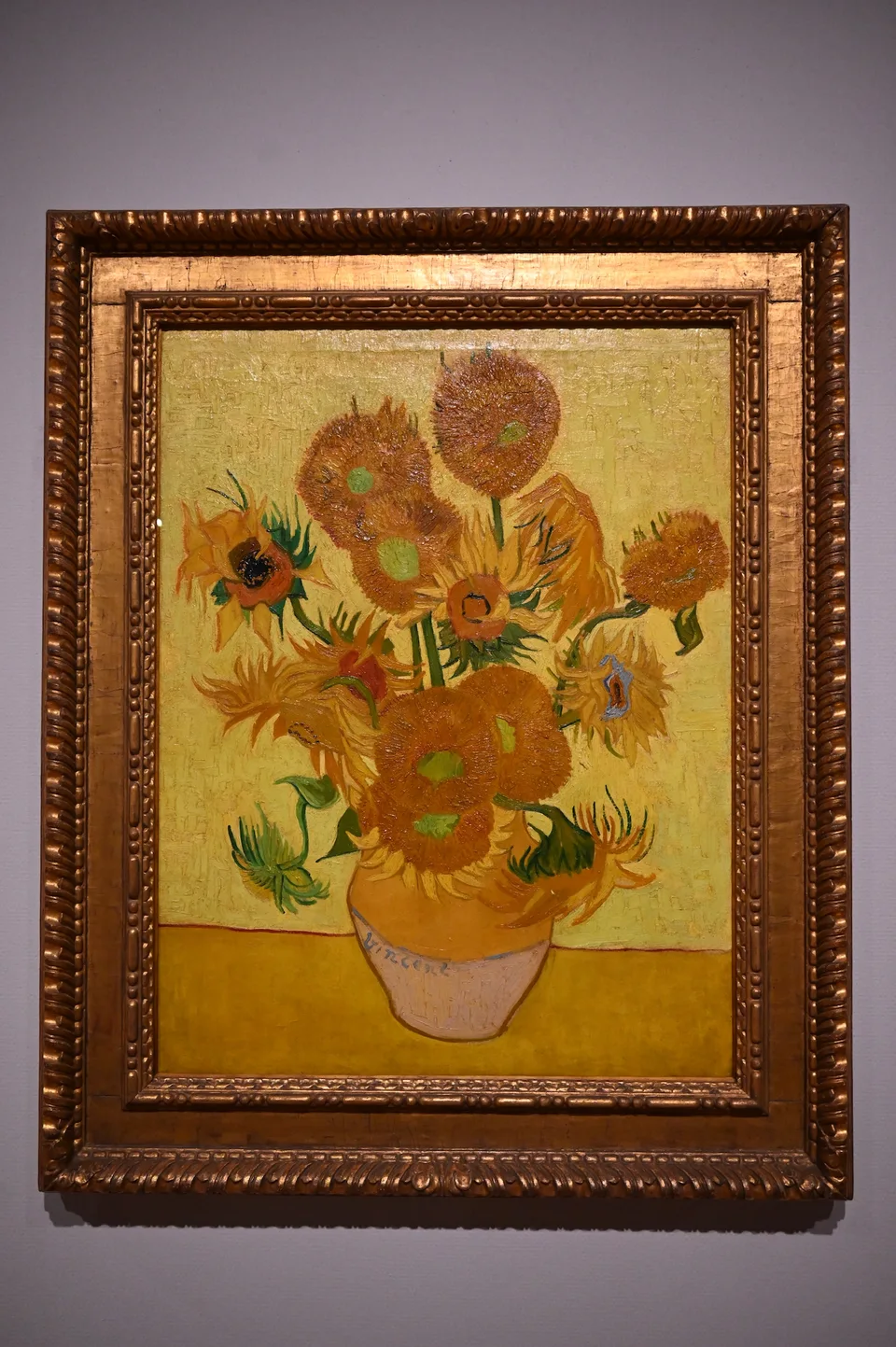
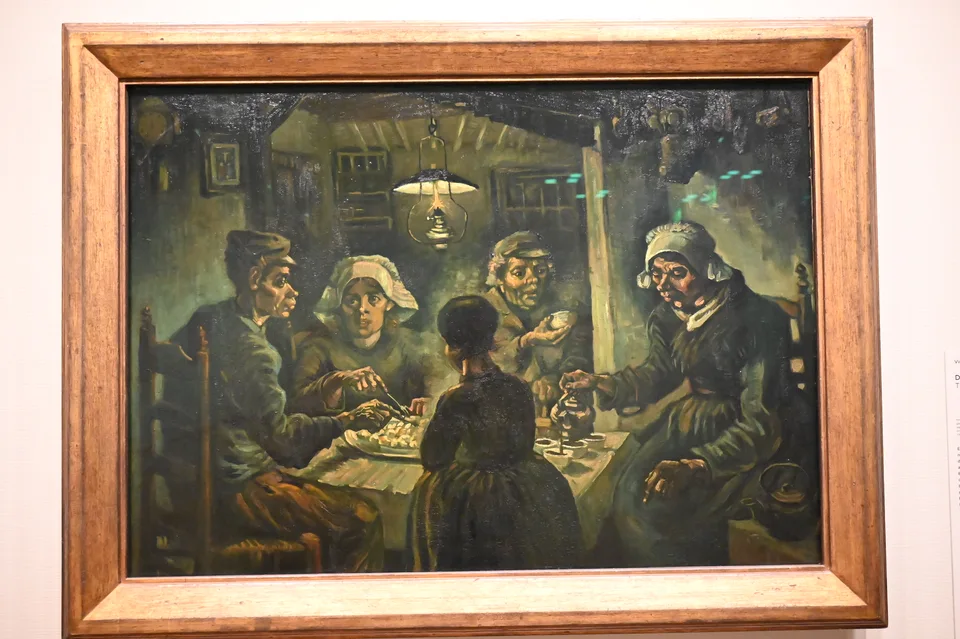
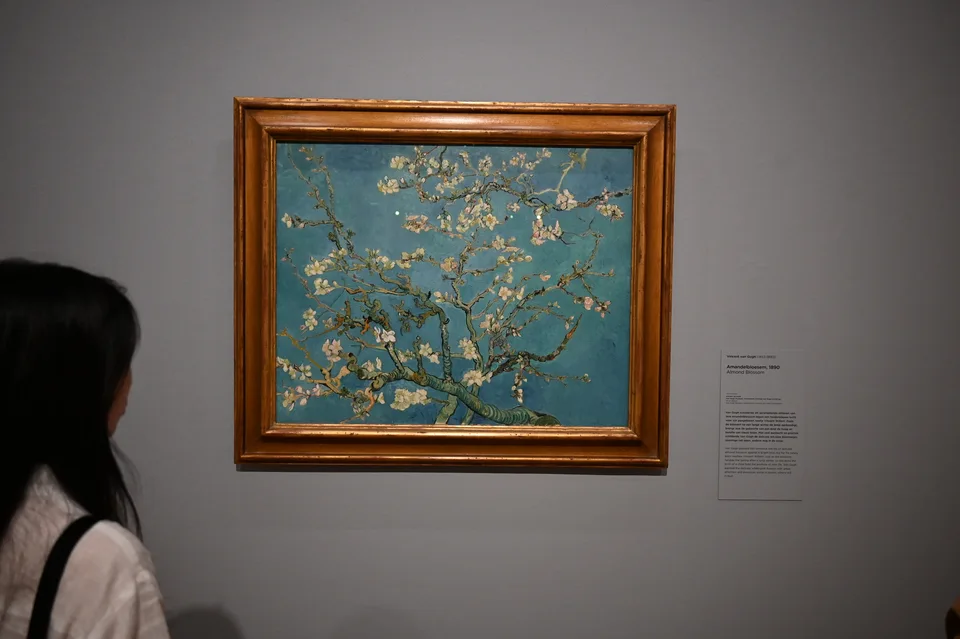
He could make a room out of yellow.
We moved between a bedroom, a field under heavy clouds and the artist looking back from a self-portrait. Seeing them together made the familiar reproductions feel insufficient. The changes in color and touch were the point; the room kept asking us to adjust our eyes.
There are other essential Amsterdam stories that deserve that same attention. For an Anne Frank House visit, arrange tickets through the museum itself and leave time around it. Some places should not be squeezed between lunch and the next reservation. The city’s beauty is real, but it is never the whole of its history.
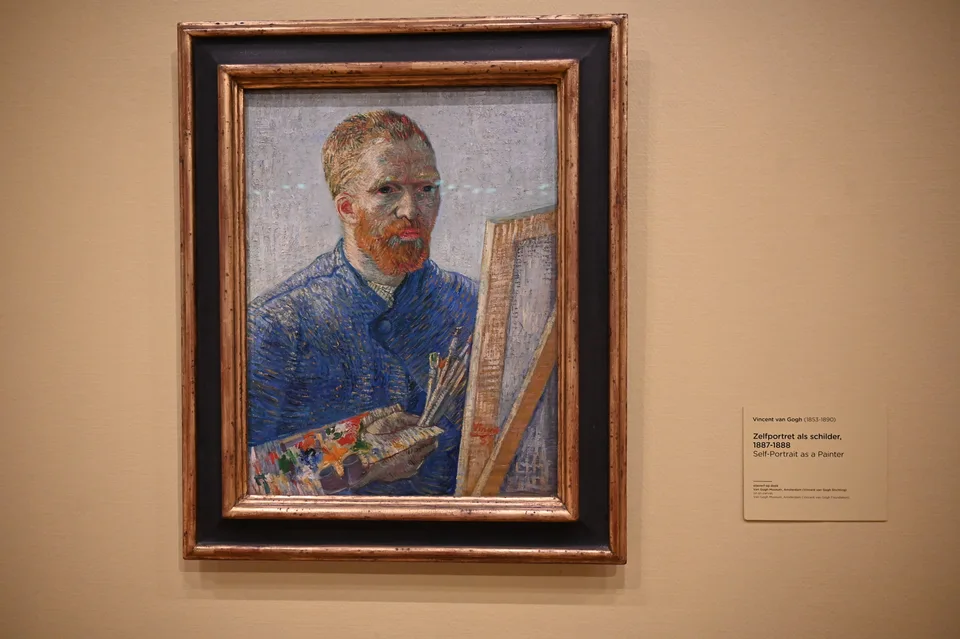
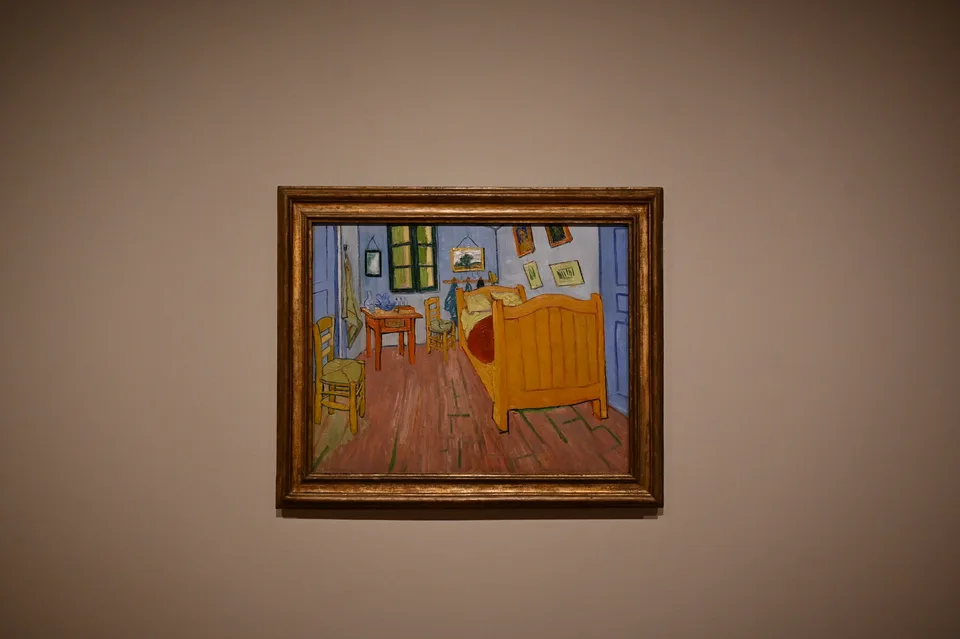
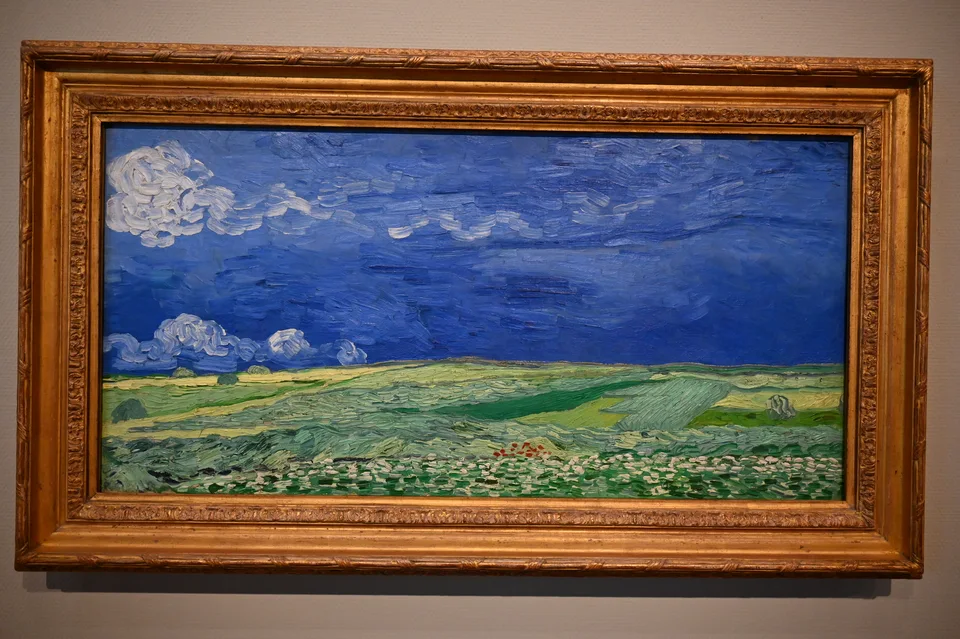
The brushwork had its own weather.
Toward evening, we returned to the canals. The same bridges that had looked practical in daylight began collecting small necklaces of light. Water caught the last orange of the sky; a boat went beneath an illuminated arch and briefly carried the scene away with it.
We had spent our days looking at people who understood light exceptionally well. Amsterdam supplied one final demonstration outside, free of a frame. We stood on the bridge longer than we needed to. By then, that had become our most reliable method of getting anywhere.
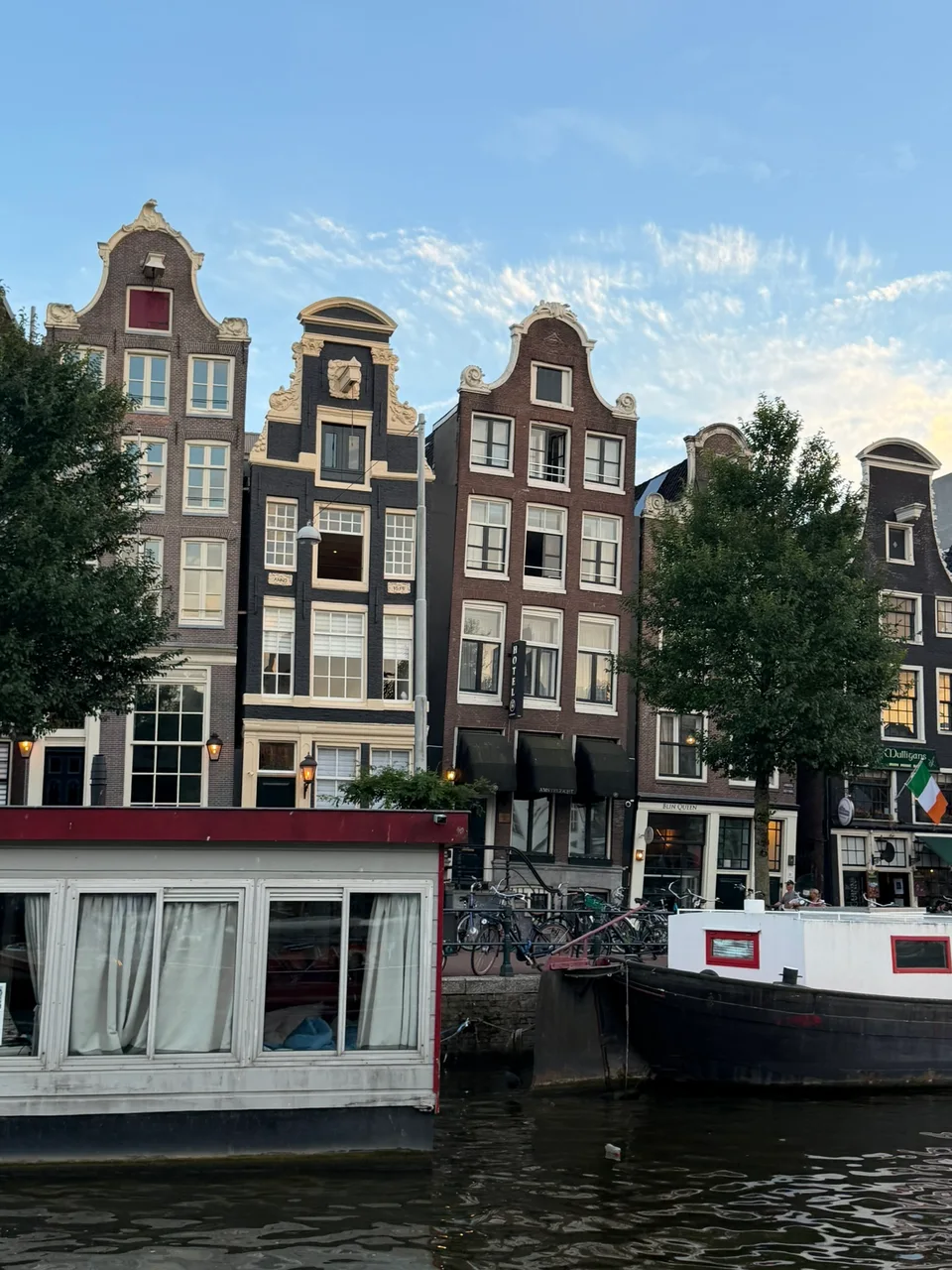
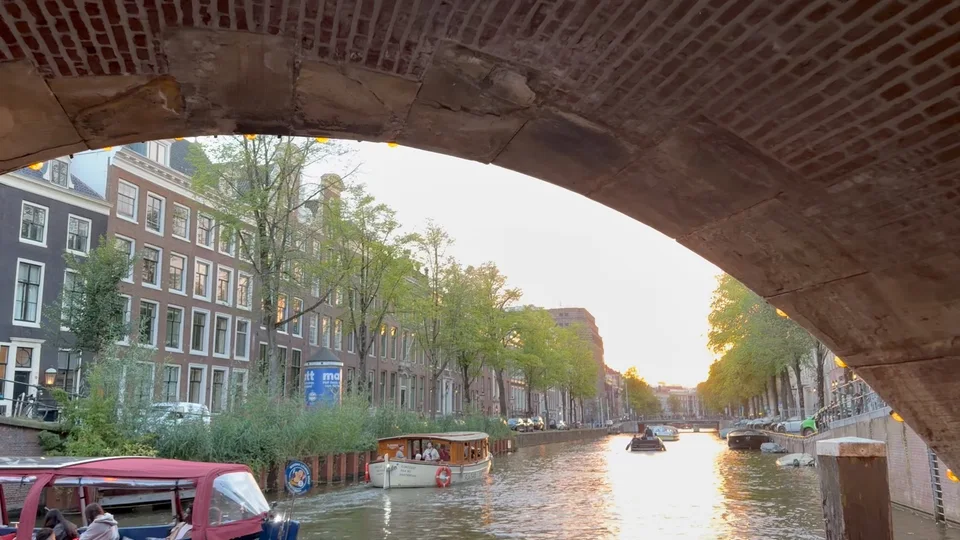
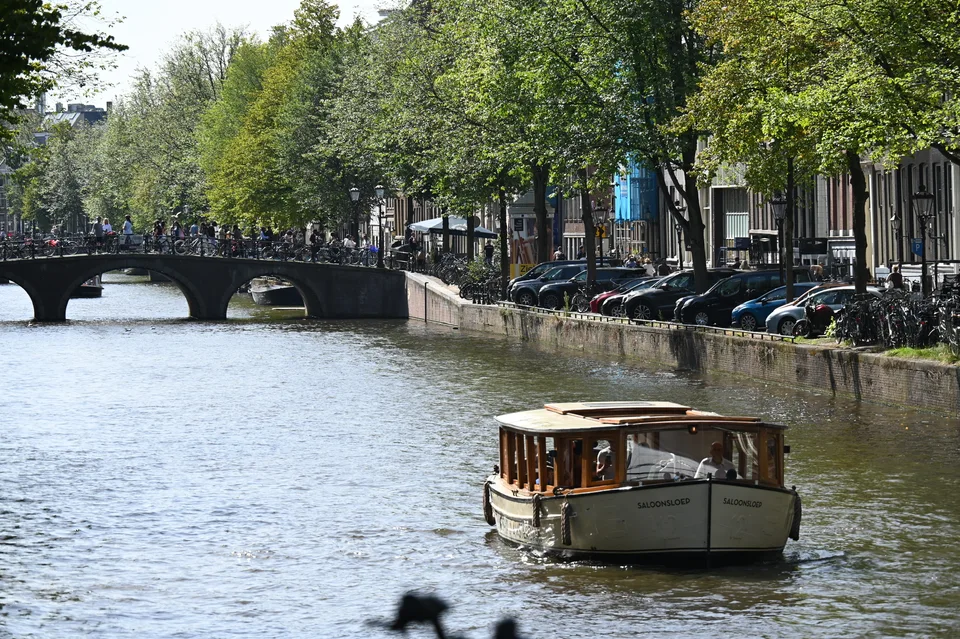
The scenic route kept winning.
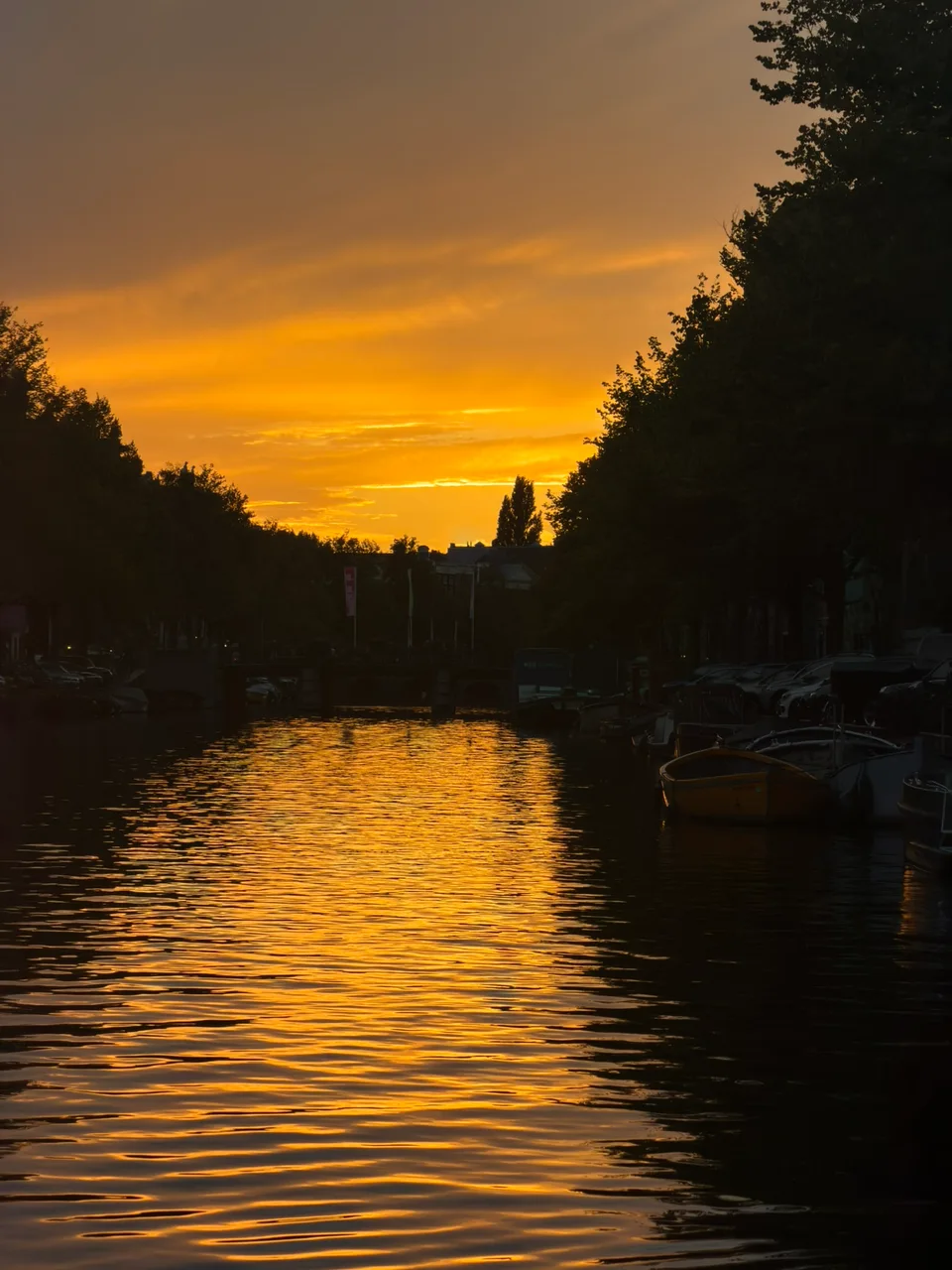
The city, signing off in gold.
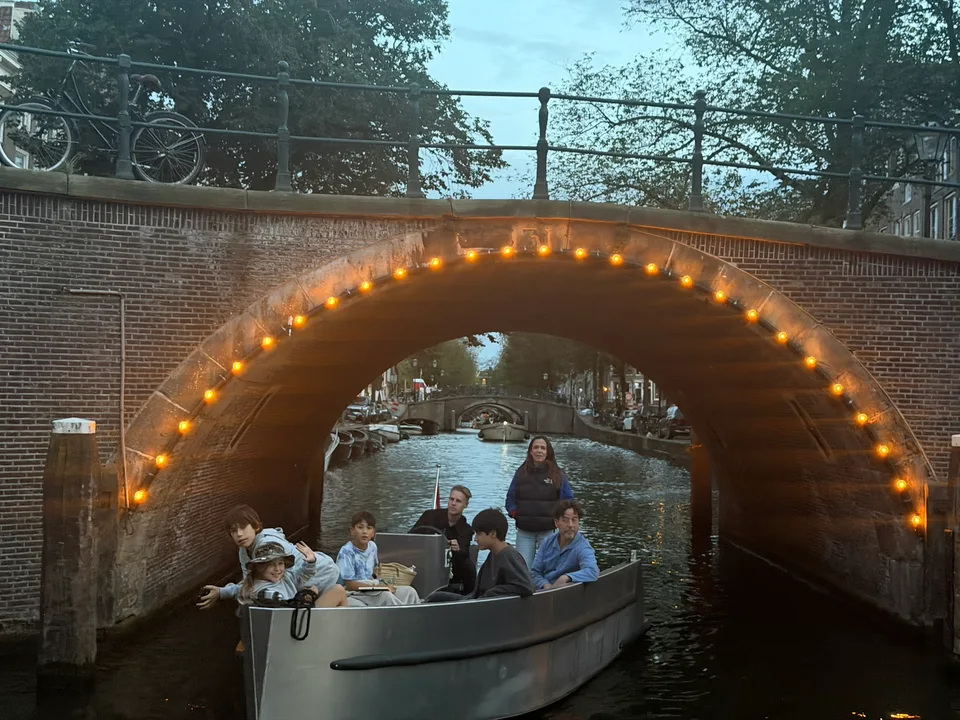
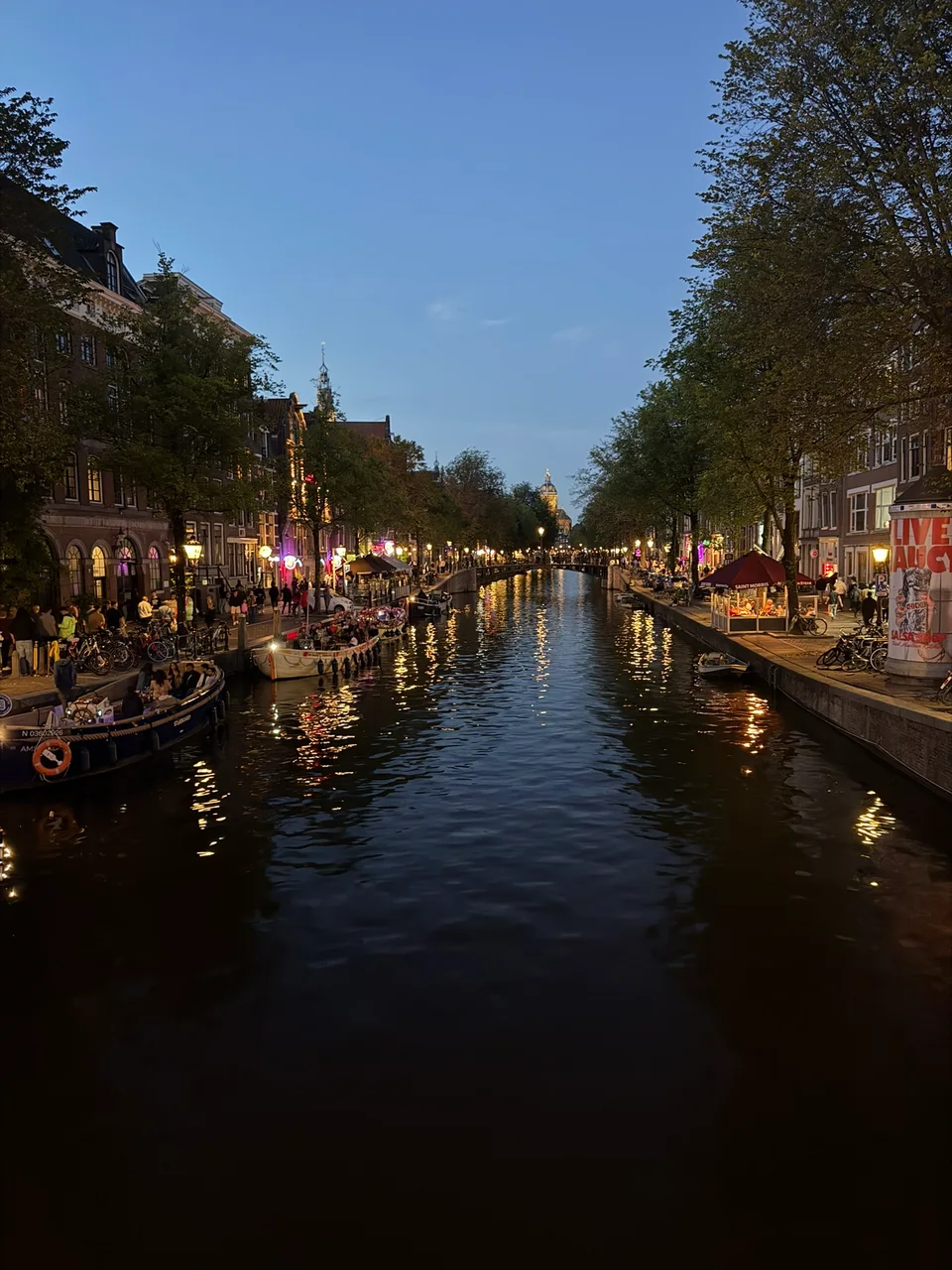
No need to hurry the last bridge.
Visited 2026 · Written 2026