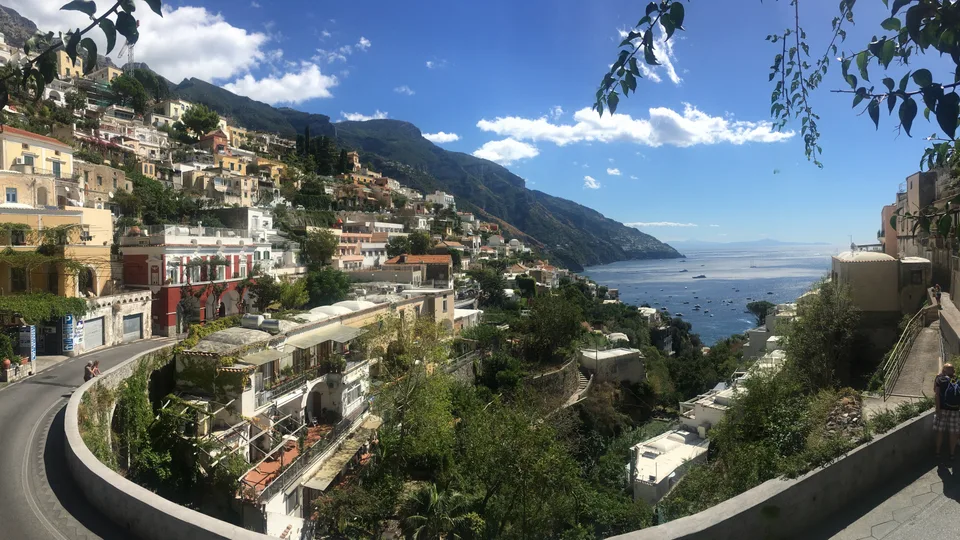
There are places that make you reach for the camera. Positano makes you wonder where to point it.
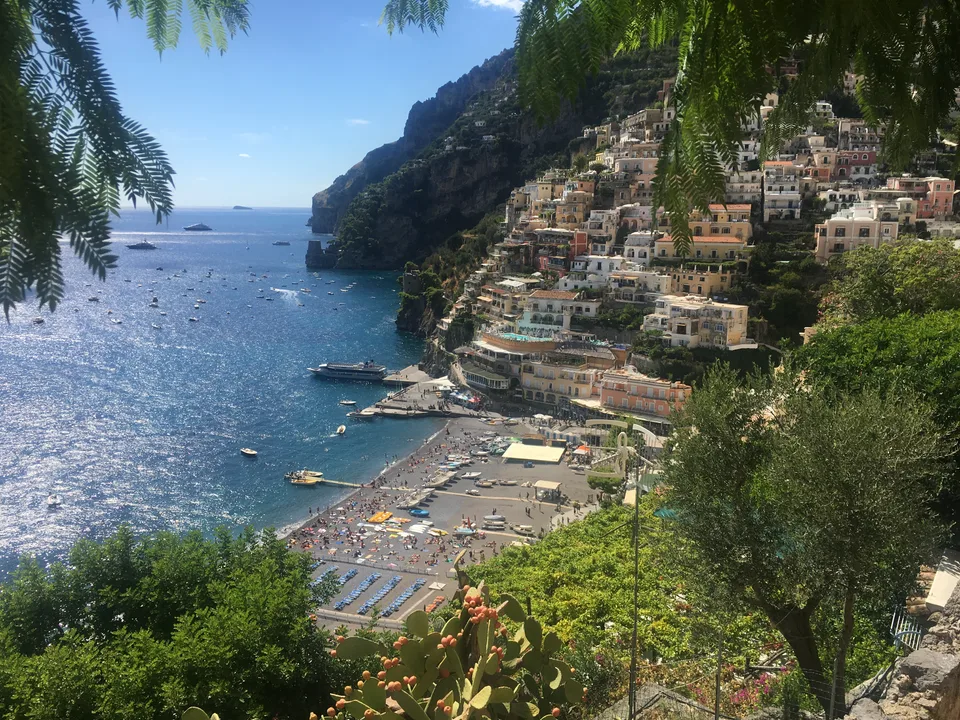
Up, at the buildings climbing the hillside. Down, at the boats scattered across the blue. Across, at a road curling around the town as though someone designed it with a ribbon and then left the engineering to somebody else. The Amalfi Coast is not short of a good angle. It is short of flat ground.
Positano fills our photographs: from the water, from the lanes above the beach, from terraces where the next row of houses seems to begin somewhere beneath your feet. Then the album moves offshore to Capri, where the coastline gets even more theatrical.
It would be easy to turn all that into a list of things to conquer. But look at the pictures for a little longer. There are boats resting at the shore. Empty deckchairs. A bench beneath a tree. A table with lunch on it. The place keeps offering alternatives to being busy.
A town built in layers
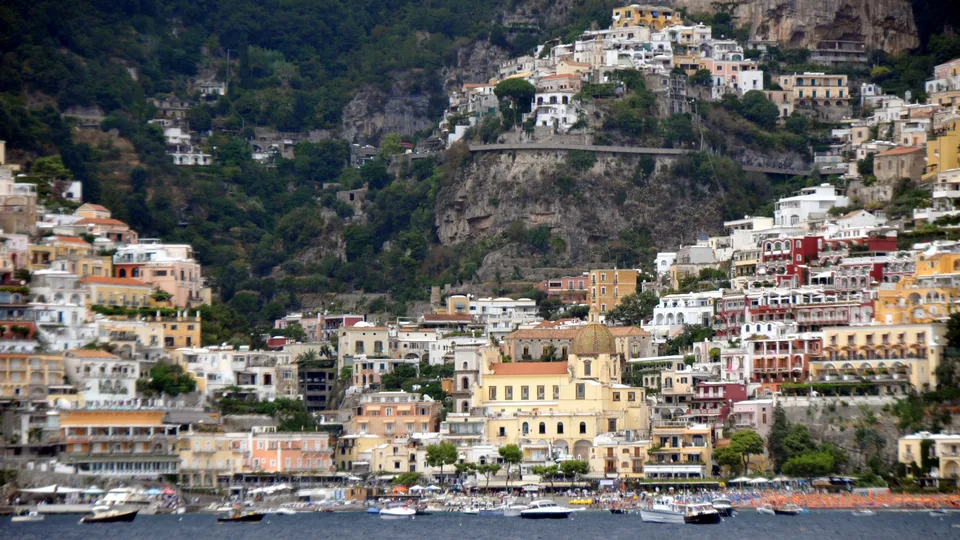
From the water, Positano looks improbably composed. Pale yellow, dusty pink, white, a patch of green, another terrace. The buildings seem to have negotiated individually with the mountain. Down at Spiaggia Grande, the beach puts a horizontal line beneath the whole arrangement.
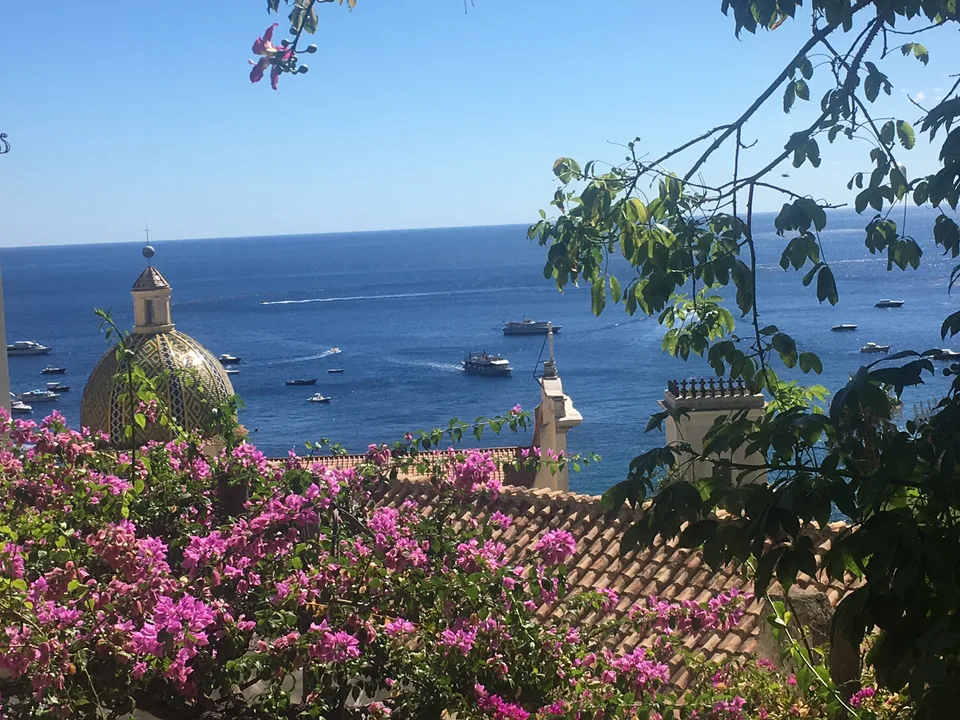
We have that broad view in the album, and the closer version too: a tiled dome, flowers over a wall, a narrow opening toward the sea. The first tells you where you are. The second gives you a reason to linger.
Santa Maria Assunta is the church behind the famous dome. Let it be more than a decorative landmark you use to orient a photograph. Give the church a little attention, then turn back into the streets. Positano is a town as well as a view, even when the view is doing its best to take over the conversation.
There is a practical consequence to all this beauty. Going down is a commitment to going up again. An address that looks wonderfully close to the beach on a map may involve rather more of your legs than expected. Check the actual walking route before booking. The sea view will not carry your suitcase.
Put something ordinary in the day
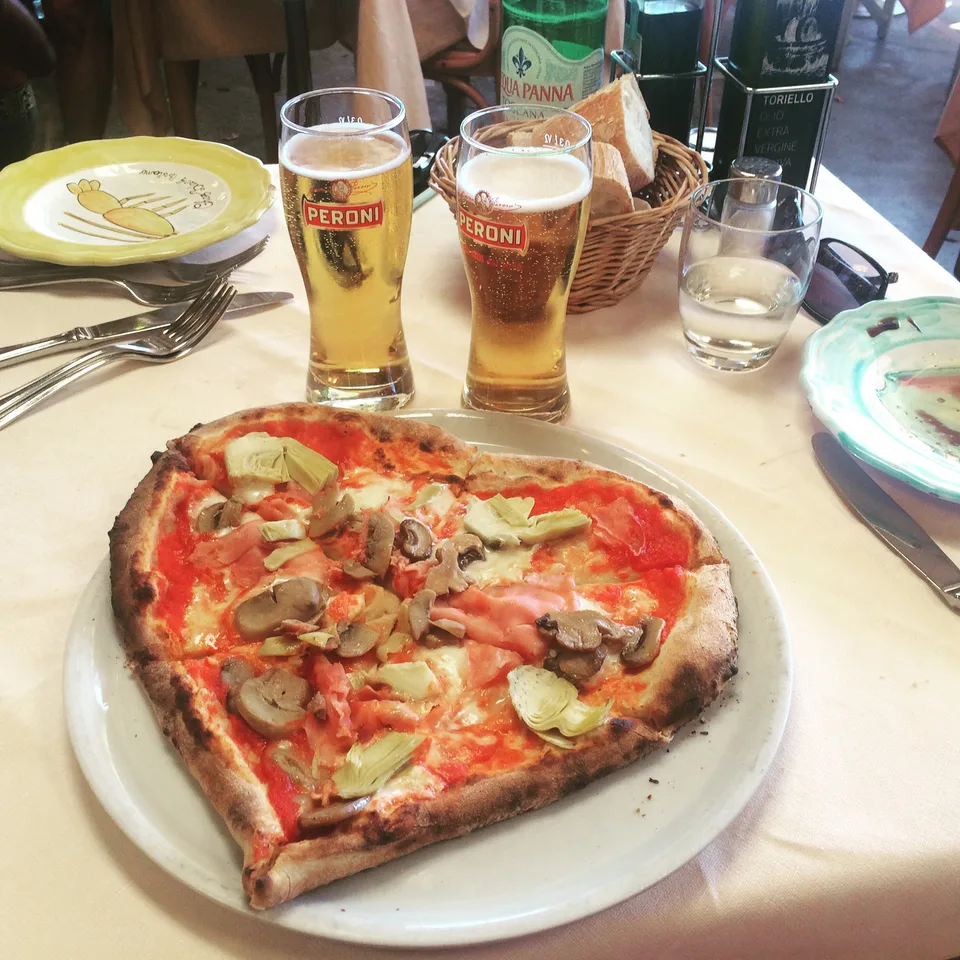
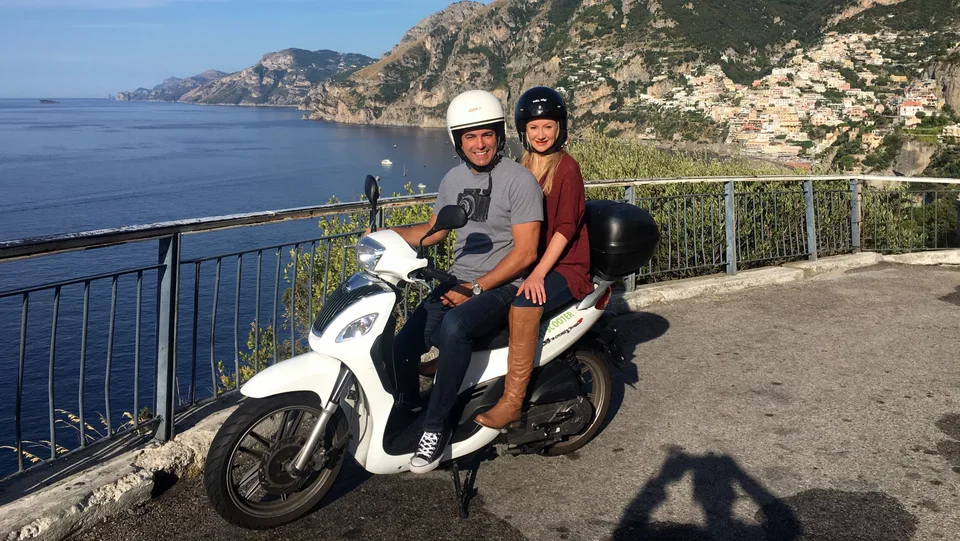
Our photographs include the other business of a holiday: a shoe shop, a pizza on a table, two helmets and a scooter. Proof that even in a place this photogenic, you eventually have to decide what to eat and how to get somewhere.
The lunch photograph is pleasingly unceremonious. Pizza, glasses, plates pushed around a small table. No monument in sight. It belongs here precisely because the coast can otherwise start to look like a sequence of grand reveals, each more determined than the last to justify the trip.
A meal gives the day a different shape. Sit down. Stop comparing the next town with the one you’re in. Give the person across from you a chance to compete with the scenery. They did, after all, come on the trip.
And the scooter? Those curves deserve your full attention. Choose transport for the journey you can handle comfortably, not for the photograph you would like to bring home.
Capri changes the scale
Capri is not one of the Amalfi Coast’s towns. It is an island in the Bay of Naples, and it deserves to be treated as its own outing. The distinction matters when you’re planning, even if the holiday photographs sit happily in the same album.
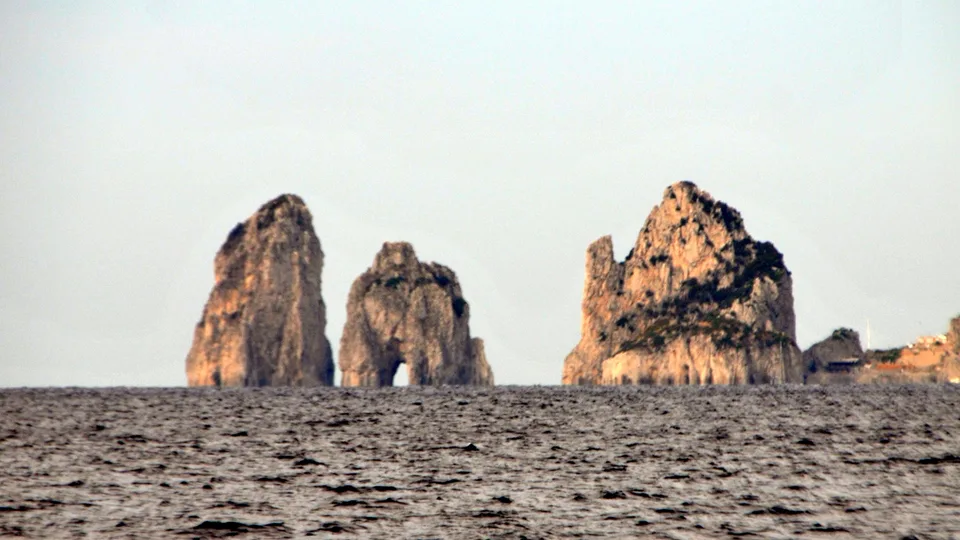
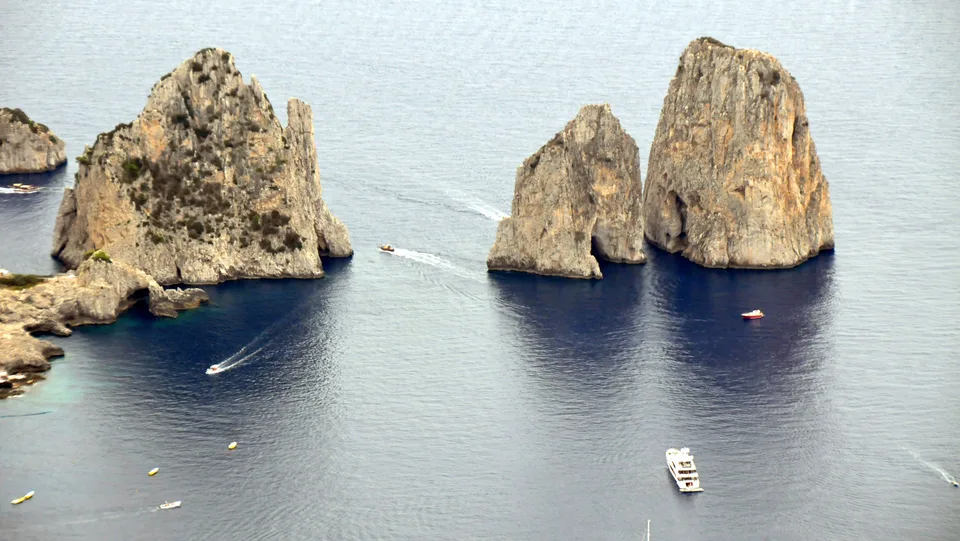
Ours carry us from Positano’s tiers of buildings to rock rising almost straight out of the sea. The Faraglioni look different at water level: less like a distant emblem, more like enormous physical objects occupying the space beside you. The light catches the stone. The water keeps moving beneath it.
Then there is Marina Grande, with small boats pulled up along the shore and the hillside behind the waterfront. Keep some of that working detail in the frame. An island is not made entirely of panoramas and people having an exceptionally expensive lunch.
The chairlift to Monte Solaro changes the scale again. Our pictures show Kristin in a single chair, the line climbing away behind her; in the wider frames, Anacapri spreads out below, white buildings gathered among green.
It is a wonderfully simple arrangement: a seat, a cable, and increasingly persuasive evidence that you are going up. Check the operator’s arrangements before you go, and be honest about whether an open chairlift sounds like pleasure to you. Nobody needs to turn a holiday into an unwanted test of character.
Higher up, the island becomes a shape rather than a collection of streets. The sea takes over. A boat that might dominate a harbor becomes a white mark in the blue. You begin to understand how much of the view is simply space.
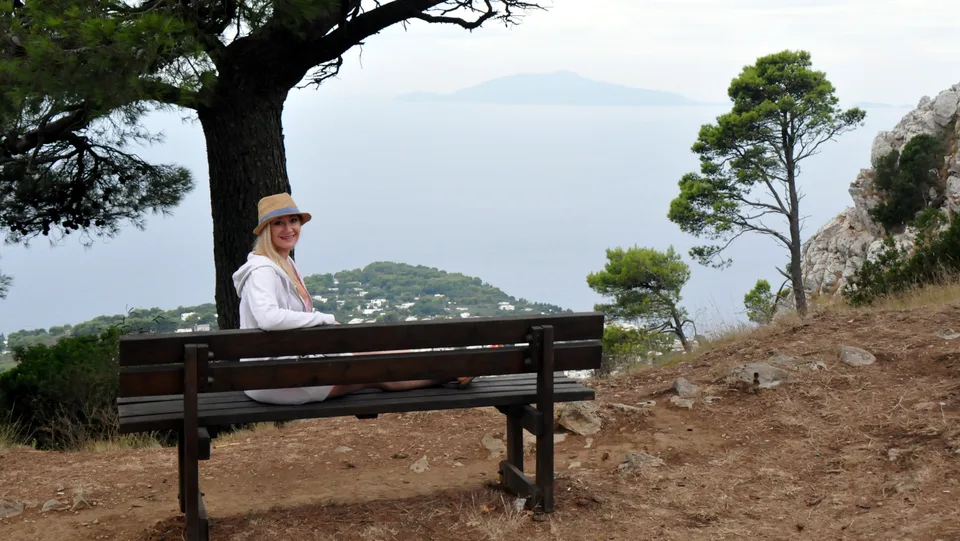
Our album also has a quieter frame from the hillside: Kristin on a bench under a tree, the sea beyond. The bench is already making a useful suggestion.
There is room on Capri for a boat outing, a climb in perspective, and time in the lanes. There is not necessarily room for every famous attraction in a single visit. The Blue Grotto, for example, has its own access arrangements and depends on sea conditions. It should not be the fragile hinge on which an entire day turns.
Choose the experience you most want, leave room around it, and know how you are getting back. An island is an excellent place to loosen your schedule. The last sailing is a poor moment to become interested in one.
“The view isn’t a reward for finishing the day. It is a perfectly good way to spend it.”
Further along the coast
Positano and Capri anchor our trip album. To understand more of the coast itself, make room for Amalfi and Ravello.
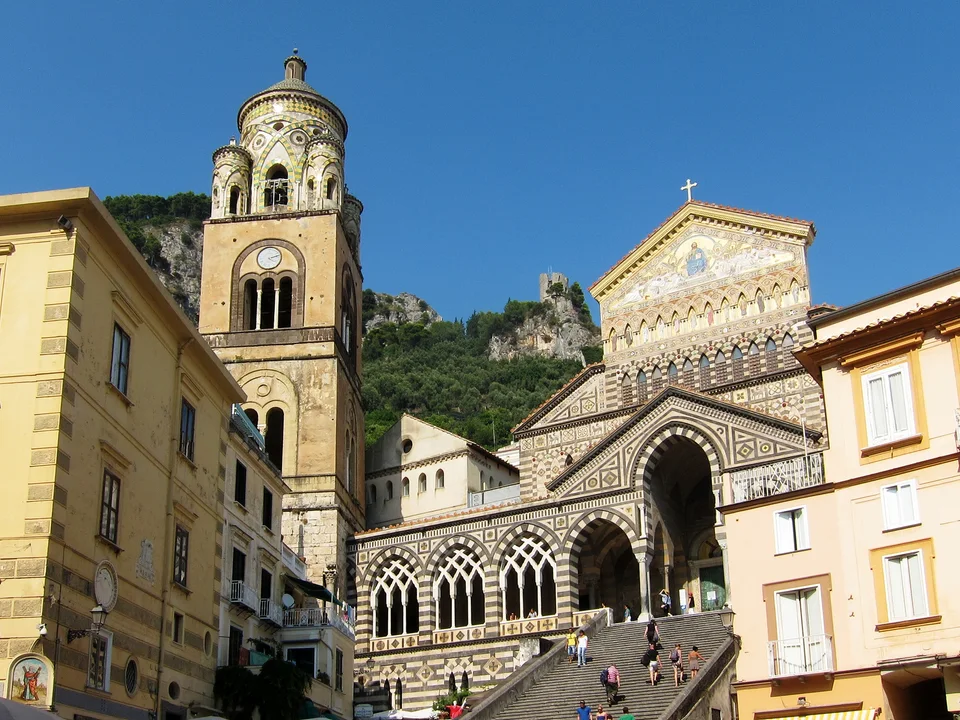
Amalfi offers a change of emphasis. Start with the cathedral, rising above its broad staircase, then look beyond the façade. The monumental complex includes the Cloister of Paradise, the crypt of St Andrew and the diocesan museum. Arches, a garden, older layers of the city: a reason to give the town more than the time between two ferry departures.
The coast’s history is not confined to churches. Amalfi’s papermaking tradition offers another thread to follow at the Museo della Carta. It is a useful counterweight to the idea that the only worthwhile thing to do here is find the next view of the water.
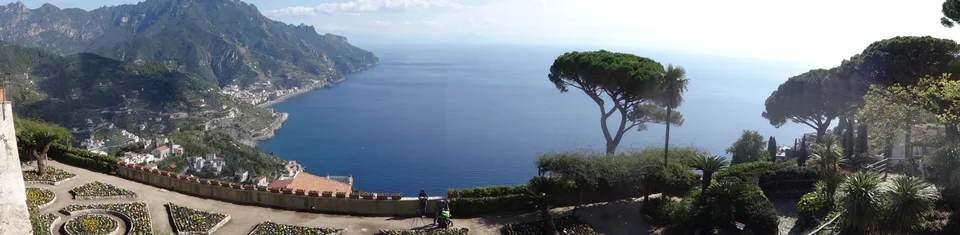
Ravello moves the experience uphill. At Villa Rufolo, gardens and architecture frame the coastline from above; Villa Cimbrone offers another celebrated garden visit and the Terrace of Infinity. Pick one if time is short. A garden deserves something better than being hurried through on the way to its best-known photograph.
This is also where the postcard version of the coast needs a little correction. Those terraces did not arrange themselves. The landscape includes cultivated slopes, orchards and the work of generations making steep land usable. UNESCO recognizes the coast as a cultural landscape, not simply a particularly attractive stretch of sea.
Look for that human effort alongside the beauty. It makes the place more interesting, not less.
If walking is the part that draws you here, the Path of the Gods belongs in your research. Treat it as a mountain walk with an actual route, conditions and a return journey to plan, rather than a picturesque gap between lunch reservations. Check local access and weather before committing.
Leave the coast a little unfinished
Back in our own photographs, the day eventually arrives at another table. There is pasta, then dessert, then a picture with people in a restaurant kitchen. We can leave the precise menu and the conversations where they belong: in the trip itself, until we tell those parts in our own words. What survives clearly is that meals and people belong in the same story as the famous scenery.
That is the version of the Amalfi Coast worth bringing home. Not a claim that you saw every town, ate at every important address, and found the only beach nobody else knows about. A few places given enough attention to become distinct. Positano climbing the hill. Capri pulling the horizon wider. A small boat. A shaded bench. Something good-looking arriving on a plate.
We have photographs of the two of us here, and we are glad of them. But sometimes the best way to remember being somewhere together is to leave yourselves out of the frame.
Let the coast have the last word.
Visited 2016 · Written 2026