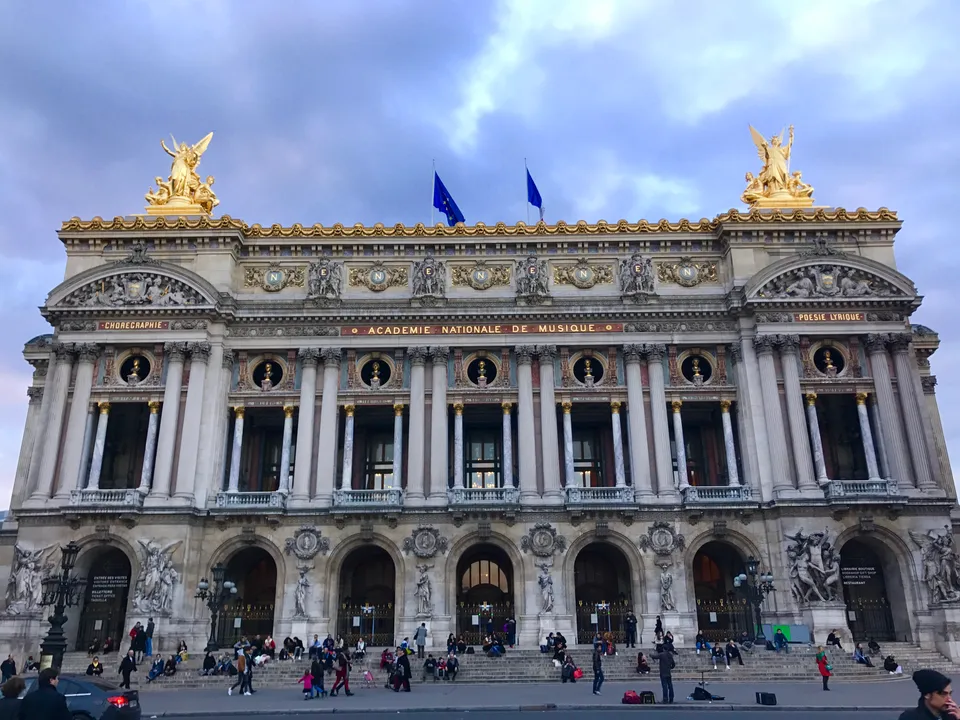
Paris knows how to make an entrance.
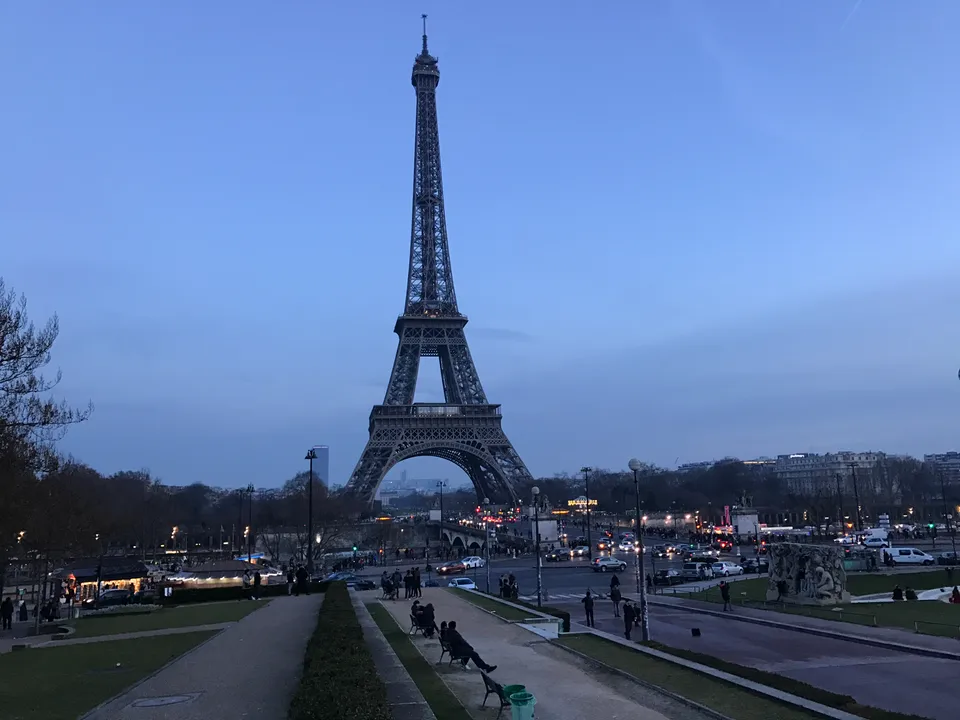
The Eiffel Tower takes the skyline. Notre-Dame takes the river island. At the Palais Garnier, even the roof appears to have dressed for the occasion. This is not a city that needs help establishing a first impression.
Coats, scarves, bare branches: our album belongs to winter, not to the sunlit café terrace that tends to arrive in your imagination before the plane does. There is blue evening light over the Seine, stone against pale skies, and plenty of reasons to go indoors.
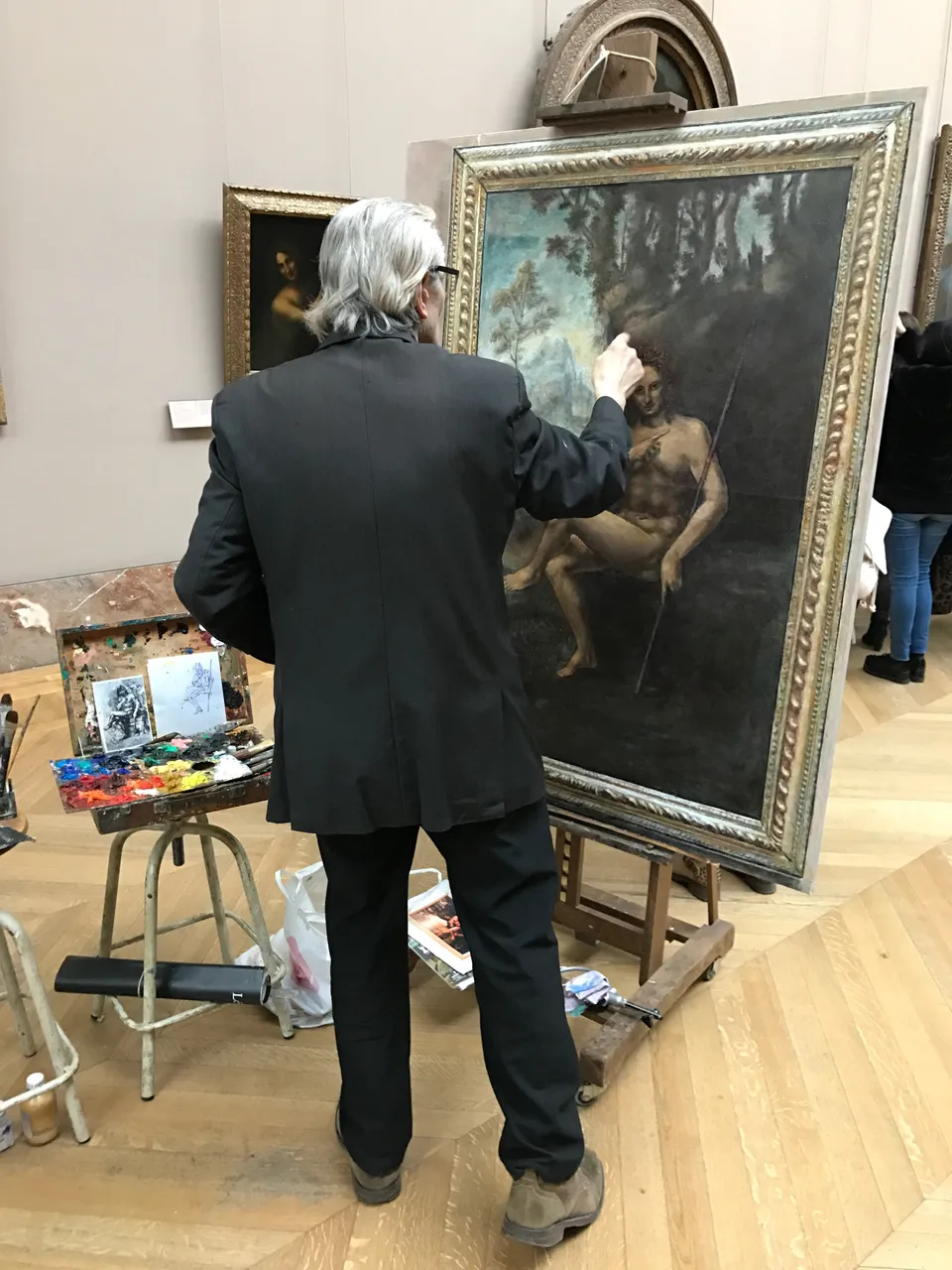
The famous sights are here. We aren’t going to pretend the Eiffel Tower was too obvious to bother with. But the photograph that gives this trip another dimension is quieter: a painter at an easel inside the Louvre, looking at a picture closely enough to make another one.
Not another landmark. Another way of paying attention.
Give the tower its moment
There is a photograph of the Eiffel Tower from the Trocadéro side, taken as the daylight thins. The gardens lead toward it; the city keeps going around it. After all the reproductions, there is still something satisfying about seeing the structure occupy actual space.
Our pictures also take us into its ironwork and up above the rooftops. From a distance, the tower is a silhouette. Close up, it becomes connections, platforms, stairs, a great deal of metal doing a very specific job. It is worth allowing both versions to exist.
Then give the river a turn. The Seine runs through our evening photographs as a broad band of blue, the lights gathering along its banks. A walk beside it is not simply a route between important things. It is one of the important things.
A cathedral, then a bookshop
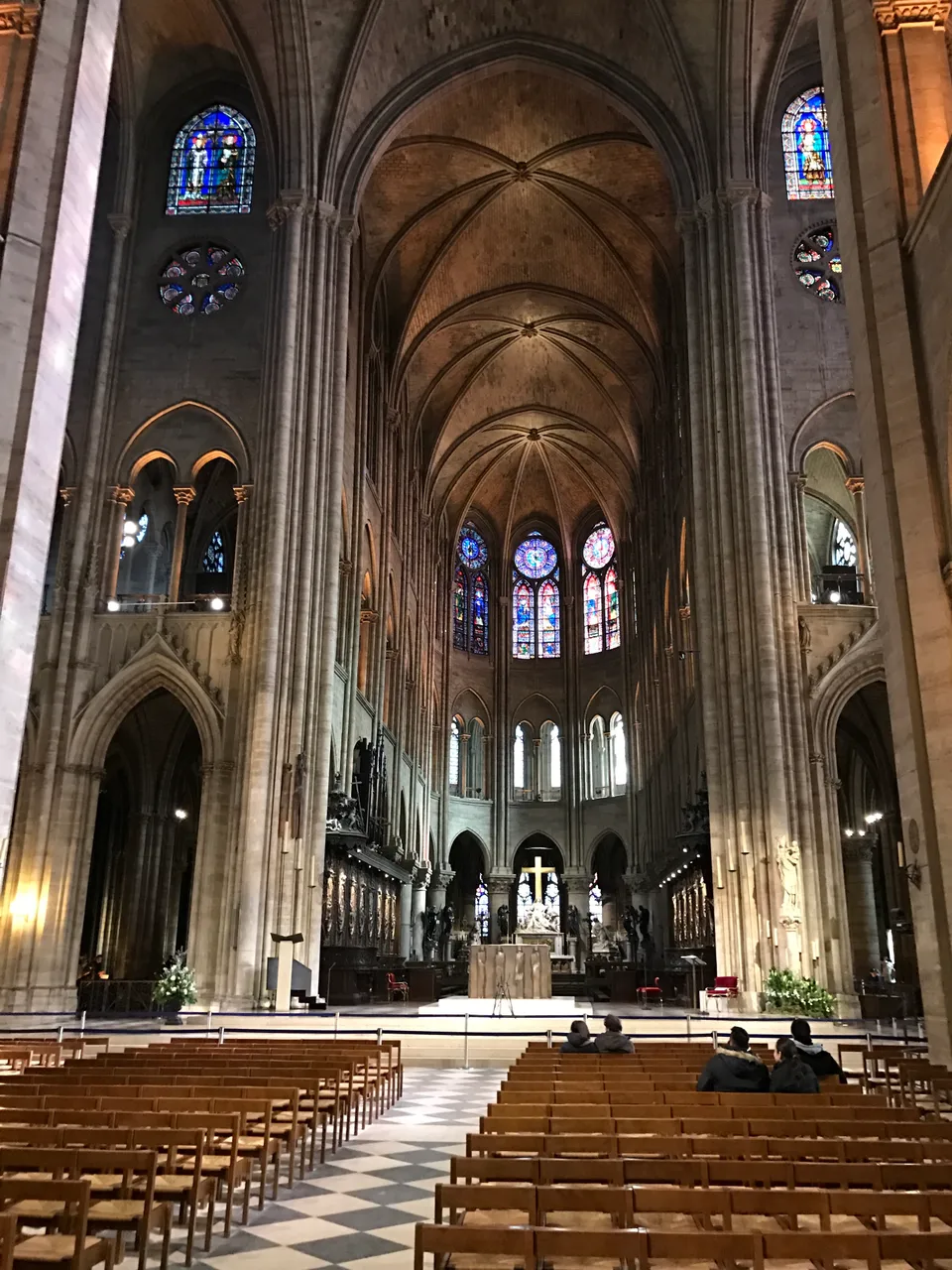
Inside Notre-Dame, our camera looks along rows of chairs toward the high vaults. Stone columns hold the space; light arrives through the windows. It is a very different scale from a street.
Nearby, our album finds Shakespeare and Company: books, shelves and the familiar green storefront. The English-language bookshop stands opposite Notre-Dame on the Left Bank. It makes an appealing companion to the cathedral, without needing to become another appointment you rush through.
The large building asks you to look up. The small shop gives you a reason to look down at a page. Paris can accommodate both.
The Louvre, with your eyes open
The Louvre makes it very easy to confuse seeing famous art with moving efficiently through a building. There is always another room, another name, another person who seems to know exactly where they’re going.
We have the expected photographs: the Mona Lisa, the Winged Victory of Samothrace, the two of us among the collections. We also have a room full of people facing the same celebrated painting. Keep the crowd in your understanding of the place. Recognition has a social life.
Then there is the painter. An easel, a canvas, an older figure in a dark coat. Beside all that movement, someone is doing the slow work of looking. The photograph offers a useful alternative to treating a museum as a collection of proof.
Pick a few works you genuinely want to spend time with. Learn a little about them. Let yourself stop somewhere that wasn’t on the plan. The Louvre’s own visitor trails can provide a structure without requiring you to invent a military campaign.
You do not have to finish the Louvre. You do have to decide how you want to be there.
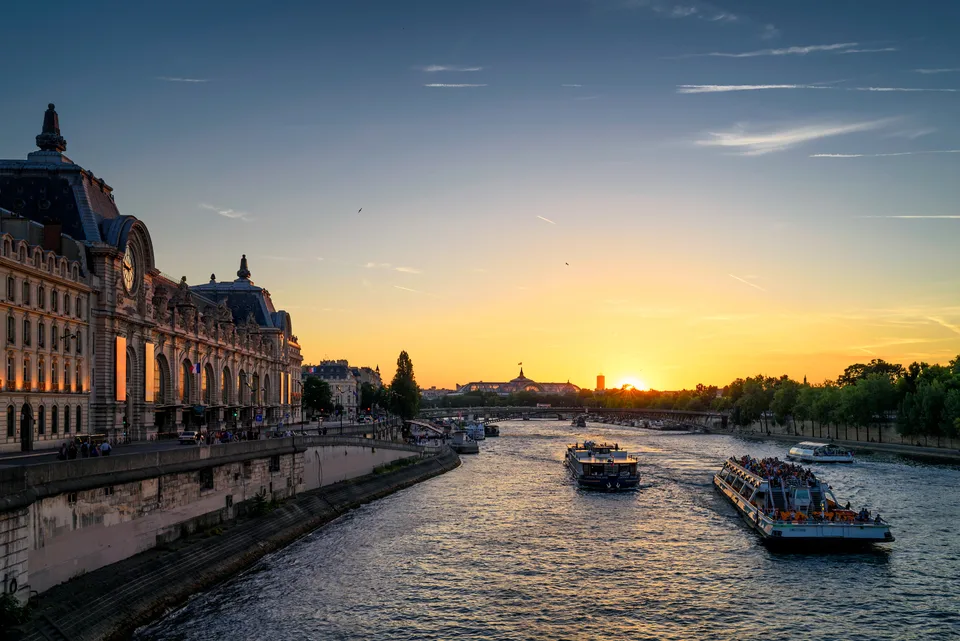
For a different artistic conversation, consider the Musée d’Orsay.
Its home is a former railway station, and its collections bring nineteenth- and early-twentieth-century art into focus, including Impressionist and Post-Impressionist painting. Monet, Degas and Van Gogh give you several good reasons to be selective rather than comprehensive.
Choose a question instead of a quota. How does a painter handle light? What happens when a street, a dancer or an ordinary person becomes the subject? A museum becomes more interesting when you give it something to answer.
“The famous picture tells you where you are. The next one might tell you why you came.”
Up the hill, into the theatre
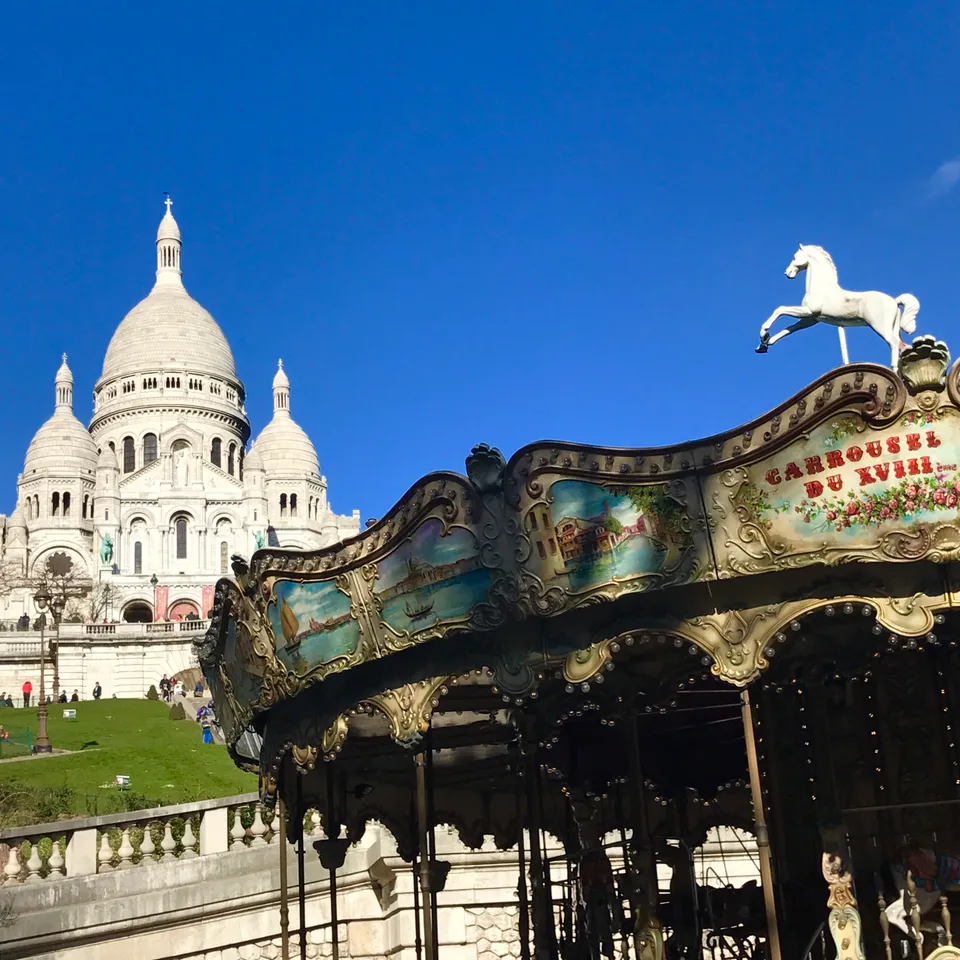
Montmartre has its own way of announcing itself. In our pictures, the white domes of Sacré-Cœur rise above a carousel; farther up, the view opens over the city. There are steps, narrow passages and artists’ displays around Place du Tertre. The postcard is present. So is the street around it.
Give the basilica its proper context as a place of worship, not merely a viewing platform with an elaborate roof. Then let the neighborhood have some time. A street can be worth following even when it doesn’t lead directly to the next photograph.
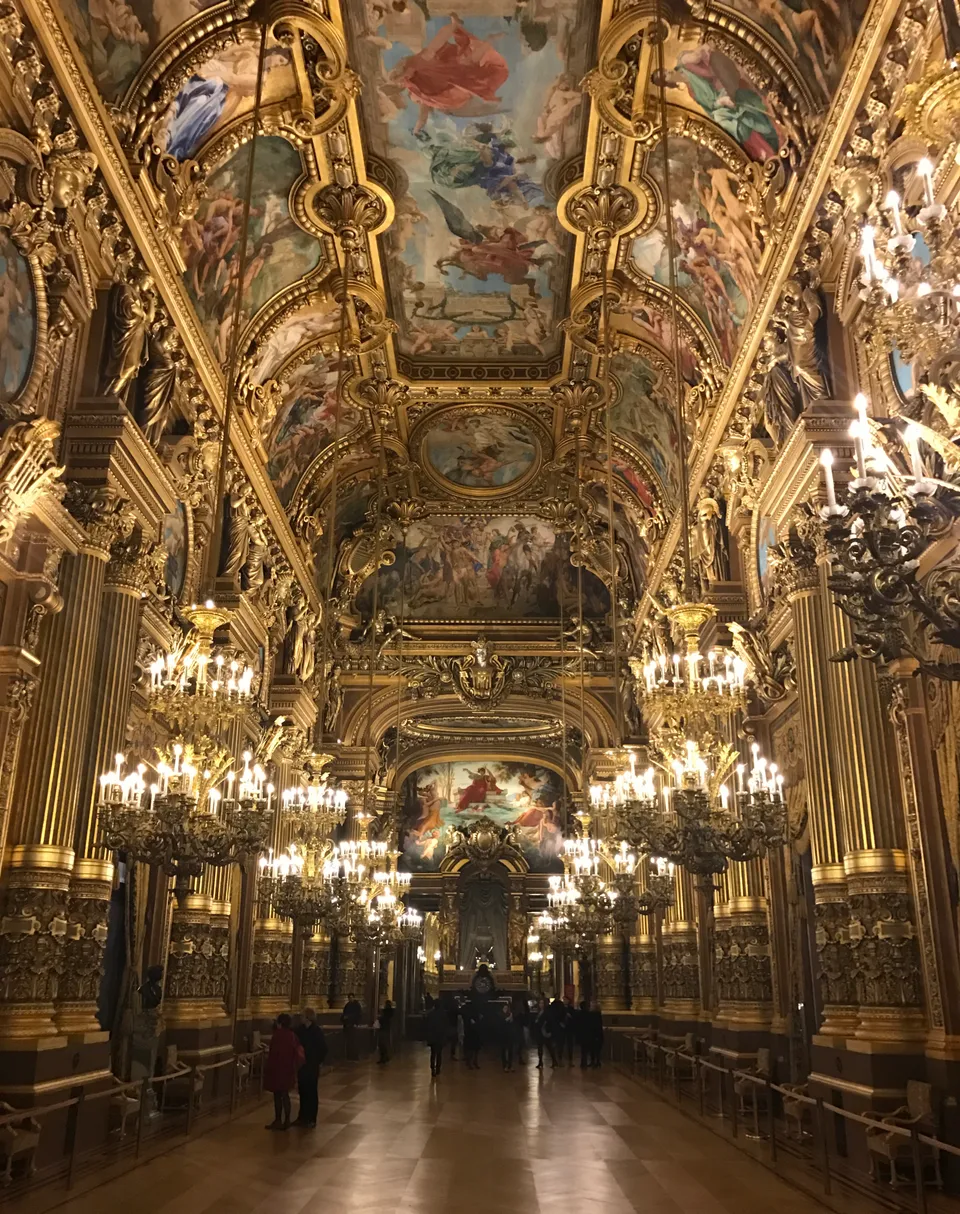
The Palais Garnier changes the register again. Our exterior picture gives you the formal introduction: columns, sculpture, gold against the sky. Inside, the Grand Foyer supplies a fairly emphatic argument against restraint.
The building is part of the experience, whether or not a performance is on your itinerary. Sometimes the room deserves its own applause.
In Paris, even a practical distinction can arrive with a chandelier.
A day outside Paris
Versailles deserves a day with its own shape, not the leftover hours of a Paris itinerary. It is outside the city, and the estate is more than the palace alone.
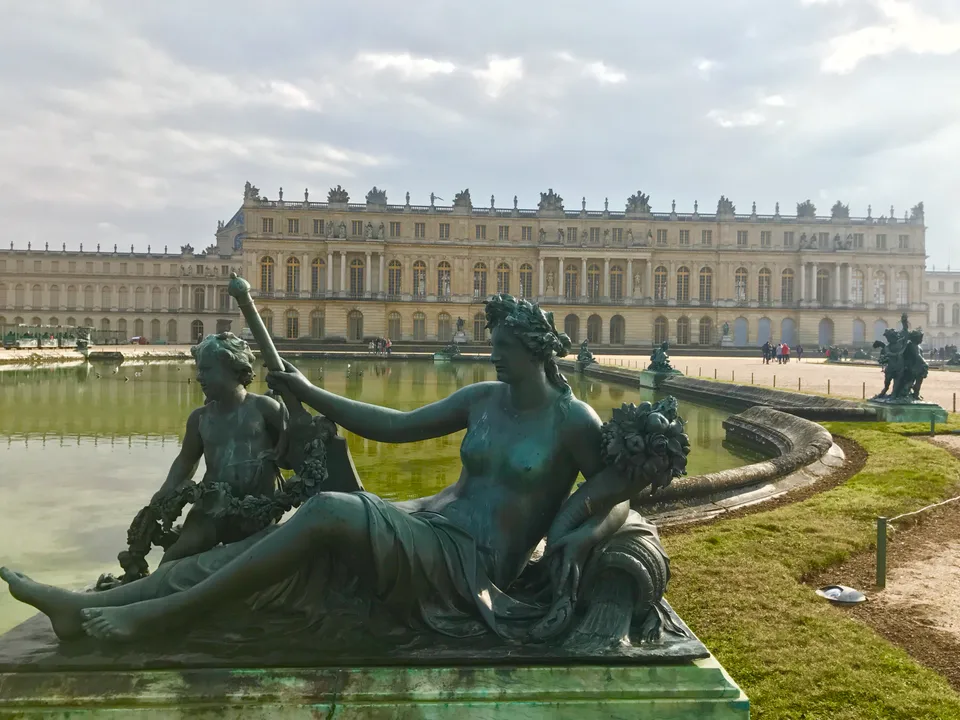
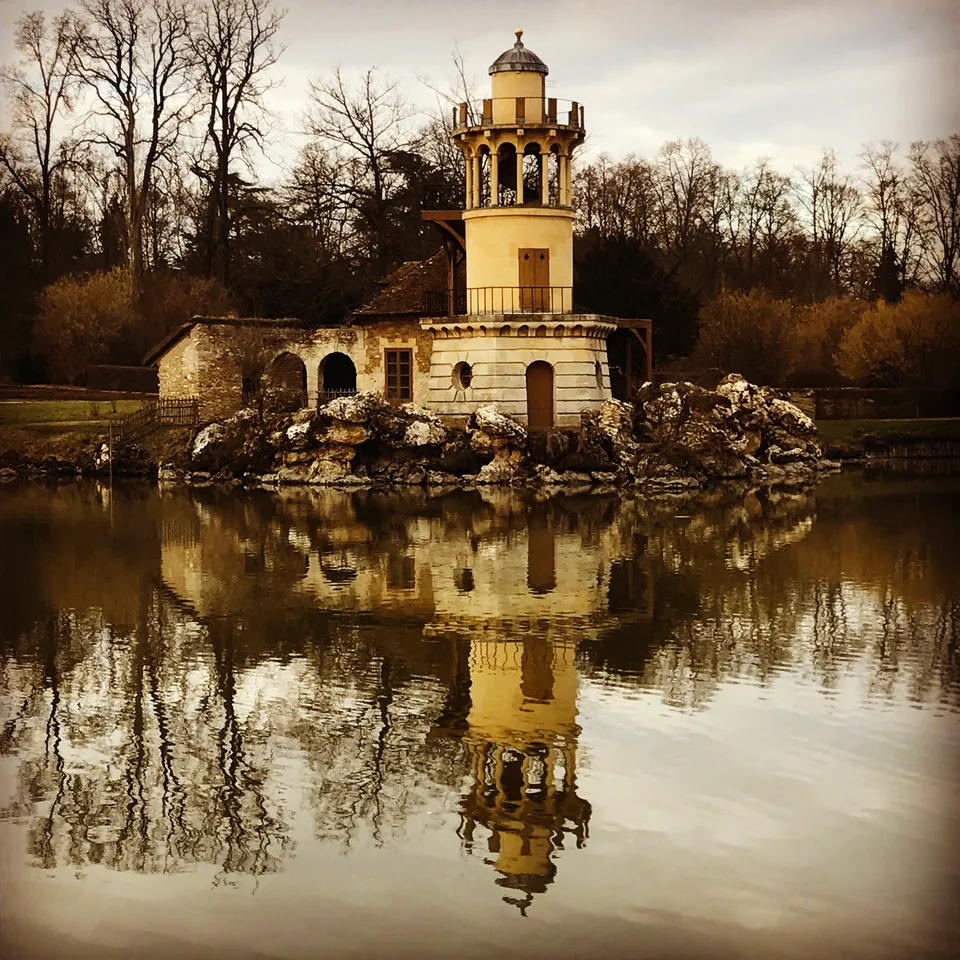
Our photographs move from water and sculpture in front of the long façade to the Hall of Mirrors, then outward toward the Trianon estate and the Queen’s Hamlet. The change in scenery is part of the interest. One minute the decoration is making a statement about royal power; later, a tower is reflected in a lake.
The Hamlet was a deliberately composed rural retreat for Marie-Antoinette, with working agricultural functions as well as places to walk and receive guests. It was not simply the cartoon of a queen pretending to be a milkmaid. Looking beyond that familiar story makes the place more complicated—and more worthwhile.
Check which parts of the estate your ticket covers and give the distances some respect. The palace, Trianon and the gardens do not become one compact attraction because they share a website. In winter, opening arrangements and the appearance of the grounds also deserve checking.
Our February photographs offer a quieter palette: bare trees, pale water, muted green. Versailles doesn’t need summer flowers to have a presence.
Save some attention for the table
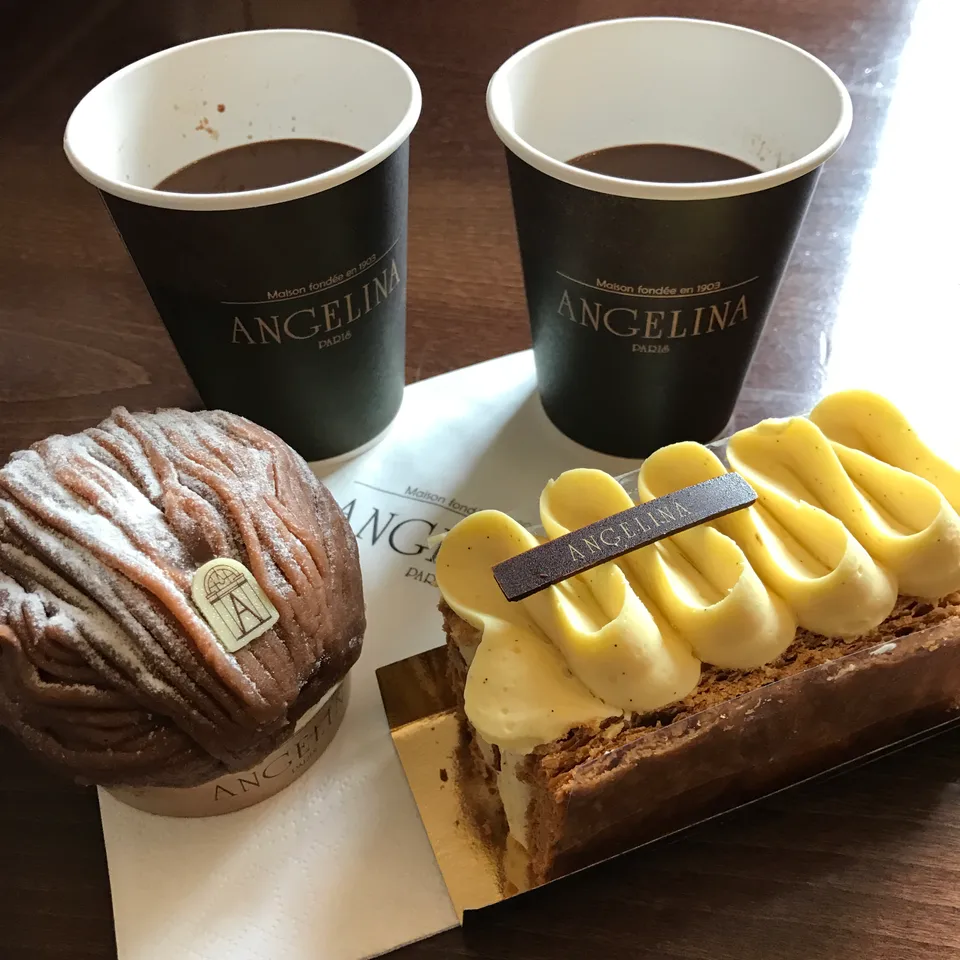
Not every memorable part of Paris has a timed entrance. Our album has a fruit display arranged with remarkable conviction, pastries in a box, cups of hot chocolate, restaurant tables and plates dressed for the evening.
There is something appealing about a city where a small cake can appear to have gone through several rounds of architectural approval. It belongs to the same trip as the painted ceilings. So does a market stall selling something you could eat without photographing it first.
That is the Paris we want to keep looking at: the monumental and the useful, the carefully staged and the ordinary, the famous picture and the quieter one beside it.
Look up at the entrance. Then look a little closer.
Visited 2017 · Written 2026